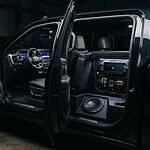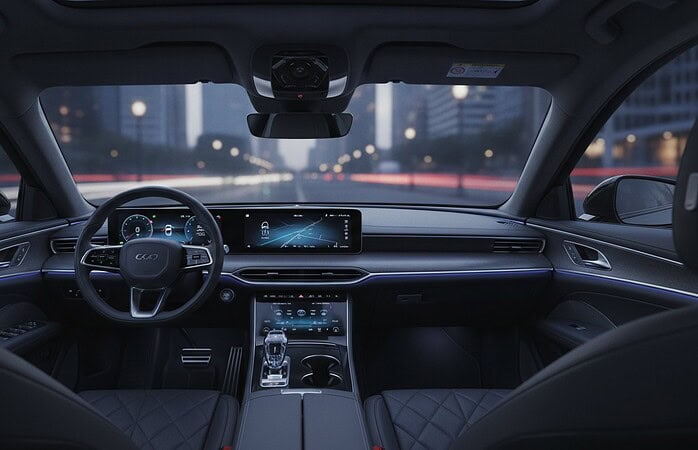
Car and truck interior LED light kits use strips or compact lights to add illumination around areas such as the dashboard, footwells, and doors. For custom interior LED lighting ideas for cars, choose an LED lighting power source of at least 12 volts. A well-planned setup brings color and visibility into the cabin while keeping lights and wiring neatly placed.
The best look is personal, but it should also suit your vehicle and feel comfortable behind the wheel. Whether you prefer a subtle accent or a coordinated glow across the cabin, thoughtful placement makes the difference.
This guide explains how to choose LED strips, plan an interior light kit, and route its wiring for a tidy installation. You’ll also learn how smartphone color controls can help tailor the lighting, explore dashboard and door accent ideas, and see when a custom installation can bring the finished look together.
Key Takeaways
- Choose a lighting power source of at least 12 volts, then match the strip style to the areas you want to accent.
- Plan the wiring route before placing lights; concealing it behind carpet, door panels, or the dash helps keep the installation tidy.
- Use smartphone color controls to coordinate cabin lighting, from a subtle single shade to a more expressive mix.
- Layer dashboard, footwell, and door accents thoughtfully so the glow feels cohesive rather than distracting.
- For a polished result, consider how the lighting layout and installation details work together across the whole cabin.
Choosing LED strips
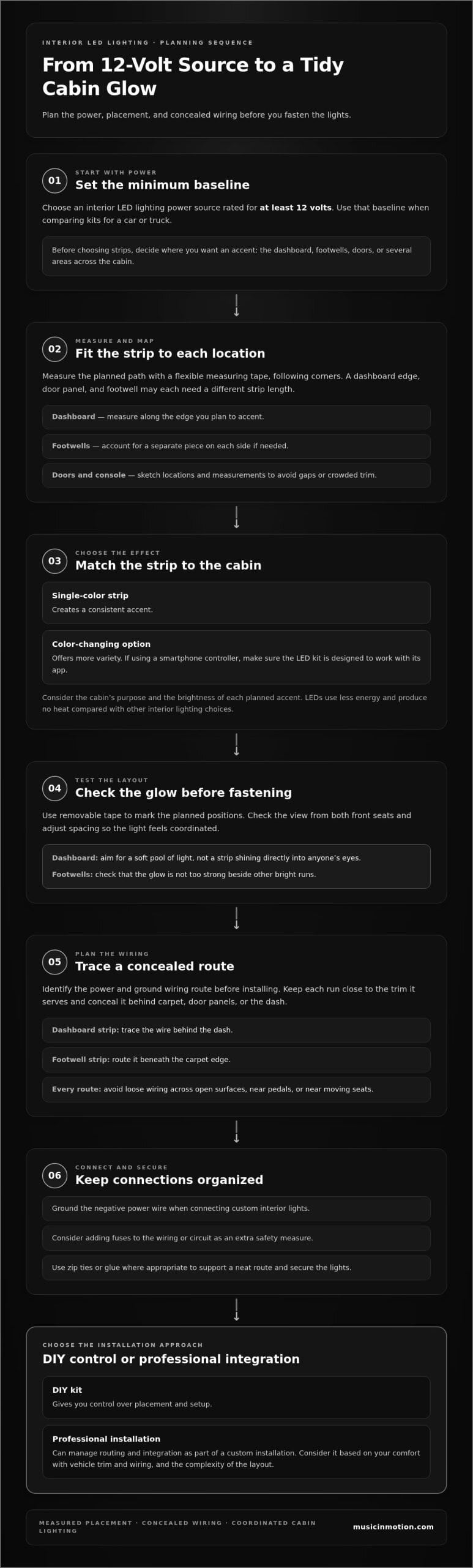
Start with the power source, then choose strips that suit the cabin’s shape and the effect you want. An interior LED lighting power source should provide at least 12 volts. This gives you a practical baseline when comparing kits for a car or truck. Before choosing a strip, decide whether you want a soft accent along the dashboard, a glow near the footwells, or coordinated lighting across several areas.
Measure each planned location before choosing strip lengths. A dashboard edge may need a shorter run than a door panel, while a footwell may call for a separate piece on each side. Use a flexible measuring tape and follow the strip’s actual path, including corners. Sketch the locations and measurements together to avoid gaps or strips crowding trim edges.
Consider the atmosphere you want inside the vehicle. A single-color strip creates a consistent accent, while color-changing options offer more variety. LEDs use less energy and produce no heat compared with other interior lighting choices. Still, plan brightness and placement around the cabin’s purpose: a restrained dashboard accent feels different from bright footwell lighting.
- Match the power source: Use a source rated for at least 12 volts.
- Map the route: Measure the dashboard, footwells, or door areas before selecting strip lengths.
- Choose the effect: Decide between one steady color and color-changing options.
- Plan the connection: Identify the power and ground wiring route before installing.
Give wiring as much attention as color. Ground the negative power wire when connecting custom interior lights, and consider adding fuses to the wiring or circuit as an extra safety measure. Keep connections organized, with no loose wire near pedals, moving seats, or trim. Zip ties and glue can secure the lights, but use them to support a clean route, not to disguise a poor fit.
Consider the complete effect before attaching anything. A strip that looks balanced on the dashboard may feel too strong beside another bright run. Test the planned positions, then adjust the spacing until the glow feels coordinated from both front seats. These practical custom interior LED lighting ideas for cars start with a suitable power source, measured placement, and a wiring plan for a tidy finish.
Interior LED light kit placement
Place each strip where it adds a clear accent without crowding the cabin. Common locations include beneath the dashboard, along the center console, and near the footwells. Test each position from the driver’s and passenger’s seats before fastening anything. A strip under the dashboard should create a soft pool of light, not shine directly into anyone’s eyes.
Plan the wiring route alongside the light locations. Run wires behind carpet, door panels, or the dash for a cleaner installation and to protect them during vehicle use. Keep each route close to the trim it serves. For a dashboard strip, trace the wire behind the dash; for a footwell strip, route it beneath the carpet edge. Avoid loose wiring across open cabin surfaces.
Use this placement sequence to plan a kit:
- Mark each light: Use removable tape to map dashboard, console, and footwell positions.
- Test the view: Sit in both front seats and check whether a strip creates glare or an uneven glow.
- Trace the wiring: Plan a concealed path behind the nearest carpet, door panel, or dash.
- Secure the route: Use zip ties or adhesive where appropriate, keeping wires neat and supported.
DIY kits and professional installations differ in planning and finish. A DIY kit gives you control over placement and setup, while a professional can manage routing and integration as part of a custom installation. Choose based on your comfort working with vehicle trim and wiring, and on the complexity of the layout.
Are car interior LED lights legal while driving in the United States? Rules vary by state and local jurisdiction. Some colors, flashing patterns, and underbody lighting configurations may be restricted for street use, so consider how visible lights operate while driving.
How much does DIY car interior LED lighting cost? The total depends on the kit, strip length, color-control features, and wiring supplies. A simple footwell layout has different requirements from a design that also follows the dashboard and doors.
Can interior LEDs drain a car battery or damage vehicle electronics? Yes. A circuit that leaves lights powered while parked can draw battery power, and incorrect connections can affect vehicle electronics. Plan the power connection carefully and keep wiring organized.
For a multi-area layout, professional LED lighting installation can help bring concealed wiring and consistent placement together in one finished cabin design.
Smartphone-controlled color combinations
A smartphone controller can make cabin lighting easier to tailor, provided the LED kit is designed to work with its app. First, match the controller to the light kit, then use the app’s available color options to set the look. Warm white dashboard lighting, for example, creates a different mood from blue footwell lighting.
Build a palette around the cabin rather than picking colors in isolation. Look at the upholstery, trim, and dashboard materials in daylight and after dark. A charcoal interior can pair well with a cool accent, while tan seats may suit a warmer hue. For a coordinated appearance, repeat a chosen color in the footwells and door accents instead of assigning a different shade to every area.
Use the app to make deliberate adjustments:
- Choose a base color: Select a shade that complements the interior, such as soft white beside dark trim.
- Set the emphasis: Use a brighter accent near the footwells and a restrained glow around the dashboard.
- Compare combinations: Try neighboring colors, such as blue and violet, before settling on a cabin-wide palette.
- Save a useful setting: If the app supports saved presets, keep a preferred everyday look separate from a more vivid display.
Consider how color appears across different surfaces. A shade reflected from dark carpet may look deeper than the same light near a pale door panel. Test your chosen combination from both front seats, then adjust the balance between areas. If a vivid door accent draws attention away from the dashboard, reduce its prominence or choose a closer hue.
App controls can help you refine the effect over time. Try a subtle setting for routine driving and a more saturated combination while the vehicle is parked. If brightness adjustment is available, lower the output so the light remains an accent rather than a focal point. Keep key controls easy to find, so changing a color doesn’t become a distraction while driving.
Before installation, review how the controller connects to the strips and where its receiver or control module will sit. Keep the module accessible without exposing it on a visible surface. A clean setup pairs thoughtful colors with organized installation, so the app adds flexibility without cluttering the cabin. Test each combination after placement, since the final glow depends on the strips’ direction and the surfaces reflecting their light.
Customizable interior LED lighting
A tailored setup starts with the cabin areas you want to highlight. Compare color, brightness, control, and placement before settling on a design.
Lighting Customization
Customization includes where the lights sit and how their glow works with the vehicle’s interior. A subtle dashboard accent, coordinated footwell strips, or door lighting can each create a different effect. Consider trim color, upholstery, and the driver’s view. A good layout feels connected across the cabin without making every surface compete for attention.
Start with a simple plan. Mark the areas you want illuminated, then decide which should lead visually. A dashboard accent, for example, can anchor the design while softer footwell lighting supports it. Door accents can extend the same look toward the cabin’s sides. Matching colors across these locations helps the finished design feel intentional.
Brightness matters as much as color. A strong glow in one location can overpower a nearby accent, while a softer setting keeps attention on the cabin’s materials. Decide whether the light should define a trim line, illuminate a footwell, or create a broader ambient effect. Assess the setup from both front seats, not just from outside the vehicle.
- Choose a focal area: Use the dashboard, console, or doors as the visual starting point.
- Balance the rest: Coordinate nearby strips rather than giving every area equal emphasis.
- Review the cabin: Check how colors and brightness interact with the upholstery and trim.
Test your plan before making permanent decisions. Temporary placement can show whether a strip follows a trim line cleanly or creates an uneven glow. A coordinated layout can be restrained or expressive; the key is deciding how each area supports the overall look.
Installation Cost
How much does custom interior LED lighting cost to install? The price depends on the project and is provided after a quote request. Factors include the number and placement of light strips, wiring routes, control choices, and the work needed to integrate the design into the vehicle.
A basic layout focused on one cabin area involves different work from a design spanning the dashboard, footwells, and doors. Complex trim shapes or concealed wiring routes can also affect the installation plan. Define the locations and desired effect first; those choices clarify the project’s scope and the work needed for a finished fit.
Keep the installation goal practical. Carefully planned accents can make the interior feel cohesive without adding light everywhere. Review the planned locations, color approach, and wiring path together before finalizing the design. This ensures the customization choices and installation work support the same result.
Door lighting
Door lights can extend a cabin’s color scheme beyond the dashboard and footwells. Consider an accent along the lower door panel, a glow near the handle, or lighting that connects the front doors visually with the rest of the interior. Choose one focal area first. Restrained placement on each front door can feel more coordinated than several competing light lines.
Study the door’s shape before choosing a strip position. Look at the armrest, handle, storage pocket, and lower panel, then identify a trim line that gives the light a natural path. A strip beneath an armrest can emphasize its contour, while a lower-panel accent can complement footwell lighting. Check the placement with the door open and closed.
Door panels move, so their wiring needs a planned route. Run LED wiring behind the door panel for a cleaner installation and to protect it during vehicle use. Keep the route aligned with the panel rather than crossing visible surfaces. Before fastening lights, make sure the planned position leaves the handle, window controls, and storage pocket accessible.
- Choose the effect: Decide whether the door should echo the dashboard or add a subtle secondary accent.
- Map the placement: Use removable tape to test a strip beneath the armrest or along the lower panel.
- Check access: Make sure the light does not cover the handle, controls, or storage-pocket opening.
- Plan the route: Trace wiring behind the door panel and keep visible sections neat.
Color and brightness determine how the door accent fits the whole cabin. Matching the door strip to the dashboard creates a continuous look, while a related shade adds contrast without changing the overall palette. View the door beside the footwell lighting, then adjust the position or intensity if one area draws too much attention.
Consider the full layout before attaching anything permanently. Test the light with the door open and closed, and view it from both front seats. Check how it looks beside the dashboard, whether the trim line appears even, and whether the glow feels balanced across the cabin. These small checks help the door detail feel integrated rather than added as an afterthought.
For a coordinated result, plan custom door lighting as part of the cabin’s overall LED layout.
Interior LED wiring can run behind the carpet, door panels, or dash for a clean installation and protection while the vehicle is in use.
Music In Motion: Car Audio Upgrades
Music In Motion brings planned cabin lighting layouts to life with LED Lighting Upgrades and Custom Installations. Turn to the team when you want door, dashboard, or footwell accents neatly integrated, or when coordinating lighting with a broader interior project.
If you’re also refreshing your sound system, Car Audio Upgrades can improve that part of the in-car experience. For a more tailored audio setup, Custom Subwoofer Enclosures offer another option. The goal is a finished result that suits your vehicle and how you use it, not simply a collection of components.
Share the areas you want illuminated, your preferred colors, and any related audio plans. Contact Music In Motion to discuss your vehicle’s custom installation.
Make the Cabin Feel Like Yours
The strongest custom interior LED lighting ideas for cars start with the feeling you want from your cabin. Think beyond color: consider how the lighting should complement your daily drives, interior materials, and the atmosphere you enjoy behind the wheel. A clear vision makes it easier to create a design that feels personal rather than temporary.
When you’re ready to turn that vision into a finished installation, Music In Motion offers LED Lighting Upgrades, Custom Installations, and Car Audio Upgrades. Its Marine Audio Systems bring custom audio expertise to time on the water, too. Whether you’re planning a focused lighting change or a broader vehicle project, contact the team to discuss the result you want.
Contact Music In Motion about car lighting to discuss your ideas. Your cabin can be distinctive, comfortable, and unmistakably yours.
Frequently Asked Questions
What are LED interior light kits for cars and trucks?
LED interior light kits add accent lighting inside a vehicle using strips or compact lights. They can highlight areas such as footwells, dashboard edges, or doors in cars and trucks. The layout depends on the cabin shape and the effect you want, from one understated accent to coordinated lighting across several interior areas.
What are popular custom interior LED lighting ideas for cars?
Popular approaches include a single-color glow that complements the upholstery, a subtle accent tracing a console edge, or coordinated colors across the cabin. A dark interior, for example, can pair with a cool-toned accent, while a lighter cabin may suit a softer shade. Start with one focal area, then decide whether another accent supports the look.
What types of automotive interior LED lights are available?
Common options include flexible LED strips for trim lines, compact lights for focused accents, and replacement LED dome light bulbs. Strips suit longer paths, such as beneath a dashboard, while compact lights can fit a smaller target area. Dome bulbs update an existing cabin light location. Choose based on where the light should appear and how broad an area it needs to illuminate.
How do you install LED ambient lighting in a car interior?
Start by planning the locations and checking that each light fits its intended trim area. Test the placement temporarily, then route wiring behind suitable trim rather than across visible surfaces. Connect the lighting according to the kit instructions, test the setup, and secure the pieces only after confirming their position. Keep wiring clear of pedals, moving seats, and controls.
How do you choose LED colors, brightness, and placement for a car interior?
Choose a color that works with the upholstery and trim, then consider how it looks from the driver’s seat at night. Use placement to shape the effect: a strip aimed toward a footwell looks different from one facing a dashboard surface. Avoid placing lights where they shine directly toward the driver or compete with important displays.
What are the best app-controlled or music-sync car LED lighting kits?
The right kit depends on whether you want smartphone color selection, music-responsive lighting, or both. App control and music synchronization are distinct features, so check the kit’s stated controls before choosing. Consider whether the app is easy to use while parked, whether its color options suit your plan, and whether the kit supports the cabin layout you want.
Are car interior LED lights legal while driving in the United States?
Rules vary by state and local jurisdiction. Some colors, flashing patterns, and underbody lighting configurations may be restricted for street use.
How much does DIY car interior LED lighting cost?
The cost depends on the kit, strip length, color-control features, and wiring supplies. A simple footwell layout has different requirements from a design that also includes dashboard and door lighting.