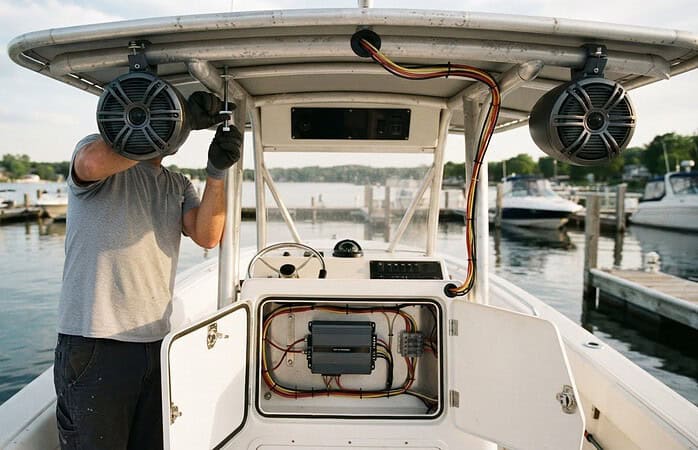
Car audio speakers can work in a golf cart, but fit and outdoor suitability matter as much as sound quality. A professional golf cart sound system installation matches speakers and controls to the cart’s available mounting space and electrical system, rather than simply transferring a car setup.
That distinction matters when you want clear music without awkward placement, exposed wiring, or equipment that does not suit your cart. Weather-resistant speakers, a soundbar, or a carefully planned combination can each work, depending on the cart and the listening experience you want.
This guide explains how professionals assess speaker suitability and placement, choose convenient Bluetooth controls, and plan battery disconnection before installation. These decisions work together to shape a reliable setup, helping you discuss your cart and audio goals with an installer.
Key Takeaways
- Car speakers may suit a golf cart, but outdoor suitability, mounting space, and secure wiring shape the right setup.
- Speaker placement should fit the cart’s layout and direct sound where riders can hear it comfortably.
- Bluetooth and remote controls can make music easier to manage while you’re on the move.
- Battery compatibility and safe disconnection are essential parts of planning a dependable installation.
Can I use car audio speakers in a golf cart?
Car audio speakers can work in a golf cart when their size, mounting position, and outdoor suitability fit the vehicle. A professional plans each mount and wire route around the cart’s dash, frame, or seats.
Follow applicable local noise ordinances and the golf course’s rules when using audio. Check the relevant limits before playing music, as restrictions can vary by location and course.
Speakers may be mounted on the dashboard, under the seats, or on roll bars. A subwoofer may also fit beneath a seat or in a cart corner when the layout allows secure mounting.
Dash Kits and Speaker Mounting
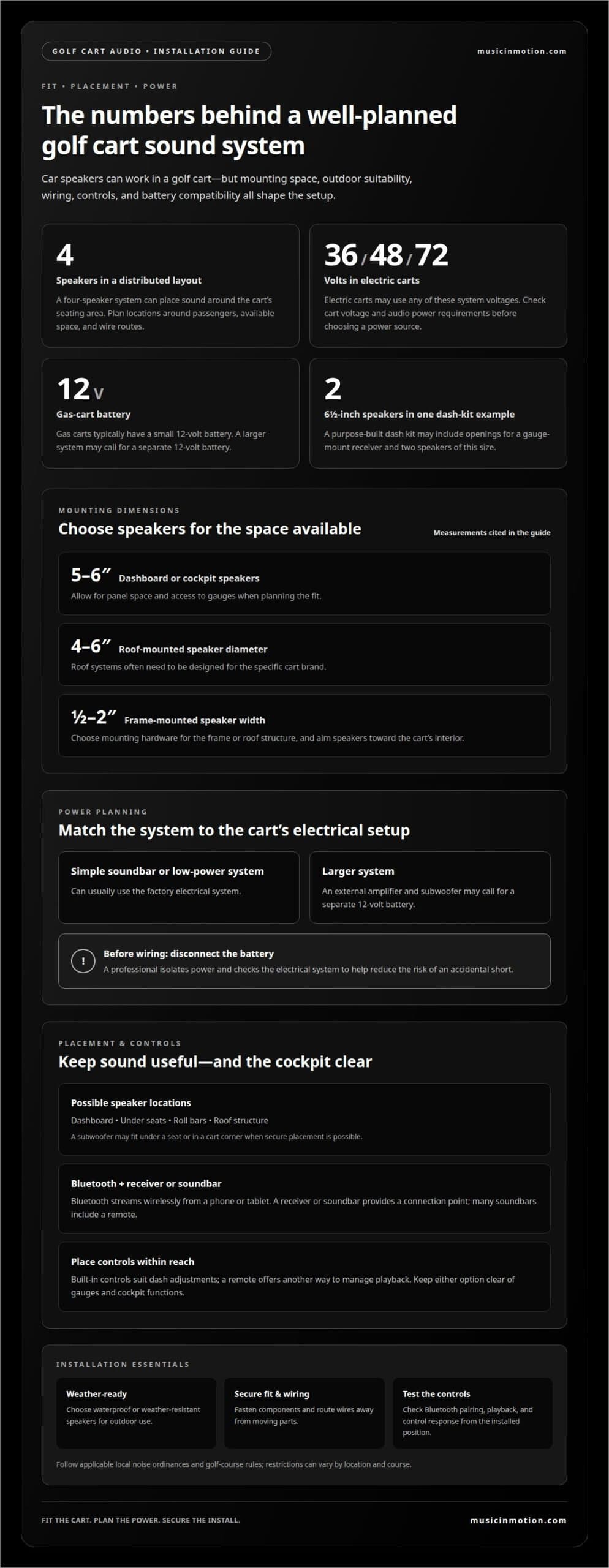
A dash kit provides shaped openings and mounting points for a receiver and speakers. For example, a golf cart dash kit may have cutouts for a gauge-mount receiver and two 6-1/2-inch speakers. A professional matches those openings to the cart and selected speakers, then secures each unit with suitable mounting hardware. Correct fit helps prevent loose components and keeps the dash layout usable.
Frame-Mounted Speakers and Subwoofers
Frame-mounted speakers attach to the cart’s frame or roof structure, leaving dash space clear. These speakers can range from half an inch to two inches wide, while roof-mounted speakers are often four to six inches in diameter. A professional selects hardware suited to the mounting point and directs speakers toward the cart’s interior. A powered subwoofer may go under a seat or in a corner if the layout allows secure placement.
Secure wiring completes the installation. The installer connects the speakers to the amplifier and the amplifier to its power source, routing and fastening wires away from moving parts. Careful routing keeps the setup orderly and protects connections during regular cart use.
Professional planning for speaker and control placement
Speaker and control locations should suit the cart’s layout, listening direction, and outdoor conditions. The right setup pairs weather-resistant speakers with an amplifier selected for clear sound without distortion.
Four-Speaker Systems and Subwoofers
A four-speaker system can place a speaker or subwoofer in each corner of the cart. Before securing the equipment, the installer plans around available space, passenger movement, and wiring routes. This layout can spread sound across the seating area, while a subwoofer adds dedicated low-frequency sound. The final configuration depends on the cart’s structure and the listening experience you want.
External Speakers and Amplifiers
External speakers and amplifiers are separate components, positioned where the cart can support them securely. The installer matches the amplifier to the speaker configuration and tunes the system for clear output without distortion. Planning also accounts for exposure, accessible wire paths, and space around seats and controls. This coordination helps avoid crowded placement or wiring that interferes with normal use.
Golf cart speakers should be waterproof or weather-resistant for outdoor use. Dashboard or cockpit speakers commonly measure five to six inches in diameter, so the installer considers panel space and access to gauges. Roof-mounted systems often need to be designed for the specific cart brand, making vehicle fit an important part of the plan.
Control placement matters, too. Bluetooth streams music wirelessly from a phone or tablet, while a remote can make operation convenient. The installer considers reach from the seat and avoids placing controls where they obstruct gauges or other cockpit functions.
For a layout tailored to the cart, explore custom installation planning.
Bluetooth connectivity and remote controls
Bluetooth lets a golf cart sound system stream music wirelessly from a phone or tablet. A professional plans the receiver, controls, and speakers together so the system is convenient to use from the driver’s seat.
A Bluetooth receiver or stereo provides a central connection point. During installation, the professional positions it so the controls are reachable without blocking gauges or taking up useful dash space. For example, a gauge-mount receiver can fit a purpose-built dash opening. The installer routes its wiring neatly and connects it to the amplifier and speakers.
Bluetooth soundbars and roof-mounted speaker systems often include wireless connectivity, and many soundbars include a remote. A receiver or soundbar can connect to a phone or tablet to stream audio without a wired device connection, helping keep the cockpit uncluttered. After installation, the professional tests the connection and sound and confirms the controls work as intended.
Control choice depends on how you use the cart. Built-in receiver controls suit drivers who prefer adjusting settings at the dash, while a remote offers another way to manage playback. The installer considers reach from the seat and keeps controls clear of gauges and other cockpit functions. A remote is useful when its placement and operation feel natural for riders.
During final testing, the professional checks Bluetooth pairing, playback, and control response from the installed position. For example, they can confirm that a paired phone streams through the system and that the remote adjusts it as expected. This check ensures the connection method works with the cart’s actual layout, rather than treating Bluetooth as a feature in isolation.
Disconnecting the battery before installation
Before installation, a professional disconnects the golf cart battery and checks the electrical system. Isolating power helps reduce the risk of an accidental short while wiring is connected.
Battery configuration affects which audio components can be powered appropriately. Electric carts may use 36-, 48-, or 72-volt systems, while gas carts typically have a small 12-volt battery. A simple soundbar or low-power system can usually use the factory electrical system. Larger systems with an external amplifier and subwoofer may call for a separate 12-volt battery.
A professional checks the cart’s voltage and the audio system’s power requirements before deciding how to supply it. If a component needs a different voltage, the installation plan accounts for suitable power conversion. This compatibility review matters because the audio system should not drain the cart battery too quickly. The system’s size and power demand guide the approach.
Battery charging is part of the planning, too. A larger audio setup draws more power than a simple soundbar, so the professional considers the cart’s electrical capacity and expected system load. For larger systems, a dedicated supplemental battery can separate audio demand from the cart’s main battery. The right approach depends on the system and the cart’s electrical layout.
After completing the wiring, the professional reconnects the battery and tests the sound system. This final check confirms the components power on and work together. It also gives the installer an opportunity to identify connection or power issues before the cart returns to use.
For a system planned around your cart’s power needs, arrange a custom installation.
Music In Motion: Custom Installations
Music In Motion provides custom installations for golf cart audio systems, coordinating speaker placement, Bluetooth controls, and battery planning in a complete setup. Turn to the team when you want a professional installation planned around your cart’s layout and audio goals, rather than components fitted without considering how they work together.
Music In Motion also offers custom subwoofer enclosures for audio projects that call for tailored bass, along with car audio upgrades and marine audio systems. The focus is on the complete installation: component fit, clean wiring, accessible controls, and a system suited to its vehicle.
Contact Music In Motion to plan your golf cart audio system.
Make your next ride sound like yours
Start by deciding what you want your golf cart to sound like, from simple background music to a fuller system. That goal gives a professional a useful starting point for planning a golf cart sound system installation around the way you use the cart.
Music In Motion offers Custom Installations, Car Audio Upgrades, and Marine Audio Systems. This vehicle-focused audio experience supports a practical approach: the finished setup should suit its environment and feel easy to use, not simply add equipment.
Bring your preferred listening style and priorities for the cart into the conversation. A clear goal helps shape a considered system that fits the way you want to enjoy each ride and works from the driver’s seat.
Contact Music In Motion for installation help and take the next step toward a sound system made for your cart.
Frequently Asked Questions
How much does golf cart sound system installation cost?
The price depends on the project and is provided after a quote request. Cost factors include speaker type and quantity, amplifier or subwoofer requirements, mounting work, and wiring complexity. A soundbar installation differs from one requiring multiple separate components or custom fabrication. Your listening goals and the cart’s layout help shape the installation plan and quote.
What is the difference between marine-grade and regular car audio for a golf cart?
Marine audio is designed for outdoor environments, while car audio is intended for vehicle interiors. Golf carts are exposed to outdoor conditions, so weather resistance matters when choosing speakers and other components. The right choice depends on where each component will be mounted and how you use the cart. A professional can match equipment to those conditions.
How do professionals install speakers and an amplifier in a golf cart?
Professionals plan component locations around the cart’s structure, passenger space, and power system. They mount speakers and the amplifier securely, then route and connect wiring between the audio components and power source. For example, a four-speaker layout may use the cart’s corners, with the amplifier positioned where it fits. The finished system is tested for operation and sound.
What tools and wiring do professionals use for golf cart audio installation?
Installation tools can include screwdrivers, wire strippers, electrical tape, and, where needed, a drill. Professionals choose wiring to connect the speakers, amplifier, and power source, then route and secure it as part of the installation. The tools and wire path depend on the cart’s mounting points and selected components. This keeps connections organized and reduces interference with vehicle use.
How do professionals power a sound system from a 36V or 48V golf cart battery?
A professional first matches the audio system’s power needs to the cart’s electrical setup. Since a 36-volt or 48-volt cart system may not directly suit every audio component, the installation may require an appropriate voltage converter or a separate 12-volt battery. The choice depends on system size and power demand. Compatibility guides the plan before components are connected.
How can a professional help prevent battery drain and protect golf cart batteries when adding a sound system?
A professional considers audio-system power demand alongside the cart’s electrical capacity. A simple soundbar or low-power system can usually use the factory electrical system, while a larger system with an external amplifier and subwoofer may need a supplemental 12-volt battery. The installer also considers charging compatibility and tests the system after connection, helping avoid an arrangement that places excess demand on the cart battery.