A fishing boat’s best audio system isn’t necessarily its loudest. The right audio system for fishing boats pairs marine speakers, an amplifier and a subwoofer to the boat’s layout and how it’s used, aiming for clear, balanced sound across the areas where people spend time. Popular marine speaker sizes include 6.5-inch and 8-inch models, while RMS power handling helps determine how speakers and amplifiers work together.
You want music that adds to a day on the water without overwhelming conversation or leaving some spots with thin sound. That balance comes from matching components, not simply choosing the biggest speakers or most powerful amplifier.
Speaker placement and size, amplifier output, subwoofer needs, and marine conditions all shape an installation. These priorities also vary by boat type. Understanding the choices makes it easier to plan a system that fits your boat and the way you listen.
Key Takeaways
- Match amplifier output to speakers by comparing their continuous RMS power ratings, not just peak figures.
- Choose a subwoofer and enclosure to complement the boat’s layout and listening priorities, while accounting for marine conditions.
- Use speaker size, available mounting space, power needs, and sound preferences to shape a system for the boat.
- A professional installation can bring speakers, amplification, and bass together as a balanced setup tailored to how the boat is used.
Marine amplifiers
A marine amplifier supplies speakers with dedicated power beyond a receiver’s built-in output. For a fishing boat, the installation plan should match amplifier power to speaker ratings, listening areas, and the conditions aboard.
Matching Speakers and Amplifiers
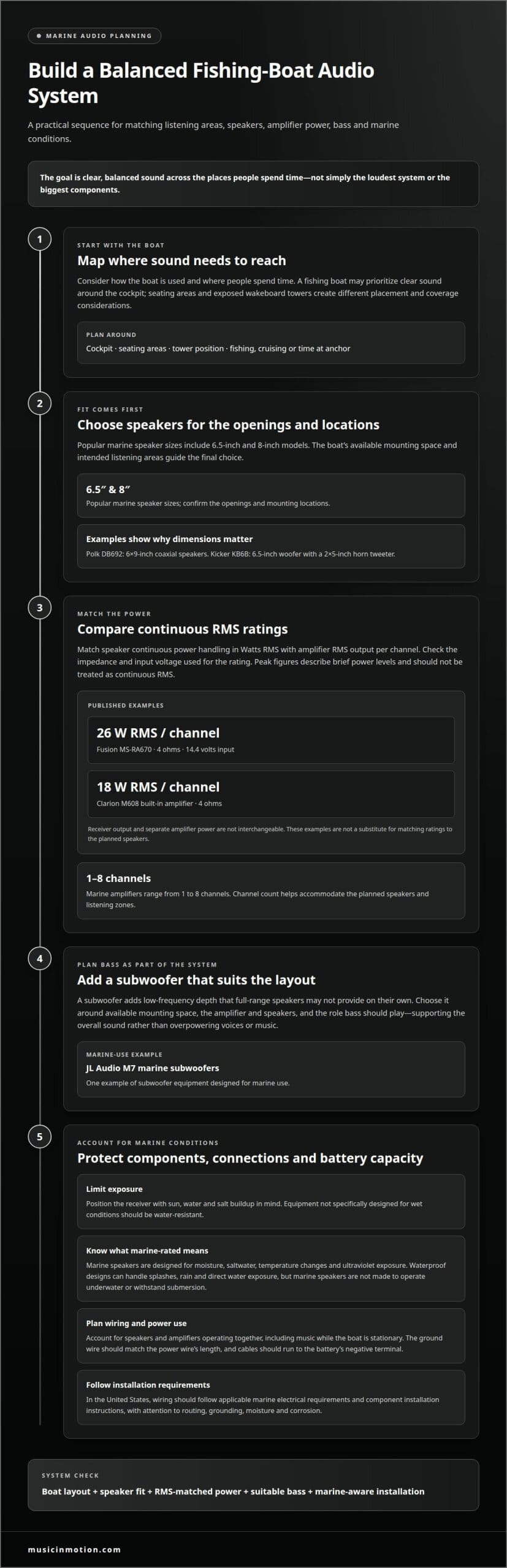
Matching begins with marine speakers’ continuous power handling in Watts RMS, not peak handling. A professional compares that rating with the amplifier’s RMS output per channel at the speakers’ impedance. This helps avoid choosing components based only on impressive peak figures. Channel count shapes the system, too: marine amplifiers range from 1 to 8 channels. The design can then accommodate the planned speakers and listening zones without asking one pair to cover the entire boat.
Amplifier Power Output
Check RMS output per channel, along with the impedance and input voltage used for the rating. For example, the Fusion MS-RA670 is rated at 26 watts RMS per channel at 4 ohms and 14.4 volts input. The Clarion M608 has a built-in amplifier rated at 18 watts RMS per channel at 4 ohms. These examples show why receiver output and separate amplifier power shouldn’t be treated as interchangeable. The professional weighs output against speaker ratings and the desired sound level before selecting the system’s feature set.
Battery Power Use
Plan battery use around the amplifier’s demand and how you’ll use the system. The power budget should account for speakers and amplifiers operating together, including whether you’ll play music while the boat is stationary. This helps set practical expectations for listening time and informs system design. Wiring matters, too: the ground wire should match the power wire’s length, and cables should run to the battery’s negative terminal. Match components and installation to manage battery demand, rather than using peak wattage as a guide.
Marine subwoofers
A marine subwoofer adds low-frequency depth that full-range speakers may not deliver on their own. In the United States, wiring should follow applicable marine electrical requirements and component installation instructions, with attention to routing, grounding, moisture, and corrosion.
Marine Subwoofer Options
A professional chooses a subwoofer based on the boat’s layout, available mounting space, and the role bass should play in the marine audio system. JL Audio M7 marine subwoofers are one example of equipment designed for marine use. The selection also needs to work with the system’s amplifier and speakers, so bass supports the overall sound rather than overpowering voices or music.
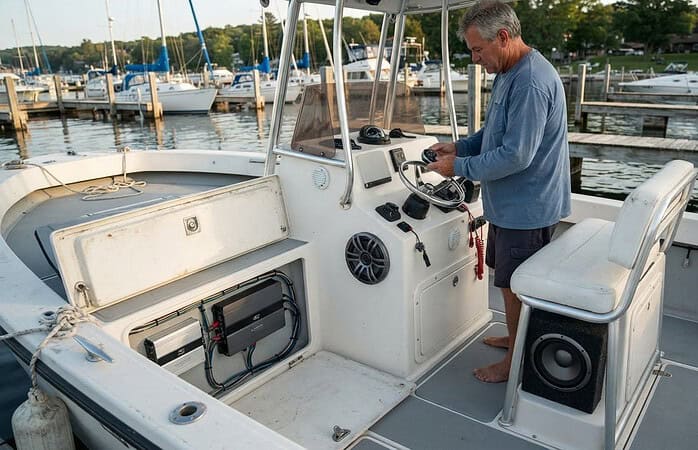
Speaker placement matters. Cockpit speakers, speakers mounted around seating areas, and tower speakers occupy different positions on a boat. Consider how each location affects sound coverage and exposure, then plan the speakers and subwoofer as one system. The result should suit how you use the boat, whether fishing, cruising, or spending time at anchor.
Installation and Exposure Advice
Place the receiver with exposure to sun, water, and salt buildup in mind. Marine audio equipment should be positioned to limit exposure, and equipment not specifically designed for wet conditions should be water-resistant. The installation should also account for connections to speakers and amplifiers, keeping controls accessible while fitting the boat’s layout.
Marine-grade construction helps equipment cope with moisture and changing temperatures. Marine speakers are designed for saltwater, moisture, temperature changes, and ultraviolet exposure; rust-resistant hardware helps address corrosion. Waterproof designs can handle splashes, rain, and direct water exposure, but marine speakers aren’t made to operate underwater or withstand submersion. A remote control may make the system easier to operate, but it doesn’t replace protected component placement or sound installation. Together, these choices help an audio system handle typical marine exposure without treating every component as submersible.
Speaker size, power, and boat compatibility
Consider mounting space, sound preferences, and the boat’s layout together. These choices determine speaker size, power needs, and how well the system covers each area.
Choosing Boat Speaker Size
Popular marine speaker sizes include 6.5-inch and 8-inch models, but the boat’s openings and mounting locations guide the final choice. A professional considers whether speakers will serve the cockpit, seating area, or an exposed wakeboard tower. For example, Polk DB692 marine-certified coaxial speakers measure 6×9 inches, while the Kicker KB6B pair has a 6.5-inch woofer and a 2×5-inch horn tweeter. Those examples show why fit and design matter alongside diameter.
Speaker Power and Boat Compatibility
A professional assesses speaker power handling alongside the source unit and marine amplifiers. RMS describes continuous power handling, while peak handling refers to brief power levels. The Poly-Planar MA905 marine speakers are rated at 200 watts; Rockville MS525B marine speakers have a 400-watt peak rating. These figures describe different measures, so they shouldn’t be compared as if they mean the same thing. The boat’s layout and desired volume help shape component choices.
Boat Speakers and Subwoofers
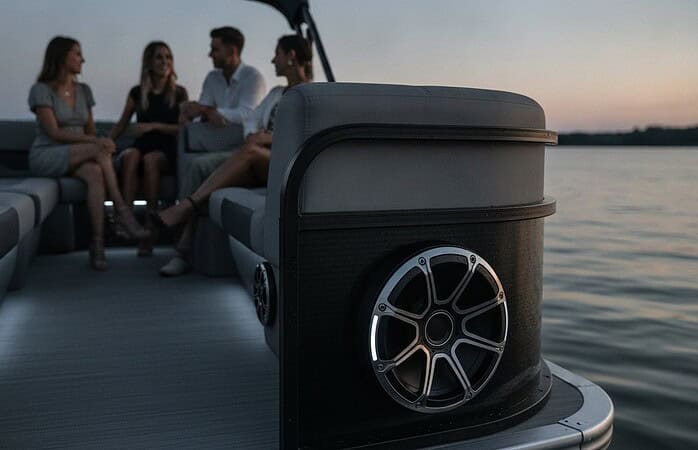
Speakers and subwoofers play different roles, so plan them together. Consider how speaker locations cover the boat and how much low-frequency support suits each listening area. Wakeboard tower speakers add another decision: their exposed position and intended audience affect the system plan. On a fishing boat, you might prioritize clear sound around the cockpit; other boats may need coverage across additional areas.
Marine construction matters, too. Components designed for marine use are built to withstand conditions such as moisture and ultraviolet exposure. Weigh these conditions alongside speaker fit, power handling, and how you use the boat to create a compatible system.
Audio for fishing boats and other boat types
A fishing boat’s layout and typical use determine where sound needs to reach. An audio system for fishing boats may focus on the cockpit, while a larger boat may need coverage across more seating and activity areas. Planning should also account for available mounting locations and outdoor use.
A factory-installed system provides a starting point for an upgrade. The source unit, speaker locations, and wiring help determine whether a design can build on existing components or needs a broader rework. For example, an audio system for fishing boats may prioritize clear cockpit sound without crowding working space. A boat used for cruising or watersports may call for coverage across more areas. Lighting and audio serve different functions, but both can influence how owners use their boats after dark.
Pre-configured boat audio bundles offer a straightforward starting point, with options built around either 2 or 4 speakers. A professional considers the number of listening areas and the boat’s layout before deciding whether either arrangement fits. A bundle provides a defined speaker count, but the complete system still needs to suit the source unit, amplification, and marine conditions. Adding marine subwoofers changes the system’s bass response and installation needs, so that choice belongs in the overall plan rather than being treated as an automatic add-on.
Boat type changes the priorities. A fishing boat may need sound focused around the cockpit, while a watersports boat may benefit from tower speakers and sound directed toward the activity area. A cruising boat may call for different coverage across seating and open deck space. Plan around intended use, existing equipment, and component placement for a system that feels integrated, not pieced together.
For a system planned around your boat’s layout and use, plan a marine audio installation with a professional.
Music In Motion
Music In Motion brings component choices together in complete marine audio installations. If you’re weighing speaker placement, amplifier power, or bass for a fishing boat, its custom installations can be tailored to the boat’s layout and how you use it. Marine audio systems and custom subwoofer enclosures support tailored setups, with the right balance guided by your priorities and existing equipment.
Bring your sound goals, boat type, and any factory-installed audio into the conversation. These details give the installation plan a practical starting point, whether you want clearer cockpit sound or fuller coverage across the boat. Contact Music In Motion to discuss your marine audio plans.
Plan the Soundtrack for Your Time on the Water
Start by defining what you want your time aboard to sound and feel like. Is music mainly for quiet hours near the fishing spot, or should it carry across the boat when friends join you? Those priorities help shape a plan around how you use the boat, rather than adding equipment without a clear purpose.
When planning an audio system for fishing boats, bring your goals, boat layout, and existing equipment into the conversation. This gives the installation plan a practical starting point and connects your listening goals with the boat itself. Music In Motion can turn those priorities into a tailored marine audio installation.
Contact Music In Motion to discuss what you’d like to hear on the water. A well-planned system can make every outing feel more like yours.
Frequently Asked Questions
What features can a professional recommend in a marine audio system for a fishing boat?
Choose a setup based on where you listen and what you want to hear. If you mainly use the cockpit, the plan may focus on sound there; a boat with several gathering areas may need broader speaker coverage. Other decisions include whether to add an amplifier or subwoofer and which marine audio equipment suits the exposure aboard.
What is the difference between marine-rated and regular car audio equipment?
Marine-rated audio equipment is designed for conditions common on boats, including moisture, salt, sunlight, and changing temperatures. Marine speakers are intended for water exposure, but that doesn’t mean they can be submerged or used underwater. Regular car audio equipment isn’t necessarily built for those marine conditions. The professional considers where each component will sit and the exposure it will face.
How can a professional determine how many speakers and how much amplifier power a fishing boat needs?
Start with the boat’s layout and listening areas, then plan speaker coverage around them. A boat with separate cockpit and seating areas may need a different arrangement from one with a single listening area. Select an amplifier based on the speakers’ continuous RMS ratings and your desired listening level, not peak figures alone.
How can a professional connect a boat stereo to Bluetooth, a phone or a fish finder?
First identify the receiver’s connection options and the ports or outputs on the phone or fish finder. Bluetooth works when the stereo and device support compatible wireless pairing; a wired connection depends on matching connections. Fish finders vary in their available audio connections, so the installation plan must account for the specific output and the stereo’s inputs.
What safety and wiring standards apply to marine audio installations in the United States?
In the United States, wiring should follow applicable marine electrical requirements and component installation instructions, with attention to routing, grounding, moisture, and corrosion. The ground wire should match the power wire’s length, and cables should run to the battery’s negative terminal.
Which marine speakers and stereos are best for open boats exposed to spray and sun?
Choose marine-grade speakers designed for salt, moisture, temperature changes, and ultraviolet exposure, with rust-resistant hardware. Protect the stereo from sun, water, and salt buildup; equipment not designed for wet conditions should be water-resistant. Marine speakers can handle splashes and direct water exposure but are not submersible.