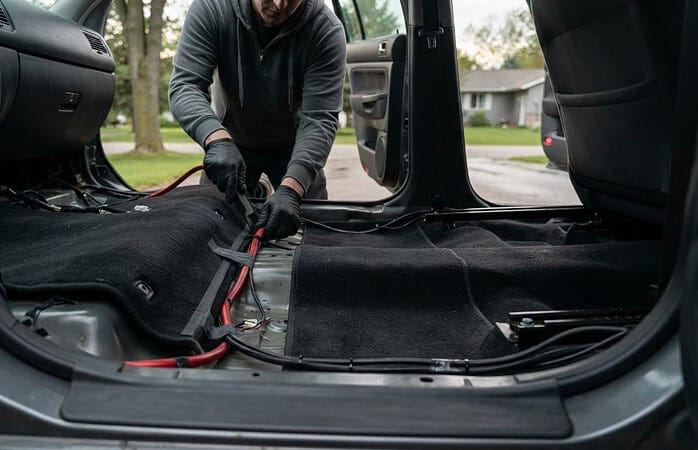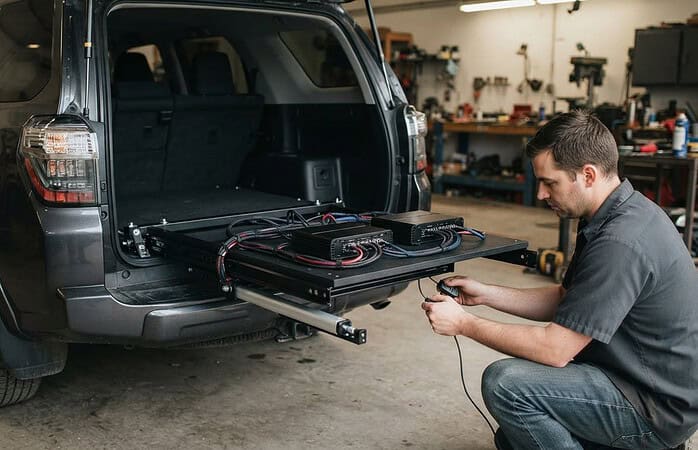
More amplifier channels don’t automatically mean more output. The benefits of bi-amping car speakers depend on how the signal is divided: separate amplifier channels power different speaker sections, while splitting frequencies before amplification can reduce strain on each channel. But bi-amping doesn’t automatically make a speaker active or guarantee louder, better sound.
It’s reasonable to expect a second amplifier to change your system’s performance. The key is understanding what bi-amping actually does and whether your speakers and crossover setup support it. This guide explains how bi-amping works, when it can be useful, and how it differs from bi-wiring.
Passive bi-amping keeps the speaker’s internal crossover in place, while true active bi-amping divides frequencies before amplification. Understanding that distinction makes it easier to judge what changes, what doesn’t, and whether this setup makes sense for your car audio system.
Key Takeaways
- Separate passive bi-amping from active bi-amping by identifying where the crossover divides the signal.
- Understand how bi-amping differs from bi-wiring, even when both use separate speaker cable runs.
- Check whether a speaker’s inputs and crossover design support separate amplifier channels before planning a setup.
- Follow the signal path from crossover to amplifier to speaker section to see what changes and what stays the same.
But wait – isn’t this making my speakers active?
No. Bi-amping describes how amplifier channels feed speaker sections; active describes where the crossover divides frequencies. Identify the crossover’s position before deciding what changes.
-
Distinguish Passive and Active Systems
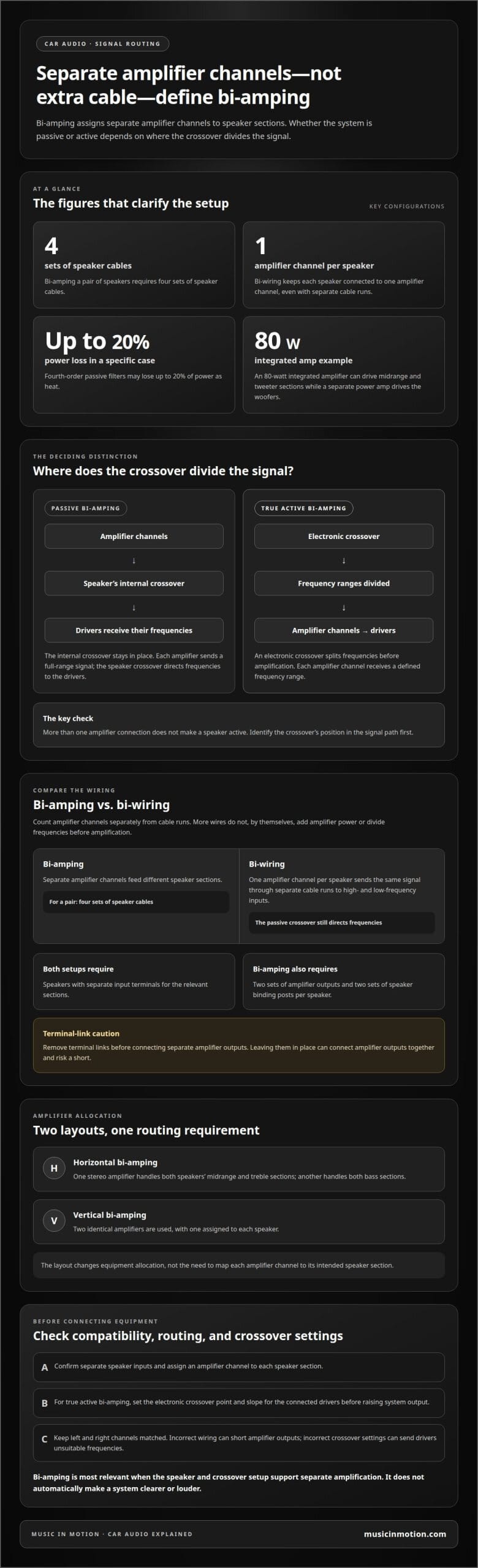
Trace the signal path from amplifier to speaker. In a passive system, the speaker’s internal crossover divides frequencies after amplification and directs them to the appropriate drivers. An active system uses an electronic crossover before the amplifiers, so each amplifier channel receives a defined frequency range. The speaker’s drivers then receive the frequencies intended for them, rather than a full-range signal. A speaker doesn’t become active simply because more than one amplifier is connected.
-
Compare Passive and Active Bi-Amping
Check whether the crossover remains inside the speaker. Passive bi-amping keeps that internal network and sends a full-range signal from each amplifier; the crossover still directs frequencies to the drivers. True active bi-amping splits frequencies before amplification with an electronic crossover. Two amplifiers alone don’t provide the same advantages. A passive crossover also dissipates power the drivers don’t need as heat; fourth-order filters may lose up to 20% of power. Bypassing the internal crossover requires work inside the speaker and voids its warranty.
- Distinguish bi-amping from bridging before choosing an amplifier setup. Bi-amping uses separate amplifier channels for different speaker sections. Bridging combines amplifier channels to drive one speaker load; it doesn’t divide frequencies between speaker sections. Because the output and wiring arrangements differ, bridging isn’t a substitute for a crossover-controlled bi-amp system.
- Compare bi-amping with a speaker upgrade or subwoofer based on the sound you want to change. A subwoofer addresses low-frequency output, while different speakers can change the sound across their operating range. Bi-amping is most relevant when the speaker and crossover setup support separate amplification; it won’t automatically make the system clearer or louder.
- Plan the setup around the equipment and installation work. A car-audio bi-amping setup has no single typical cost; the price depends on the equipment, wiring, crossover configuration, and installation requirements, and is given after a quote request.
Bi-amping versus bi-wiring
Trace the cable path from amplifier to speaker. The key difference is whether the signal gets separate amplification, not simply how many wires you see.
- Identify the amplifier outputs first. Bi-wiring uses one amplifier channel per speaker, then sends the same signal through separate cable runs to the speaker’s high- and low-frequency inputs. The speaker’s passive crossover still directs frequencies to its drivers. Bi-amping instead assigns separate amplifier channels to different speaker sections, changing the amplification arrangement rather than just the wiring.
- Count cable runs and amplifier channels separately. Bi-amping a pair of speakers requires four sets of speaker cables, while bi-wiring also uses separate cable runs but keeps each speaker connected to one amplifier channel. That distinction matters: extra wire alone doesn’t add amplifier power or divide frequencies before amplification.
- Inspect the speaker terminals and links before choosing either setup. Both methods require speakers with separate input terminals for the relevant sections. Bi-amping needs two sets of amplifier outputs and two sets of speaker binding posts per speaker. Remove the terminal links before connecting separate outputs; leaving them in place can connect amplifier outputs together and risk a short.
- Match the setup to the speaker and your listening goals. Bi-wiring changes the cable route, while bi-amping adds amplifier channels for separate speaker sections. A speaker with three or more ways may benefit when deep bass is isolated to one amplifier, particularly during loud playback. Neither approach automatically makes the speaker active, and bi-wiring alone doesn’t provide the separate frequency control of an electronic crossover.
- Compare the complete signal path before committing. For example, an 80-watt integrated amplifier can drive a speaker’s midrange and tweeter while a separate power amplifier drives its woofers. That is bi-amping because separate amplifiers handle different sections, regardless of the number of cables. Trace each cable back to its amplifier output to distinguish this from bi-wiring.
How speaker bi-amping works
Map each amplifier channel to a speaker section before connecting equipment. Incorrect wiring can short amplifier outputs, while incorrect crossover settings can send drivers unsuitable frequencies. Whether bi-amping car speakers benefits your system depends on compatible speakers, signal routing, and careful setup.
- Confirm the speaker’s input layout and plan the channel assignments. Each speaker section needs its own amplifier channel, with two sets of amplifier outputs and binding posts per speaker. For a pair, plan four speaker-cable runs. Keep the left and right channels matched so each stereo signal reaches the intended speaker.
- Choose a horizontal or vertical amplifier layout. In horizontal bi-amping, one stereo amplifier handles both speakers’ midrange and treble sections, while another handles both bass sections. In vertical bi-amping, two identical amplifiers are used, with one assigned to each speaker. The layout changes equipment allocation, not signal-routing requirements.
- Set the electronic crossover before raising the system’s output. In true bi-amping, it divides the signal before amplification, sending the intended frequencies to each channel. Set its crossover point and slope for the connected drivers. A woofer and tweeter need different frequency ranges, so incorrect settings can produce an uneven response.
- Match amplifier gain across the speaker sections. Different gain levels can make one driver louder and shift the system’s tonal balance. Don’t choose different amplifier types or power levels just to tune separate sections. Splitting frequencies before amplification can reduce amplifier stress, but it doesn’t automatically double total system power.
- Check polarity, channel routing, and the full frequency range. If the system uses DSP, separate driver delays can help time-align sound at the listening position. Incorrect impedance matching can affect loudspeaker power and frequency response, according to the U.S. Government Publishing Office. Decide whether bi-amping car speakers benefits your setup by confirming the crossover, amplifier channels, and speaker connections work together before judging the result.
Can any car speakers be bi-amped, or do they need separate crossover inputs?
Start with the speaker terminals and crossover layout. Bi-amping suits speakers designed with separate inputs for their high- and low-frequency sections.
- Read the speaker markings and wiring diagram. A compatible speaker has two sets of input terminals, with one pair serving each crossover section. Removing the terminal links must leave the sections electrically separate. A single input pair doesn’t provide separate connections for bi-amping.
- Trace each input back to its crossover section before planning amplifier channels. One channel must feed the high-frequency section and another the low-frequency section. The speaker’s passive crossover still routes frequencies to the intended drivers unless the system is configured for active operation.
- Inspect the terminal links with the system powered off. These links connect the input pairs for ordinary single-wire operation. Remove them before connecting separate amplifier outputs. Leaving them in place can join the outputs and create a risk of a short circuit.
- Check the crossover design, not just the number of terminals. Bi-amping is suitable when the speaker has separate high-pass and low-pass sections that disconnect from each other once the links are removed. Extra terminals alone don’t prove the speaker supports this arrangement. A wiring diagram can show which input serves each section.
- Choose a different system plan if the speaker has only one input pair or a crossover that keeps its sections connected. Don’t bypass internal crossover components or send an amplifier output to a driver without the intended frequency control. For speakers designed for bi-amping, map each channel to its labeled input and confirm the wiring before powering up.
To match speaker inputs with an amplifier and crossover plan, plan a compatible car-audio upgrade.
Music In Motion
Music In Motion can help turn your bi-amping questions into a practical car audio plan. We consider whether your speakers have separate crossover inputs, how to assign amplifier channels, and whether bi-amping fits your listening goals. Depending on your speakers and desired sound, a different car audio upgrade may be a better fit.
With car audio upgrades and custom installations, the focus is the complete result: compatible components, correct connections, and a system that works together. If you’re also looking to shape low-frequency output, a custom subwoofer enclosure may be relevant to the setup. The right direction starts with understanding what your current speakers and equipment can support.
Contact Music In Motion to discuss your car audio system and the changes you want to make.
Plan your next audio upgrade around the sound you want
The benefits of bi-amping car speakers matter most when the setup suits your speakers, amplifier channels, and listening priorities. Treat installation as a complete system decision, not simply an opportunity to add equipment. A well-planned system can leave room for future changes while keeping the sound you want in the vehicle in focus.
Music In Motion works on car audio upgrades and custom installations, as well as marine audio systems. If you’re weighing bi-amping against another way to shape your sound, we can help you consider the system as a whole and choose a practical direction for your vehicle.
Contact Music In Motion for help planning an audio setup that fits your goals. The right next step is a clear one: build around the listening experience you want.
Frequently Asked Questions
What is bi-amping?
Bi-amping uses separate amplifier channels for different speaker sections. For example, one channel can serve the woofer section while another serves the higher-frequency section. The speaker and signal path must support separate inputs; simply adding an amplifier isn’t enough. The term describes the amplification arrangement, not a guarantee of louder or clearer sound.
Why bi-amp your speakers?
Bi-amping can help reduce amplifier stress when separate channels handle different frequency ranges, especially during demanding playback. It may also let a system’s crossover and processing control each speaker section independently. For example, a DSP-equipped setup can adjust driver timing. These advantages depend on suitable equipment and careful setup; adding channels without appropriate signal routing won’t provide the same control.
What does vertical and horizontal bi-amping mean?
Vertical and horizontal describe how amplifiers are assigned, not different types of speakers. With horizontal bi-amping, one stereo amplifier powers both speakers’ bass sections, and another handles both speakers’ midrange and treble. With vertical bi-amping, each speaker gets its own amplifier. Using identical amplifiers in the vertical arrangement helps keep the left and right sides consistent.
What will I hear when I bi-amp?
You hear the result of the complete system, including its speakers, crossover settings, amplifiers, and tuning. A properly configured active system gives an installer control over frequency division and driver timing, which may affect balance and presentation. Bi-amping alone doesn’t guarantee a sonic change. Compare the system at matched listening levels so increased volume isn’t mistaken for better sound.
What’s the difference between bi-amping and bi-wiring?
Bi-wiring sends the same amplifier channel’s signal to a speaker through separate cable runs for its frequency sections. Bi-amping assigns separate amplifier channels to those sections. For example, adding another wire while keeping the same amplifier output is bi-wiring, not bi-amping. Either setup requires suitable separate speaker inputs and correctly handled terminal links.
What is bi-amping car speakers and how does it work?
Bi-amping car speakers means assigning separate amplifier channels to different speaker sections, such as the woofer and tweeter. First, the speaker needs separate crossover inputs designed for this arrangement. Then the signal path and amplifier outputs must match those inputs. In an active setup, an electronic crossover divides frequencies before amplification; passive bi-amping retains the speaker’s internal crossover.