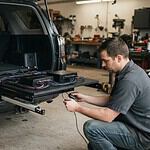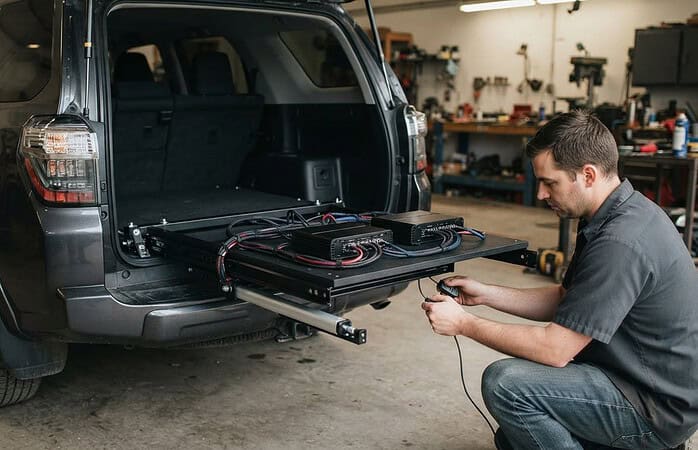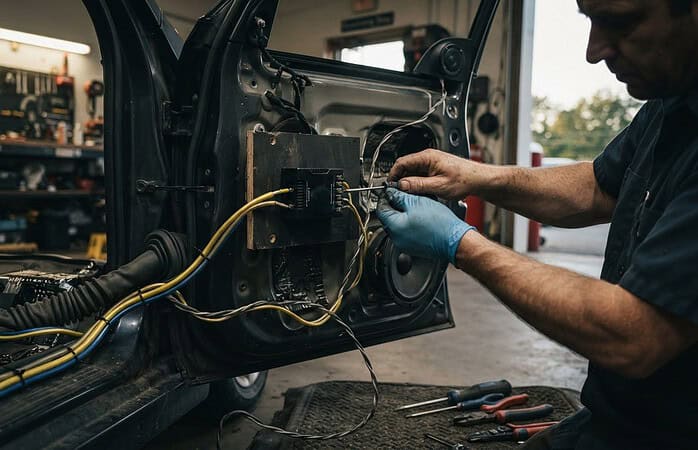
Start with two separate routes: run the amplifier power wire beneath the carpet and trim along one side of the vehicle, then route RCA cables along the other. This is the practical answer to how to hide car audio wiring while helping reduce the chance of interference between power and audio signals.
You’re right to want the cables out of sight. Loose wiring can clutter the cabin, but hiding it well also means choosing a route that keeps cables organized and avoids pinching them beneath trim or seats. A common approach is to follow the floor near the door rocker panel for the power wire, using the vehicle’s trim and carpet to conceal it.
Plan the routes, lift interior trim carefully, and secure the wires while keeping speaker wiring apart from power cables. Before replacing panels and carpet, inspect the full route to help ensure the installation stays neat and the audio system can perform as intended.
Key Takeaways
- Plan the amplifier power wire’s path along the vehicle’s trim before lifting carpet or removing panels.
- Keep power, RCA, and speaker cables on separate routes to help reduce unwanted audio noise.
- Use care around door panels and the firewall so wiring stays concealed without being pinched or strained.
- For a clean, integrated result, Music In Motion offers car audio upgrades and custom installations tailored to the vehicle.
Routing amplifier power wire under carpet and trim
Plan a concealed route along the floor near the door rocker panel. Keep the amplifier power wire away from moving parts and places where trim could pinch it.
-
Gather Concealment Tools and Materials
Before lifting panels, gather a trim removal tool, flashlight, wire loom, electrical tape, and cable ties. Use the flashlight to inspect the path beneath the carpet and make sure the wire can lie flat. Hiding a wire alone doesn’t determine warranty coverage or safety inspection results; those can depend on the vehicle’s terms and applicable inspection requirements.
-
Check for Wiring Safety Risks
Before laying the cable, check the route for airbag components, seat belts, heat sources, and moving parts. Keep wiring clear of seat tracks and belt anchors, and never run it across an airbag deployment area. Look beneath the dashboard and beside the rocker panel for anything that could rub, crush, or heat the insulation.
-
Tuck Wiring Beneath Carpet and Trim
Carefully lift the door-sill trim and ease back enough carpet to place the power wire along the floor near the rocker panel. Follow an existing edge where practical instead of crossing open footwell space. In a Mark VIII, remove the lower rear seat cushion by pushing it rearward and lifting it clear of its floor hooks to access the rear carpet.
-
Secure Wires Against Rattles and Shorts
Secure the wire with cable ties or suitable automotive tape, holding it in place without crushing the insulation. Add wire loom where the cable passes an edge that could cause abrasion. Before replacing trim, check that no wire is trapped beneath a clip, seat bracket, or carpet edge. Loose cables can rattle, while damaged insulation can expose conductors and create a short.
A forum member recommends running amplifier power wire beneath the carpet along the driver’s-side floor near the door rocker panel. The carpet covers the cable, while the rocker panel helps identify the route. Keep the wire on that path and make sure it remains clear before replacing the carpet and trim.
Separating power and RCA cables to reduce interference
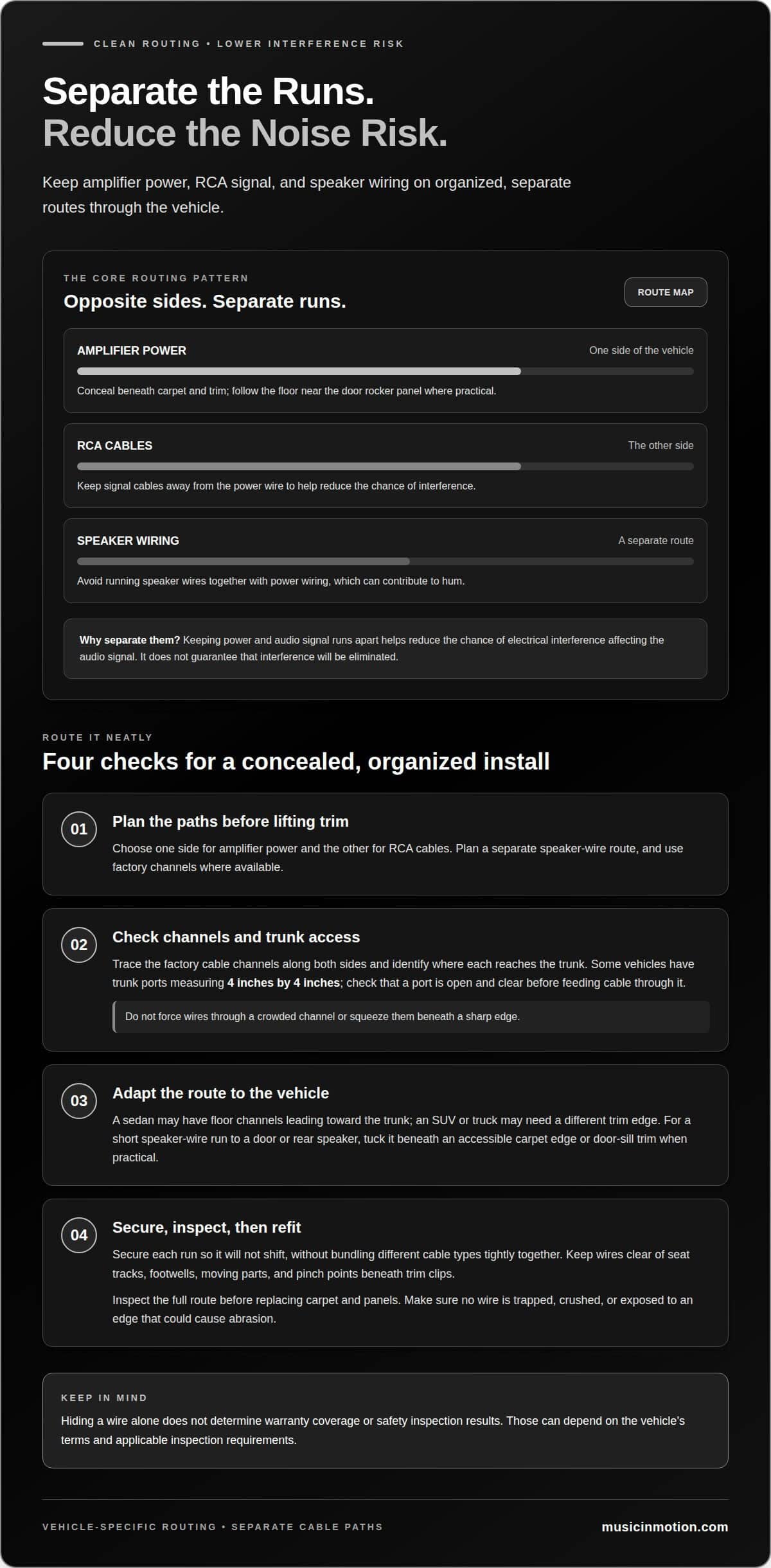
Plan separate routes for amplifier power, RCA, and speaker wires. Where available, factory channels can help keep each cable hidden and organized.
-
Use Factory Channels and Trunk Ports
Trace the factory cable channels along both sides of the vehicle, then identify where each route reaches the trunk. Some vehicles have trunk ports measuring 4 inches by 4 inches, which can provide a passage into the cargo area. Check that a port is open and clear before feeding cable through it. Avoid forcing wires through a crowded channel or squeezing them beneath a sharp edge.
-
Keep Power and RCA Cables Apart
Run the amplifier power wire along one side of the car and RCA cables along the other. Separating them helps reduce the chance of electrical interference affecting the audio signal. Keep speaker wires apart from power wiring as well, since running them together can contribute to hum. Use separate factory channels where available, and avoid bundling different cable types into one tight run.
- For speaker wires running to a door or rear speaker, tuck them beneath an accessible carpet edge or door-sill trim. This can hide a short run without removing larger interior panels. Keep the wire clear of seat tracks and footwells, and don’t trap it under a trim clip. If you need to lift a panel, route the cable behind its edge and refit the panel without pinching it.
- Adapt the path to the vehicle’s layout. A sedan may offer floor channels leading toward the trunk, while an SUV or truck may require a route along a different trim edge. Follow existing channels where practical, keep power and signal cables on opposite sides, and secure each run so it won’t shift. A vehicle-specific car audio installation can account for trim and cable routing together.
How to remove car door panels and hide speaker wire safely
Run speaker wire through the door’s existing wiring path, not across exposed hinges. Carefully remove the panel, then secure the cable away from window movement and door hardware.
- Gather a plastic trim tool, screwdriver, flashlight, and containers for screws and clips. Check the vehicle’s owner information for panel-removal details, since fastener locations vary by model. Keep metal tools away from visible trim to avoid scratches, and don’t pull against a panel that still feels attached.
- Inspect the door before removing anything. Look for screw covers, handles, switches, and airbag labels, and note their positions. If the panel area contains airbag components or unfamiliar wiring, don’t disconnect or disturb them. A qualified installer can manage access where the speaker route passes near those components.
- Remove exposed fasteners and release the panel clips with a plastic trim tool. Work gradually around the panel edge rather than pulling hard on one corner. Lift the panel only after the clips are free, and support it while disconnecting accessible switch connectors. Don’t tug on wires or let the panel hang from a connector.
- Feed speaker wire through the door’s existing rubber wiring boot, where the factory harness passes between the body and door. Use the available path without piercing or stretching the boot. Inside the door, keep the wire clear of the window glass, regulator, latch rods, and hinge movement. Raise and lower the window to confirm the route stays clear.
- Secure the wire to a stable part of the door with suitable ties or tape, leaving enough slack for normal door movement. Keep it away from sharp metal edges and drainage openings. Before reinstalling the panel, reconnect switches and check that the speaker works. Press the panel clips back into place, replace each screw, and test the window and door handle.
How to route amplifier power cable through a car firewall and hide it
Use an existing firewall grommet to route amplifier power cable into the cabin. Plan the path on both sides before feeding the wire through, then conceal the interior run beneath trim.
- Find an existing rubber grommet passing through the firewall, the barrier between the engine bay and passenger cabin. Use a flashlight to check both sides and confirm the opening leads to a clear route. Avoid drilling into the firewall, since wiring, components, or other obstructions may be behind it.
- Prepare the cable before threading it through the grommet. Protect its end from snagging, then feed it gently through the opening without stretching or tearing the rubber. If the grommet is crowded or the cable won’t pass freely, stop rather than forcing it against existing wires.
- After routing, inspect the engine-bay section and cabin entry. Keep the power cable away from hot or moving components, sharp edges, and existing wiring that could be disturbed. Check that the grommet still fits closely around the cable to help protect it from abrasion.
- Guide the cabin-side cable beneath the lower dashboard and along the door-sill trim toward the amplifier. Keep it clear of pedals, seat tracks, and other moving parts. Secure it so it can’t sag into the footwell or get trapped beneath a trim clip when panels are replaced.
- Before refitting trim, trace the entire route from the firewall to the amplifier and check for tight bends, pinched sections, or exposed cable. Make sure the wire stays in place as you press the panels back. If the firewall opening is inaccessible or the route crosses crowded components, leave the job to an experienced installer.
For a clean, vehicle-specific power-cable route, plan your amplifier installation with the installation team.
Flat speaker cables can run under throw rugs or carpet to keep them out of sight. For a wall route, speaker cables can be installed inside walls, with wall plates near speakers and equipment. Cable clips with integrated nails can secure speaker cables to room baseboards, while cable raceways or conduits painted to match the wall can conceal them. A forum member recommends routing car power wire on one side and RCA cables on the other to help avoid audio interference, and keeping speaker wires separate from power wires to avoid hum.
Music In Motion
Music In Motion integrates carefully planned wiring into complete car audio installations. When routing around door panels, factory channels, or a firewall feels complicated, a custom installation can account for the vehicle’s layout and help keep the finished system neat and functional.
For a broader system refresh, car audio upgrades can bring wiring, speakers, and amplification together in one coordinated project. The right approach depends on the vehicle, equipment, and listening goals. Contact Music In Motion to discuss your car audio wiring and installation needs.
Make Your Next Audio Upgrade Feel Seamless
Knowing how to hide car audio wiring is a useful starting point, but the finished result depends on how the cable routes work with your vehicle’s interior and audio components. A thoughtful installation makes the system feel integrated rather than added on. For a project beyond your car, Music In Motion also offers Marine Audio Systems.
Music In Motion can help shape the next step around your vehicle and listening goals, whether you’re planning a new setup or refining an existing one. Contact Music In Motion for help and discuss an installation that fits your plans. A clean cabin and a great listening experience can go hand in hand.
Frequently Asked Questions
Where to run wires for amp to hide them?
Run the amplifier power wire along a protected floor edge, with the amplifier’s location guiding the route. Before lifting trim, trace the path from the battery area to the amp and note where the cable enters or exits the cabin. Avoid exposed footwell space and places where cargo could snag the wire. Keep the route continuous and accessible enough to inspect before replacing panels.
Does hiding car audio wiring affect a vehicle warranty or safety inspection
Hiding the wiring alone doesn’t determine warranty coverage or safety inspection results; these can depend on the vehicle’s terms and applicable inspection requirements.