Why does your favorite album feel like a front-row experience at the venue, yet sounds like a muffled radio broadcast once you’re behind the wheel? Most drivers accept that car audio is just “good enough,” but we know the frustration of music that feels stuck in the floorboards or bass that sounds disconnected from the melody. It’s disappointing when turning up the volume leads to harsh distortion rather than the clear, soaring vocals you expect from a professional performance.
We’ve spent decades perfecting the science of spatial audio to solve these exact pains. You’re about to discover exactly how to make a car stereo sound like a live concert by using high-end components and expert tuning to create a “phantom center” right on your dashboard. This isn’t just about louder speakers; it’s about a complete sonic transformation that places the singer directly in front of you.
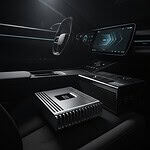
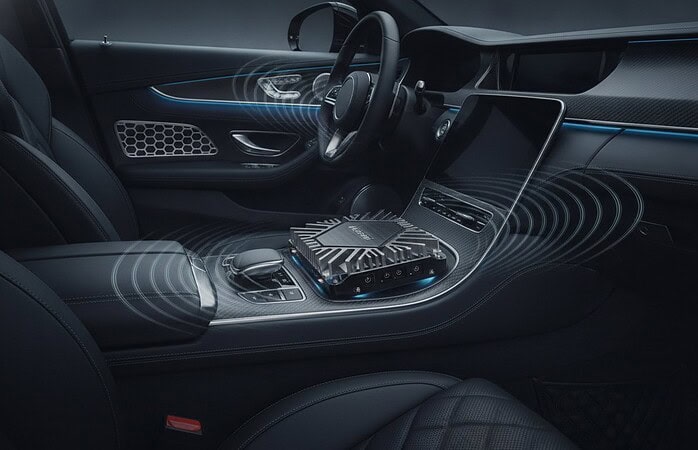
This 2026 guide covers the professional Digital Signal Processing (DSP) techniques, custom subwoofer enclosures, and acoustic treatments required to achieve total clarity. We’ll walk you through how our team uses advanced hardware like the Goldhorn DSPA series to move the soundstage from your doors to your dash, ensuring every kick drum hit feels like a physical heartbeat.
Key Takeaways
- Master the concepts of soundstage and imaging to transform your dashboard into a virtual stage where you can pinpoint every instrument.
- Identify why external amplification and premium speaker materials are non-negotiable for recreating the high-energy dynamic peaks of a real performance.
- Learn how to make a car stereo sound like a live concert by using Digital Signal Processing (DSP) to fix time delays and interior acoustic reflections.
- Reduce your vehicle’s noise floor with professional acoustic treatments that stop door panels from rattling and let clear vocals shine through.
- Discover how custom fabrication, including specialized speaker pods and subwoofer enclosures, creates a perfect fit without sacrificing your vehicle’s utility.
Defining the “Live Concert” Experience in a Vehicle
When we talk about how to make a car stereo sound like a live concert, we’re really discussing the concept of spatial realism. A true concert experience isn’t just about raw volume; it’s about the physical placement of sound. We define this through the “soundstage,” which describes the perceived width, depth, and height of your music. In a high-performance system, the music shouldn’t feel trapped inside your doors. Instead, it should feel like it stretches from one side of the hood to the other, with layers of depth that make the drummer sound like they’re sitting several feet behind the lead singer.
Imaging is the partner to the soundstage. This is the technical ability of your system to let you pinpoint exactly where each musician is standing. If you close your eyes, you should be able to “see” the bassist to the left and the rhythm guitarist to the right. The crown jewel of great imaging is the “phantom center.” This is a psychoacoustic illusion where the lead vocals sound like they’re coming from a physical speaker sitting right in the middle of your dashboard, even though there isn’t one there. It creates the sensation that the artist is performing specifically for you, standing right on your hood.
Finally, we focus on dynamic range. This is the dramatic difference between the quietest whisper of a piano key and the sudden, explosive hit of a kick drum. Without enough power and control, these peaks sound compressed or distorted. A concert-grade system preserves that energy, giving you the “snap” and impact that makes live music feel so alive.
Why Factory Systems Fail to Deliver the Stage
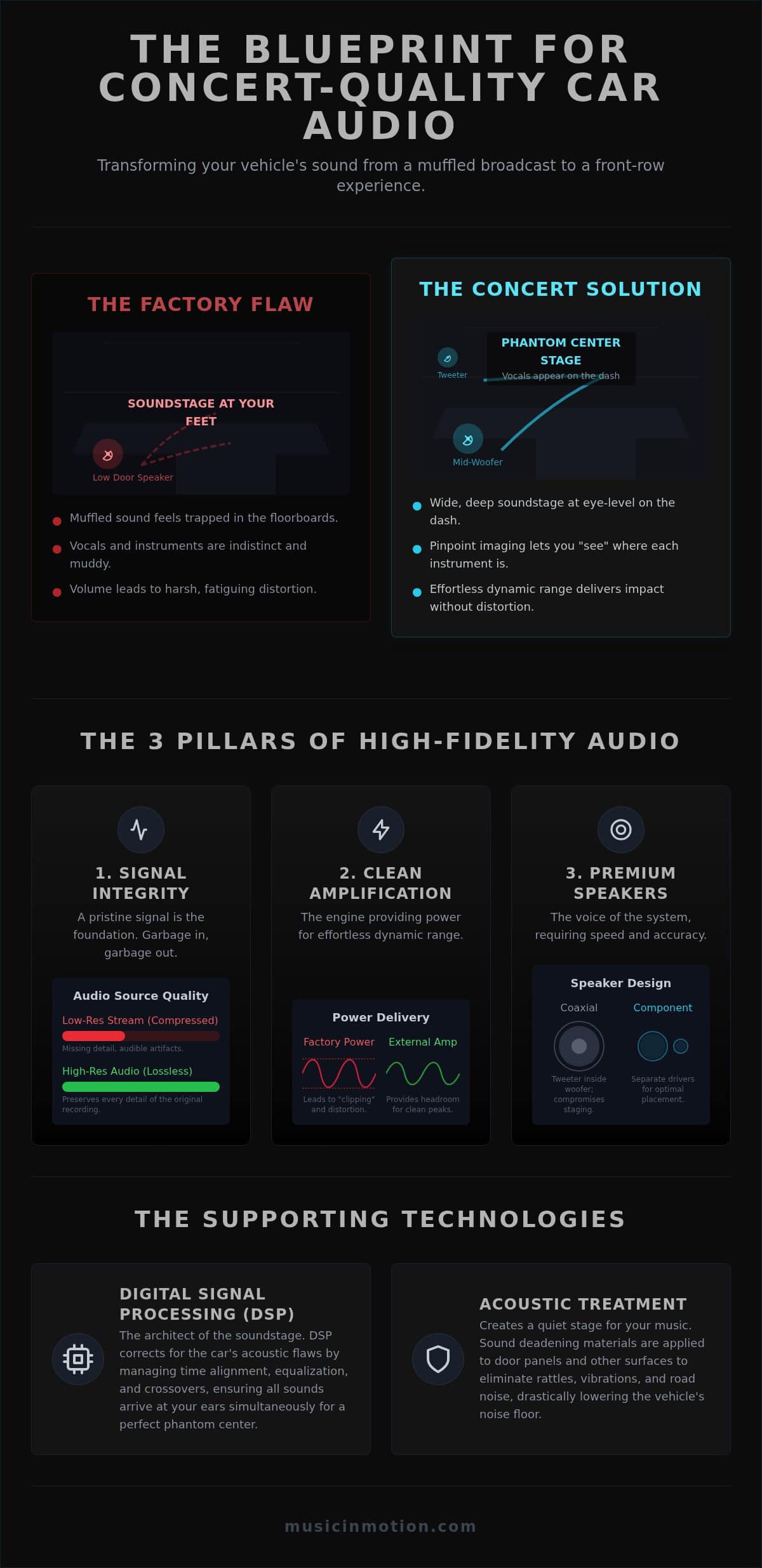
Most stock systems struggle because of poor speaker placement and basic Vehicle audio components that prioritize cost over performance. Factory speakers are usually tucked into the lower corners of the doors, which pulls the soundstage down toward your ankles. This makes the music feel muddy and distant. Additionally, the interior of a car is a hostile acoustic environment. Large glass windows reflect high frequencies while plastic panels vibrate and absorb mid-bass energy, destroying the clarity needed for a realistic stage.
The Goal: Replicating the “Front Row” Seat
Our goal is to lift that sound from the floor and place it at eye level. We want you to feel like you’ve moved from the parking lot to a front-row seat. This requires a perfect tonal balance where no single frequency overwhelms the others. Whether it’s a delicate violin or a heavy bass line, every element should be clear and distinct. We focus on achieving this impact without a hint of distortion, ensuring that the “finished result” is a smooth, powerful, and immersive listening experience every time you turn the key.
The Three Pillars of Concert-Quality Car Audio
To understand how to make a car stereo sound like a live concert, we have to look at the hardware as a cohesive team. It starts with signal integrity. If you feed a low-quality, compressed stream into a high-end system, you’ll only hear the flaws and artifacts more clearly. We prioritize high-resolution sources to ensure every detail of the original recording is preserved before it ever reaches an amplifier. This foundation allows the rest of the system to shine.
External amplification is the engine of the system. Factory head units typically provide very little power, which leads to signal clipping and audible distortion when you try to reach concert volumes. Clean power provides the necessary headroom for those sudden dynamic peaks, such as a snare hit or a vocal crescendo, without losing clarity. This ensures the music stays effortless and open, even when the volume is turned up.
We move away from generic paper cones found in factory setups. Premium materials like silk, carbon fiber, and treated metals offer the rigidity and speed required to reproduce complex music accurately. These materials don’t flex or distort under pressure, maintaining the “finished result” we promise our clients. Proper Acoustic treatment and sound deadening ensure that your door panels don’t become part of the instrument, keeping the focus entirely on the music.
Component Speakers vs. Coaxial Designs
Coaxial speakers place the tweeter in the center of the woofer, which is convenient for installation but poor for staging. Component systems separate these drivers, allowing us to place the tweeters higher up, near eye level, to lift the soundstage. The crossover acts as a traffic controller, directing high frequencies to the tweeter and lower ones to the woofer. A component system serves as the structural foundation of precise acoustic imaging by physically separating the high and low frequency drivers.
The Importance of a Dedicated Subwoofer
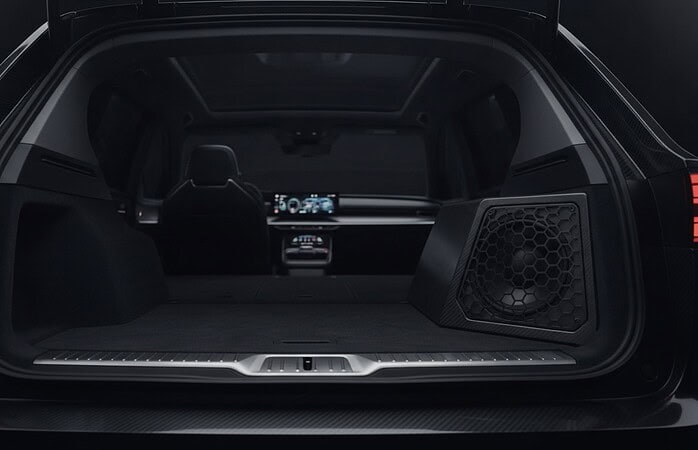
A live show has a physical presence you can feel in your chest. Small door speakers simply cannot move enough air to reproduce those deep, low-end frequencies accurately. A dedicated subwoofer fills this gap, but the goal is accuracy rather than just “loudness.” We want the bass to sound like a kick drum sitting on the stage, not a generic rumble coming from the trunk. For those looking to maximize performance while keeping a factory look, our custom car audio fabrication techniques allow for seamless integration into your vehicle’s existing lines. If you’re ready to hear the difference for yourself, our team at Music In Motion is here to help design your ideal setup.
Digital Signal Processing (DSP): The Architect of the Stage
If speakers are the musicians and amplifiers are the energy, the Digital Signal Processor (DSP) is the conductor. In the quest for how to make a car stereo sound like a live concert, the DSP is your most powerful tool. It allows us to overcome the physical limitations of a vehicle interior by digitally manipulating every aspect of the sound signal before it reaches your ears. Modern processors, like the Goldhorn DSPA series, provide a level of control that was once reserved for professional recording studios.
One of the primary functions of a DSP is digital equalization. Every car has a unique acoustic signature that can interfere with your listening experience. We use professional measurement microphones to identify these issues, then use the DSP to flatten the response for a natural, balanced sound. Common cabin issues we address include:
- Hard glass surfaces that reflect and sharpen high frequencies.
- Soft upholstery and plastic panels that absorb mid-bass energy.
- Interior dimensions that create resonance and boomy notes.
We always recommend an active system over a passive one for high-end builds. In an active setup, every single speaker has its own dedicated amplifier channel and its own set of instructions from the DSP. This gives us surgical control over the crossover points, levels, and timing of every tweeter and woofer in the car. It is the only way to achieve the center image illusion, where the music feels like it’s floating in front of you rather than coming from the doors.
Solving the “Driver’s Seat” Problem
The biggest challenge in a car is that you sit off-center. You’re naturally closer to the left speakers, meaning that sound hits your left ear before it hits your right. This ruins the illusion of a stage. We use time alignment to add precise millisecond delays to the speakers closest to you. This synchronizes the arrival of sound at your ears, effectively centering the stage on the dashboard. If you’re starting with a factory head unit, check out our car audio upgrade for stock stereo guide to see how we integrate these processors into modern vehicles.
Fine-Tuning for Different Genres
A live jazz performance in a small club sounds very different from a rock concert in a stadium. A DSP allows us to create custom presets for different genres or listening preferences. We can tune one setting for the raw energy of rock and another for the delicate detail of acoustic music. The role of the professional tuner is critical here. We don’t just set the numbers; we use our ears to ensure the finished result captures the soul of the music. In 2026, a DSP isn’t just an add-on. It’s the single most important upgrade for anyone serious about sound.
Acoustic Treatment: Creating a Quiet Stage for Your Music
A world-class concert hall is meticulously designed to be silent, ensuring that every note reaches the audience without interference. Your vehicle, however, is a chaotic mix of wind, engine, and road noise. If you want to know how to make a car stereo sound like a live concert, you must first address the environment itself. Acoustic treatment is the process of turning your car’s cabin into a controlled listening room by lowering the noise floor and managing vibrations. Without this step, even the most expensive speakers will struggle to overcome the background hum of the road.
We focus on vibration control to stop door panels and trim pieces from rattling along with your music. When a speaker moves, it creates energy. If that energy is transferred into the thin metal of your car doors, it creates unwanted noise that muddies the soundstage. By using high-quality butyl rubber sheets, we mass-load these panels to keep them still. This ensures the speaker energy goes into the air as music, rather than into the metal as a rattle. We also employ thermal and acoustic barriers to block outside noise, making the cabin feel like a high-end studio rather than a hollow shell.
Treating the Doors: The Speaker’s Cabinet
In a home audio setup, speakers are mounted in rigid, heavy cabinets. In a car, your speakers are usually mounted to a thin, hollow door. This acts like a poorly designed speaker box that vibrates and leaks sound, destroying the “finished result” of your upgrade. We use professional decoupling techniques to isolate the speaker from the door frame. Adding foam rings around the speaker face is a critical step; it seals the driver against the door panel. This directs all the sound through the grille and into your ears rather than letting it get lost inside the door cavity.
Reducing Road and Wind Noise
A lower noise floor directly increases your system’s perceived dynamic range. When your car is quiet, you don’t have to turn the volume up as high to hear the subtle details in a recording, like a singer’s breath or the decay of a cymbal. We target the floorboards and wheel wells to block the constant drone of tires on pavement. Sound deadening is the unsung hero of concert audio, providing the silence necessary for your music to truly shine. If you are ready to transform your driving experience, our team at Music In Motion can design a custom acoustic treatment package for your vehicle.
Professional Fabrication: Taking Your System Beyond the Bolt-On
Professional fabrication is where the math of acoustics meets the art of craftsmanship. While high-end components are essential, their physical orientation determines whether your music sounds like a flat recording or a vibrant performance. We don’t just bolt speakers into factory holes; we use custom fabrication to place drivers exactly where they need to be to achieve a realistic soundstage. This approach is the final secret in how to make a car stereo sound like a live concert.
At Music In Motion, our philosophy centers on the finished result rather than the mere transaction of goods. We believe that a high-end system should look like it belongs in the vehicle. Our OEM integration techniques ensure that custom pods and enclosures match your interior’s textures and colors perfectly. Since 1994, our team has focused on this collaborative approach, pushing creative boundaries while maintaining the safety and functionality of your vehicle’s standard systems.
Optimizing Speaker Placement
Factory locations are designed for manufacturing ease, not acoustic perfection. To lift the music to eye level, we often utilize custom A-pillar pods. By mounting tweeters and midranges at dash height, we create a wider and higher soundstage that mimics a front-row seat. For certain vehicles, custom kick panels are the better choice. These optimize path-length equalization, ensuring the distance from the left and right speakers to your ears is as equal as possible. This physical alignment works in tandem with the DSP tuning we discussed earlier to create a rock-solid center image.
Custom Enclosures for Accurate Bass
A live concert has physical impact, but a generic subwoofer box taking up your entire trunk isn’t the only solution. We specialize in custom subwoofer enclosures that integrate seamlessly into side panels or under-floor storage areas. This saves your cargo space while providing the exact internal volume the driver requires for peak performance. We typically choose between two main styles based on your listening habits:
- Sealed enclosures: These offer the tight, accurate “snap” of a kick drum found in jazz or acoustic sets.
- Ported designs: These provide the high-output energy and efficiency needed for rock or electronic performances.
Regardless of the design, we build every enclosure to be incredibly rigid and vibration-free. This prevents the box itself from coloring the sound, ensuring the bass remains clean and impactful. When the enclosure is built specifically for the vehicle and the driver, the bass feels like it is part of the music on the dashboard rather than a separate noise coming from the back.
Elevate Your Daily Drive to Center Stage
Transforming your vehicle into a mobile concert hall is a journey that goes far beyond simple speaker swaps. By prioritizing the finished result through precise digital signal processing and strategic acoustic treatment, we can eliminate the cabin’s natural interference. Understanding how to make a car stereo sound like a live concert requires a shift in focus from raw hardware to the spatial realism of a perfectly tuned soundstage. Whether it’s through custom A-pillar pods or a stealth subwoofer enclosure, the goal is always a breathtaking internal experience for the driver.
Our team has served as custom fabrication specialists since 1994, bringing a wealth of expertise to cars, marine vessels, and powersports equipment. We don’t just sell equipment; we partner with you to design a system that fits your lifestyle and your vehicle’s specific geometry. Experience the Music In Motion difference; contact our experts for a custom audio consultation today. Your favorite artist is waiting to perform for you right on your dashboard, and we are ready to help you take that front-row seat.
Frequently Asked Questions
How much does it cost to get a concert-quality sound in my car?
The cost of achieving a front-row experience depends on the complexity of your vehicle and your specific goals. While we don’t offer flat rates due to the custom nature of our work, we focus on providing a finished result that exceeds expectations. A professional build typically involves a combination of high-performance speakers, amplification, and digital processing. We work with you to design a system that fits your budget while delivering clarity and impact.
Do I need to replace my factory radio to get live concert sound?
You don’t have to replace your factory head unit to enjoy high-fidelity audio. Modern vehicles often have integrated infotainment systems that are difficult to remove. We use professional integration techniques to take the signal from your stock radio and run it through a Digital Signal Processor. This allows us to clean up the factory tuning and create a perfect soundstage without changing the look of your dashboard or losing any factory features.
What is the most important component for a better car soundstage?
The Digital Signal Processor, or DSP, is the single most important component for creating a realistic soundstage. It acts as the brain of your system, allowing us to adjust the timing of every speaker so the sound hits your ears simultaneously. This is the key to how to make a car stereo sound like a live concert because it creates the illusion of a performer standing right in the center of your dashboard.
Can I get concert sound in a convertible or a boat?
We frequently design high-end systems for open-air environments like boats, motorcycles, and convertibles. While these vehicles present unique acoustic challenges, the same principles of imaging and power apply. We utilize marine-grade components and high-output amplifiers to overcome wind and engine noise. Our expertise in marine audio systems ensures that your favorite tracks sound just as clear on the water as they do in a luxury sedan.
What is the difference between a loud stereo and a live concert sound?
A loud stereo focuses purely on volume, which often leads to distortion and ear fatigue. In contrast, concert sound focuses on imaging, depth, and tonal balance. When you learn how to make a car stereo sound like a live concert, you’re focusing on how to hear the subtle details of a recording. It creates a physical stage where instruments have a specific location, rather than just filling the cabin with noise.
How long does a professional car audio installation take?
Every project is unique, so the timeline depends on the scope of the work. A straightforward speaker and amplifier upgrade might be completed in a single day. However, complex projects involving custom fabrication, full-vehicle acoustic treatment, and precision DSP tuning can take a week or more. We believe in doing the job right the first time, ensuring every wire is secure and every component is perfectly integrated into your vehicle.
Will a high-end audio system drain my car battery?
A properly designed high-performance system won’t drain your battery during normal operation. We use efficient modern amplifiers that provide massive power with minimal electrical draw. For extremely high-output systems, our team can integrate secondary power cells or upgraded alternators to ensure your vehicle’s electrical system remains healthy. We always prioritize the safety and functionality of your car’s standard utility systems to give you total peace of mind behind the wheel.
Does sound deadening really make a difference in audio quality?
Sound deadening is one of the most effective ways to improve your audio experience. It lowers the noise floor of your vehicle by blocking out wind and road noise. When your car is quieter, your speakers don’t have to fight against the environment to be heard. This allows the fine details of your music to shine through, making the overall sound feel much more dynamic and lifelike, regardless of the volume level.