
What if your car could sound dramatically better without looking any different? That’s the idea behind a thoughtful stealth car audio system installation: keep the upgrade discreet while bringing clearer vocals, fuller bass, and a more engaging listening experience to your drive. It’s reasonable to worry that visible equipment could change the look of your interior or that audio upgrades might affect factory features you rely on.
A discreet setup doesn’t have to mean settling for less sound. When component placement is planned around your vehicle, listening goals, and available space, speakers, amplifiers, and custom subwoofer enclosures can fit neatly into the cabin or cargo area. Planning for factory-system integration also helps account for the functions you use every day.
This guide explains what can be concealed, how upgrades can work with factory electronics, and which choices shape the listening experience. You’ll get practical ways to clarify your priorities and understand how professional planning can make better sound part of a clean, functional upgrade.
Key Takeaways
- Stealth describes how audio upgrades are integrated, not a fixed set of components or a single system recipe.
- Learn how the source, audio processing, amplification, and speakers work together to suit your vehicle and listening goals.
- A well-planned stealth car audio system installation can keep equipment discreet without automatically compromising sound quality or everyday usability.
- Use a simple planning sequence to clarify your sound priorities, factory features, available space, and preferred level of visibility.
- See how Music In Motion’s installation and custom fabrication approach can shape an upgrade around your vehicle and the way you use it.
What Does Stealth Car Audio System Installation Actually Mean?
A stealth car audio system installation integrates audio upgrades discreetly while preserving a vehicle’s cabin appearance and everyday usability. The goal is to improve the listening experience without making aftermarket equipment the first thing you notice when you open the door.
Stealth describes the installation approach, not a particular product or standard system recipe. One driver may want clearer vocals and fuller sound while keeping the factory stereo and trim in place. Another may prioritize stronger bass without giving up useful cargo space. A speaker replacement can improve sound, but a stealth design considers how the complete system fits and functions together.
Which parts of a stealth car audio system can stay out of sight?
Depending on the vehicle layout, amplifiers and audio-processing equipment may fit behind trim or in another concealed area that remains accessible for service. Wiring can be routed out of view, and a subwoofer may be integrated into available cargo-area space. A custom subwoofer enclosure can be shaped to fit the vehicle, with attention to both placement and access rather than simply taking up an open section of the cabin.
Not every component needs to disappear. Speakers may remain visible behind factory-style grilles, and an upgraded display or control may be positioned for easy use. The right balance depends on the vehicle and how discreet you want the finished system to look.
What should a stealth installation preserve?
Concealment should work with the cabin, not against it. Plan around usable cargo space, seating, well-fitted trim, and routine access to equipment. Factory controls and infotainment features matter too. Considering them early helps shape an upgrade around the way you use the vehicle every day.
It also helps to understand how the source, speakers, and related components contribute to the listening experience. This overview of the Vehicle audio system provides a useful foundation. From there, component placement and custom fabrication can be coordinated with the vehicle’s layout and your sound priorities.
The finished cabin should feel natural, not stripped down or crowded, while the music reflects what matters to you, whether that means cleaner staging, fuller sound, or more controlled bass. Music In Motion combines professional audio installation with custom fabrication to plan discreet upgrades around the vehicle and listening goals. Hidden hardware can still make a noticeable difference from the driver’s seat.
How the Components Work Together in a Stealth Car Audio System
A car audio system follows a signal path. Music comes from the factory or aftermarket source, may pass through processing, and then reaches an amplifier that powers the speakers and, if included, a subwoofer. In a stealth car audio system installation, the components still need to work as a coordinated system, even when they’re tucked out of sight.
The right combination depends on the factory audio, available space, and what you want to hear. If clearer vocals are the priority, speakers and tuning may deserve attention. If you want more depth, a subwoofer may be part of the plan. Some factory systems provide speaker-level signals that can be used for integration, but signal availability and system behavior vary by vehicle. There’s no universal parts list or wiring method.
| Component | Purpose |
|---|---|
| Source | Provides the music signal through the factory or aftermarket system. |
| Amplifier | Supplies power to speakers and, where configured, a subwoofer. |
| DSP | Helps process and tune the audio signal for the system and listening position. |
| Speakers | Reproduce vocals, instruments, and other sound across the cabin. |
| Subwoofer | Adds low-frequency sound to round out the listening experience. |
How do you integrate an amplifier with a factory stereo?
Start by assessing the available audio signals and how the factory system behaves. That information helps determine an appropriate integration method, including whether speaker-level inputs or additional processing are suitable. A Ford Maverick forum discussion about amplifier triggering shows why signal behavior can raise vehicle-specific questions. The vehicle and equipment need to be considered together before selecting an approach.
When do a DSP, upgraded speakers, or a subwoofer make sense?
A DSP can help when signal processing or system tuning is needed to achieve the intended integration and listening balance. Upgraded speakers may suit goals such as clearer vocals or a more focused sound from the driver’s seat. A subwoofer can add fuller, more balanced low frequencies without making maximum volume the priority. Professional installation takes the components and their interaction into account. Mobile Electronics Certified Professional (MECP) offers information about credentials in the mobile electronics field.
Music In Motion plans audio upgrades around the vehicle, factory electronics, and your listening priorities. Learn about custom car audio installation and how a system can be planned around both your sound goals and cabin.
Does Stealth Installation Sacrifice Sound Quality or Everyday Usability?
No. Hidden components don’t automatically mean compromised sound. A well-planned stealth car audio system installation can keep equipment discreet while delivering the listening experience you want. Results depend on the vehicle layout, equipment, installation, and tuning. Concealment alone can’t guarantee a particular sound, and a design that works well in one vehicle may not suit another.
Stealth and visible upgrades involve different tradeoffs. Visible equipment can be easier to see and reach, while discreet integration can keep the cabin closer to its original appearance. Neither approach is automatically better. Consider how you use the vehicle, how much space you need to retain, and how much equipment you’re comfortable seeing.
Stealth versus visible upgrades: what changes?
Weigh your priorities and the practical tradeoffs together. A custom enclosure may fit a particular area neatly, but its design needs to account for available space and the access you need. In some setups, visible equipment allows different placement options, but makes the hardware a more prominent part of the cabin.
| Priority | Stealth design consideration | Potential compromise |
|---|---|---|
| Clean cabin appearance | Place or conceal components to blend with the interior. | Some equipment may be less immediately accessible. |
| Cargo and seating space | Plan enclosure placement around how the vehicle is used. | Available space can limit enclosure size or position. |
| Easy access to equipment | Keep service access in mind when choosing concealed locations. | Access needs may affect how fully components can be hidden. |
| Visible customization | Use discreet integration for a more original-looking cabin. | Fewer components may be on display by design. |
Can hidden subwoofers still deliver satisfying bass?
Yes, a concealed subwoofer can contribute satisfying bass. Its sound depends on enclosure design, placement, system matching, and the vehicle’s acoustics. A custom subwoofer enclosure can be designed around available space, but the vehicle’s layout influences the options. There’s no single placement or enclosure approach that produces the same result in every cabin.
Define what “good bass” means to you before planning the system. A balanced goal is bass that supports vocals and instruments without overwhelming them. Prioritizing maximum output may lead to different design choices. Music In Motion’s professional installation and custom fabrication bring these considerations together around your vehicle, desired sound, and everyday use. The aim is a considered balance, not simply hiding hardware at any cost.
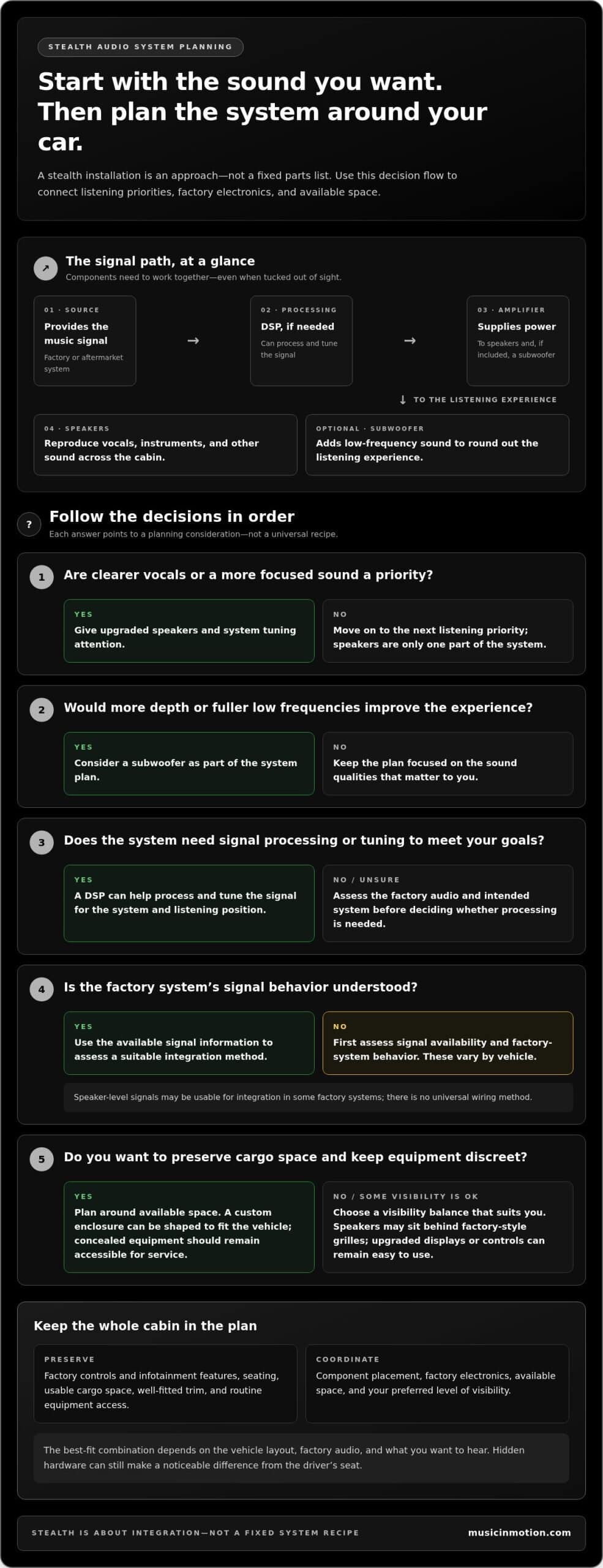
How to Plan a Stealth Car Audio Installation for Your Vehicle
Start with how you want the system to sound and how you use the vehicle. Before discussing components, consider the everyday details you want to preserve: factory infotainment, steering-wheel controls, passenger seating, cargo needs, and the cabin’s original look.
Use this sequence to organize your priorities:
- 1. Define your sound goals. Decide whether you want clearer vocals, a stronger front stage, fuller bass, or a balanced improvement across your favorite music. Sharing the genres you listen to can help describe the experience you’re after.
- 2. Note factory features. List the audio and vehicle functions you rely on, including the factory stereo, infotainment interface, and steering-wheel controls. Identify the features you want the upgrade to retain.
- 3. Identify space and daily use. Think about where cargo, passengers, seats, and access matter most. A vehicle used for family trips may call for different placement choices than one where cargo capacity is less important.
- 4. Set your visibility preference. Decide whether you want nearly all aftermarket equipment concealed or are comfortable with some visible components. Note any concerns about trim appearance or equipment access.
These details give a professional installer a useful starting point for shaping a stealth car audio system installation around your priorities. For broader guidance on planning an upgrade while keeping a factory stereo, read the stock stereo upgrade guide.
What details should you bring to an installation consultation?
Bring a short list of the music you enjoy and what you’d like to hear more clearly or feel more fully. Describe how discreet you want the equipment to be, which factory features matter, and how you use the cabin day to day. Specific concerns, such as preserving trim appearance or keeping room for luggage, help focus the project discussion.
How does custom fabrication support a discreet result?
Custom fabrication can shape component fit around the spaces available in your vehicle. A subwoofer enclosure, for example, can be planned with sound goals, appearance, cargo use, and service access in mind. The right balance depends on the vehicle and intended use, not a one-size-fits-all layout. Explore the custom car audio fabrication guide to learn how design choices support a finished installation.
When you’re ready to turn your priorities into a practical plan, explore a custom car audio installation with Music In Motion.
What to Expect from Music In Motion’s Stealth Audio Installation Approach
A successful stealth system starts with your listening goals, not a preset package. Music In Motion combines professional audio installation and custom fabrication to shape a system around your vehicle, preferred sound, and desired level of visibility. The aim is an upgrade that feels considered in the cabin and rewarding from the driver’s seat.
Planning is collaborative. We discuss what you listen to, how you use the vehicle, which factory features matter, and what you’d prefer to keep out of sight. Those priorities help guide choices such as speaker upgrades, amplification, audio processing, or a custom subwoofer enclosure. The component mix depends on the vehicle and the result you want.
How does a custom audio project move from goals to installation?
Each project moves through connected stages, with decisions shaped by the vehicle and your priorities rather than a one-size-fits-all package:
- Discovery: Discuss sound preferences, everyday vehicle use, factory features, and how discreet the system should be.
- System planning: Match potential components and placement to the listening goals, cabin layout, and practical needs.
- Integration and fabrication: Coordinate audio components with the factory system, fit, appearance, and access. Custom fabrication can adapt an enclosure or component placement to the vehicle.
- Installation and review: Complete the planned upgrade and review how the finished system fits the intended use and listening experience.
This coordinated approach keeps sound quality, discreet appearance, fit, and daily function in view throughout the project. The system is designed around your vehicle instead of forcing the vehicle into a standard configuration.
What is the next step for a discreet audio upgrade?
Bring a few useful details to the conversation: your vehicle information, the music you enjoy, what you’d like to improve, and which factory controls or features you want to retain. Explain how you use the cabin, including passenger or cargo needs, and whether you want all aftermarket equipment hidden or are comfortable with some parts remaining visible.
With those priorities in mind, we can discuss a vehicle-specific direction and the finished result you have in mind. If you’re ready for clearer sound without a distracting interior, share your goals with Music In Motion and start planning your stealth car audio system installation.
Bring Better Sound Into Your Everyday Drive
A discreet upgrade is about more than hiding equipment. The right stealth car audio system installation balances sound goals with factory integration, cabin appearance, and how you use your vehicle. Component choices and placement should suit your specific layout rather than follow a one-size-fits-all formula.
Music In Motion combines professional vehicle audio installation with custom fabrication, including custom subwoofer enclosures when they suit the design. Its audio work spans cars and other vehicle types, with each project shaped around the owner’s priorities. The goal is a finished system that feels at home in your vehicle and makes every drive more enjoyable.
Ready to explore what could work in your car? Talk with Music In Motion about your custom car audio installation and share the sound, function, and look you have in mind. A clear plan can be the first step toward a cabin that stays clean and functional while your favorite music comes through with new depth.
Frequently Asked Questions
What is a stealth car audio system installation?
A stealth car audio system installation integrates upgraded audio equipment discreetly while keeping the vehicle practical for everyday use. Amplifiers, wiring, processing equipment, and subwoofers may be placed out of sight where the vehicle’s layout allows. The goal is better sound with minimal visual change, not simply replacing factory speakers. Some parts, such as speakers behind grilles or accessible controls, may remain visible by design.
Can a stealth car audio system sound as good as a visible installation?
It can deliver excellent sound, but hiding components alone doesn’t determine sound quality. Results depend on the vehicle, equipment selection, system design, installation, and tuning. A visible setup may allow different placement or access choices, while a discreet design prioritizes integration with the cabin. The best approach depends on your listening goals and vehicle use. No single design guarantees identical results across different vehicles.
How are aftermarket amplifiers integrated with a factory stereo?
An installer first assesses the factory system’s available audio signals and behavior, then selects an integration approach suited to the vehicle and equipment. Some systems may provide speaker-level signals for an amplifier, while others may require additional processing or another solution. Signal behavior can vary, including how equipment turns on. That’s why there isn’t one wiring method that fits every factory stereo.
Can a subwoofer be installed without taking up visible cargo space?
A subwoofer can often be integrated discreetly, but the options depend on the vehicle’s available space and your sound goals. A custom subwoofer enclosure may be shaped to fit a suitable area, with cargo use and access considered in the design. Some space or placement tradeoffs may still apply. Include your cargo needs in the plan so the installation can balance bass, appearance, and practicality.
Will a stealth audio installation preserve my factory controls?
Factory controls can be considered during system planning, including steering-wheel controls and infotainment functions you use regularly. The integration approach depends on the vehicle’s electronics and proposed upgrade, so preserving specific features requires considering those details. Make a note of the controls and functions that matter to you. Professional planning helps coordinate audio goals with the vehicle’s everyday features.
What should I discuss before planning a custom car audio installation?
Share the sound you want, the music you listen to, and how discreet you’d like the equipment to be. Also describe your vehicle’s daily use, passenger and cargo needs, factory audio features, and any trim or access concerns. For example, clearer vocals may call for different system choices than fuller bass. These details help shape a plan around your priorities.
Does every stealth car audio system need a DSP?
No. A digital signal processor (DSP) can help when a system needs additional signal processing or tuning to meet integration and listening goals, but it isn’t automatically necessary for every upgrade. The vehicle’s factory audio, selected components, and desired result all inform whether a DSP makes sense. Reviewing the system can help determine whether processing is appropriate or a simpler component mix better suits the project.