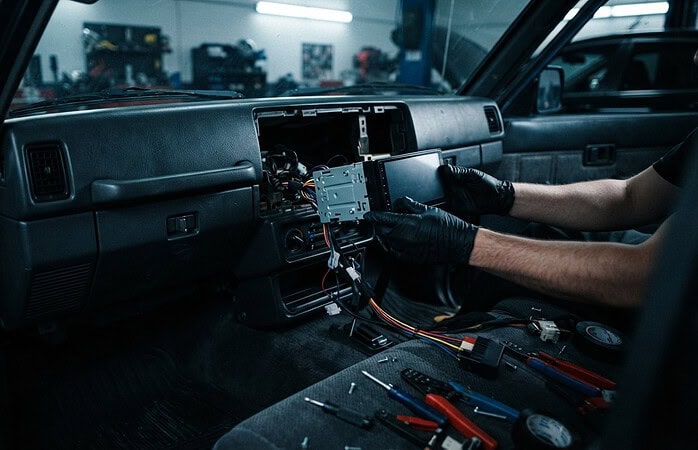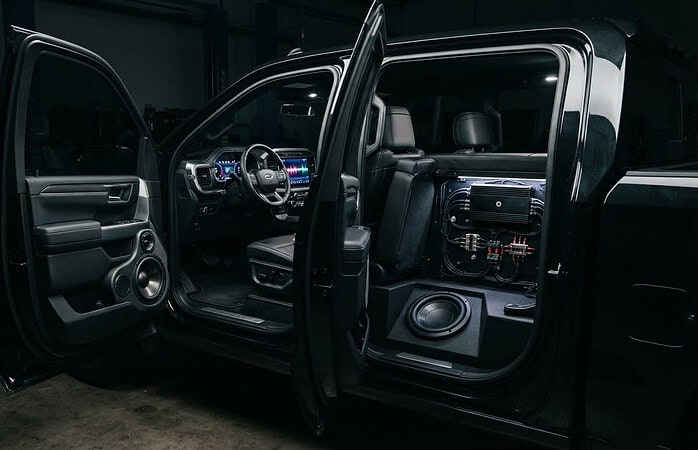
More bass won’t automatically make your car sound better. A car audio system to impress friends should make vocals crisp, music feel full, and bass add impact without taking over. It’s natural to want a setup that turns heads, but raw volume can leave songs harsh or muddy, and poorly integrated upgrades can create more frustration than enjoyment.
A better goal is balanced sound that feels great at everyday listening levels and suits your music, vehicle, and passengers. This guide explains which upgrades can make a noticeable difference, how speakers and a subwoofer can work together, and what to consider before choosing equipment. You’ll also find practical ways to assess your current system and plan improvements around your priorities. A cohesive setup is built around the experience you want, with the details working together behind the scenes. That’s what makes a shared listen memorable, whether you’re playing a favorite track or handing a friend the playlist.
Key Takeaways
- Start with the music and listening experience you want, then assess your vehicle and current equipment before choosing upgrades.
- Speakers, amplification, and a subwoofer have different roles. Upgrading one component may not address every weak link.
- A car audio system to impress friends doesn’t need to be loud. Focus on clear sound and controlled bass at comfortable listening levels.
- Use your everyday driving habits, preferred music, and passengers’ needs to set practical priorities for your system.
- Professional integration and custom fabrication can help create a cohesive setup that fits your vehicle and goals.
What Makes a Car Audio System Impress Friends?
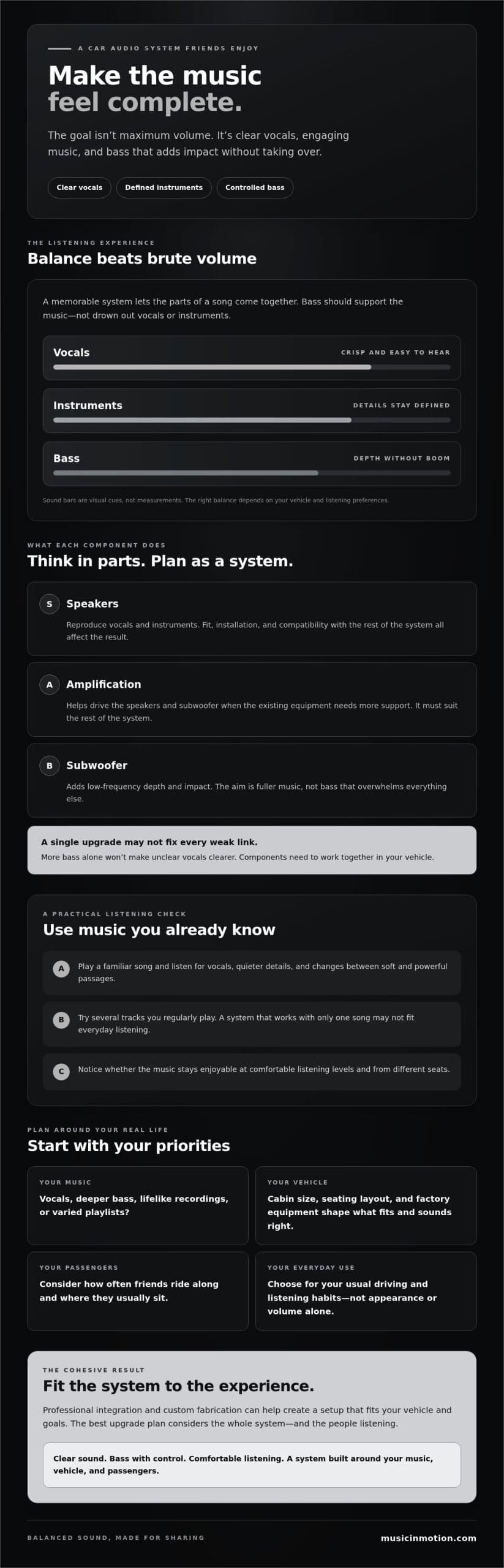
Friends should be able to enjoy the music together, not shout over it. A memorable car audio system feels balanced, clear, and engaging at a comfortable volume. Vocals, instruments, and bass come together so the song sounds complete, rather than one component drawing attention while the rest gets lost.
A balanced car audio system lets every part of the music come through clearly, with bass that supports the song instead of overpowering it. That result depends on the system as a whole. A subwoofer can deliver strong bass, but if vocals become hard to hear or the sound turns harsh when you raise the volume, the experience may still feel incomplete. A vehicle audio system has components that work together, so it helps to think beyond any single upgrade.
Which parts of the sound do passengers notice first?
Listeners often notice clear vocals, defined instruments, and bass that adds weight without booming over the song. They may also notice whether the music remains enjoyable from different seats. The driver’s position isn’t the only one that matters when friends are along, though the sound can vary across seating positions.
Try a familiar song you know well. Listen for its vocals, quieter details, and shifts between soft and powerful passages. These can help you judge whether the sound feels clear and even. Also try a few tracks you regularly play, since a system that only sounds good with one song may not suit your everyday listening. An immersive presentation makes music feel engaging and well-rounded without relying on higher volume.
Why the right setup depends on the car and the listener
Cabin size, seating layout, existing equipment, and listening habits all influence what sounds satisfying. A setup that suits one vehicle or listener won’t necessarily produce the same experience in another. The goal is a system shaped around your car and the way you use it.
Before choosing upgrades, think about what you want to hear most. Do you want vocals to feel more present, bass to have more depth, live recordings to sound more lifelike, or varied playlists to stay enjoyable from song to song? Consider how often you carry passengers and where they usually sit. Those preferences give you a practical starting point for discussing your goals with an installation specialist, rather than choosing components based on appearance or volume alone.
How Do Speakers, Bass, and Amplification Shape the Experience?
Each part of a car audio system has a different job. Speakers reproduce vocals and instruments, a subwoofer adds low-frequency depth, and amplification helps drive the speakers and subwoofer. The right combination depends on the car, its existing equipment, and what you want to hear. Not every vehicle needs every upgrade.
Speakers bring out musical detail, amplification supports the system’s output, and a subwoofer adds depth at the bottom of the sound. If one part is mismatched or unable to keep up with the others, the whole system can feel unbalanced. Adding bass, for example, won’t solve unclear vocals by itself. A good plan considers how all the components work together inside the vehicle.
What speakers add beyond louder music
Upgraded speakers can help vocals and instruments come through with greater definition, but the result depends on more than the speaker itself. Fit, installation, and compatibility with the rest of the system all matter. A speaker that isn’t suited to its location or equipment may not deliver the listening experience you want. If your factory stereo sounds thin or unclear, identify what you’d like to improve, then explore a car audio upgrade that works with your vehicle.
When a subwoofer or amplifier makes sense
A subwoofer can give music more low-frequency depth, from the pulse of a bass line to the impact in a recorded performance. The aim is to fill out the sound, not let bass drown out vocals or instruments. A custom subwoofer enclosure may be worth considering when the system needs a tailored fit or you want to account for how equipment sits in the vehicle.
An amplifier may make sense when the system needs support beyond what its existing equipment can provide. It must be compatible with the speakers and subwoofer and installed as part of a considered system. Adding amplification without addressing other components can leave the original imbalance in place.
Cabin shape, seating, and existing factory equipment also influence how sound is heard. Automotive acoustics can be assessed using standardized measurement procedures, though the practical goal is a system that sounds right in your car and suits your listening habits. For a car audio system to impress friends, choose components around the experience you want, not a single headline feature. If you’re weighing different upgrades, discuss your car audio goals with an installation specialist and consider how the pieces can work together.
Does an Impressive Car Audio System Have to Be Loud?
No. A system can impress at a comfortable volume when vocals and instruments stay clear, the sound feels balanced, and bass adds impact without taking over. Turning the volume up may make music feel more forceful, but loudness alone doesn’t create a satisfying listening experience. A social showpiece should let friends enjoy the music together, not make conversation uncomfortable or drown out every detail.
Clarity and balance make a system enjoyable across different songs and everyday drives. If one part of the sound dominates, passengers may notice the excess rather than the music itself. A thoughtfully planned car audio system to impress friends can feel lively and engaging without being disruptive.
Clarity and balance versus volume
Listen for whether vocals remain distinct from instruments and whether the sound stays composed as a song gets more energetic. Excessive bass can mask voices, guitar, or other musical details. The result may feel powerful for a moment, but less enjoyable over a full playlist.
Test several familiar tracks at a comfortable level. Choose music with different qualities, such as a vocal-led song, a track with a prominent bass line, and a recording with a wider range of instruments. Notice whether each still sounds clear and cohesive. If you keep turning up the volume just to hear certain details, the system may need better balance rather than more output.
How to make bass feel powerful without overwhelming music
Bass should support the rhythm and add depth while blending naturally with vocals and instruments. If it seems detached from the rest of the sound or dominates every track regardless of style, it may be overpowering the mix rather than improving it. The right balance should work across your regular listening, not just on one bass-heavy song.
Subwoofer enclosure design also matters. The enclosure needs to suit the subwoofer and the space available in the vehicle. A tailored setup can be useful when both fit and usable cargo room are priorities. A substantial bass upgrade or custom fabrication project calls for planning around the car and the sound you want. An installation specialist can help assess those factors and consider how the bass will integrate with the rest of the system.
Impressive sound isn’t a volume contest. Aim for music that stays clear and enjoyable at the level you’d actually use with passengers. That balance makes a better impression than bass or loudness that leaves everyone waiting for the next song to end.
How to Plan a Car Audio System Your Friends Will Enjoy
Start with the experience you want, not a cart full of components. A car audio system to impress friends should suit your vehicle, music, and passengers while working as a cohesive whole. First, understand what’s in your car and what you want to hear. Then choose upgrades that address those needs and fit the space.
Start with your vehicle, current stereo, and listening habits
Before comparing equipment, write down your vehicle details and what you know about its existing audio system. Note how you use the car, the music you play most, and who usually rides with you. These details help clarify whether you’re looking for more vocal detail, fuller bass, or sound that works well across different playlists and seats.
Compatibility depends on the specific vehicle and equipment already installed, so don’t assume a component will fit or integrate just because it works in another car. Bring your notes to a discussion with an installation specialist. A clear description of what feels lacking is more useful than starting with a shopping list.
Prioritize upgrades before adding more equipment
Connect each possible upgrade to a goal. If vocals sound unclear, speakers may deserve attention. If music lacks low-end depth, consider whether a subwoofer is appropriate. Amplification may be relevant to the system as a whole, while custom fabrication can help when equipment needs a tailored fit. These are options to assess, not a checklist every car needs.
Think through the trade-offs, too. A larger subwoofer enclosure may affect available vehicle space, and a more involved system can mean more components to integrate. Appearance and everyday practicality count alongside sound. Make a short priority list:
- Current setup: Note the factory stereo and any audio components you know are installed.
- Listening goals: Identify the main change you want, such as clearer vocals or deeper bass.
- Daily use: Consider your usual drives, music variety, and passenger seating needs.
- Vehicle priorities: Record space, fit, and appearance considerations that matter to you.
If you’re unsure how components will match or fit, get a vehicle-specific assessment before settling on equipment. That conversation can turn your preferences into a practical upgrade plan, with integration and the finished result considered from the start. To take the next step, discuss your car audio system goals with an installation specialist.
How Professional Car Audio Installation Creates a Cohesive Result
A collection of upgraded components isn’t automatically a complete system. Your vehicle, listening goals, existing equipment, available cabin space, and preferred appearance all matter. A car audio specialist can consider these factors together, helping you plan upgrades around the experience you want instead of treating each component as a separate purchase.
That planning is especially useful when you’re unsure what will work with your current setup. Component compatibility and fit depend on the specific vehicle and equipment, so details should be assessed rather than assumed. A cohesive car audio system to impress friends is built around the whole listening experience, from the sound you hear to how the equipment fits into the car.
What to discuss with a car audio installer
Bring the vehicle’s make, model, and year, along with any details you know about its current audio equipment. Share the music you enjoy and the change you’re hoping to hear, such as more defined vocals, added bass, or a system that works well for passengers. These specifics give the conversation a practical starting point.
Ask how proposed components would work with the existing system and the space available in your vehicle. It’s also reasonable to ask which changes are essential for your goal, which are optional, and what depends on an assessment of the car. Clear answers can help you make decisions at a comfortable pace and understand how each choice contributes to the finished setup.
From individual upgrades to a finished sound system
Coordinated choices can help speakers, amplification, and bass work together rather than compete. The right plan may involve one targeted car audio upgrade, several compatible components, or a custom installation. More equipment isn’t always the answer. The goal is to address what you want to improve while respecting the vehicle’s layout and everyday use.
Custom fabrication is another option for projects that need a tailored fit. Music In Motion offers custom subwoofer enclosures and custom installations, with professional installation and fabrication capabilities. An enclosure can be designed as part of a vehicle-specific project, but its fit and suitability need to be assessed for the particular car and goals. Music In Motion was founded in 1994 and offers car audio upgrades and installation.
If you’re ready to talk through your vehicle, current equipment, and preferred listening experience, talk with the Music In Motion team about your car audio goals.
Build a Soundtrack Worth Sharing
A memorable car audio system to impress friends isn’t about chasing maximum volume. It’s about clear vocals, bass that supports the music, and components chosen to work together in your specific vehicle. Start with what you listen to, how you use your car, and what you’d most like to improve. Then plan upgrades around compatibility, fit, and the experience you want for both drivers and passengers.
Professional installation can help bring those choices together into a cohesive finished system. Music In Motion offers car audio upgrades, professional installation, custom fabrication, and custom subwoofer enclosures. Whether you’re considering a focused upgrade or a tailored project, the next step is a conversation about your vehicle and listening preferences.
Talk with Music In Motion about your car audio goals and explore an approach that fits your car and the music you love.
Frequently Asked Questions
Does a car audio system have to be loud to impress friends?
No. A car audio system can impress without playing at excessive volume. Clear vocals, distinct instruments, and bass that supports rather than overwhelms the music can make familiar songs more enjoyable. Try several tracks at a comfortable listening level, then ask passengers what they notice. If the music feels engaging while conversation remains easy, the system is delivering a more cohesive experience than volume alone can provide.
What is the first upgrade to make to a car audio system?
There isn’t one first upgrade that suits every vehicle. Begin by identifying what feels lacking, such as vocal clarity, musical detail, or bass, and note what audio equipment is already installed. The right option depends on your goals, vehicle fit, and compatibility with the current system. An installer can assess those details and help prioritize changes rather than adding components that may not address the issue you notice most.
Will a subwoofer make my car audio system sound better?
A subwoofer can add depth to low frequencies, but it won’t automatically improve every system. Its contribution depends on how it’s matched with the other components, the music you enjoy, and the space available in your vehicle. If bass is too prominent, it can distract from vocals and instruments. Consider the sound you want, including how much bass feels right, and ask an installer about options suited to your car.
Can I upgrade my factory stereo without replacing everything?
In some vehicles, you may be able to improve the sound while retaining some factory equipment. What can stay depends on the vehicle, existing stereo, and upgrades you’re considering. Check compatibility and integration before buying components, since a setup that works in one car may not suit another. A vehicle-specific assessment can clarify which equipment may be retained, what might need to change, and how the pieces can work together.
How do I choose a car audio system for different kinds of music?
Start with the music you listen to most, then consider whether you want the system to handle varied playlists too. Think about your priorities: clear vocals, instrumental detail, deeper bass, or an even presentation across different styles. Share those preferences along with your vehicle details with an installer. A considered plan can balance your listening goals with component compatibility and available space, rather than overemphasizing one type of music.
Is professional installation worth considering for a custom car audio system?
Professional installation is worth considering when vehicle-specific fit, component integration, or custom fabrication is part of the project. It can help bring equipment choices together as a cohesive system instead of a collection of separate upgrades. Music In Motion offers professional car audio installation, custom installations, and custom subwoofer enclosures. Ask what’s suitable for your vehicle, what work is necessary or optional, and how the proposed setup supports your listening goals.
What should I tell a car audio installer before planning an upgrade?
Share your vehicle details, what audio equipment is already installed, the music you enjoy, and what you’d like to hear differently. Explain how you use the car, whether passengers often listen with you, and any preferences around bass, appearance, or available space. These details help an installer discuss suitable options and compatibility. You can also ask which recommendations depend on assessing the specific vehicle and which choices are optional.