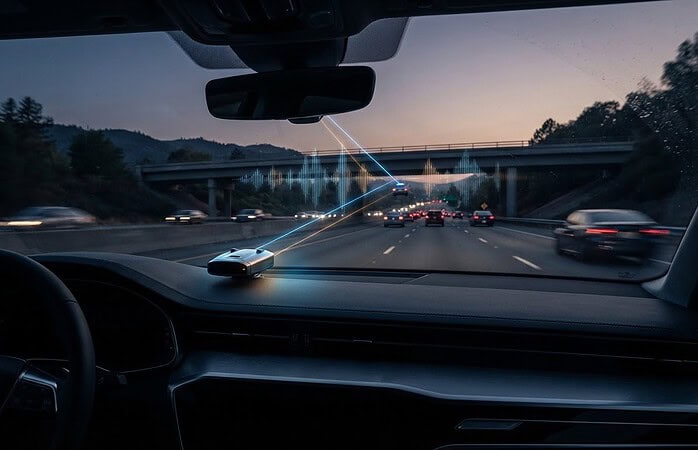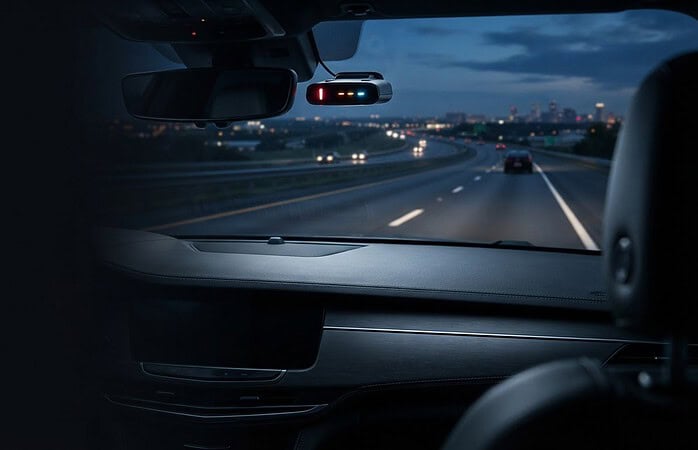
A radar detector can be useful without becoming the most visible thing in your cabin. The real custom-installed radar detector benefits are often about integration: a cleaner dashboard, fewer dangling cords, and a setup tailored to your vehicle rather than a device that simply sits on the windshield. If you value a tidy interior or prefer not to leave a portable unit in view, that difference can matter every day.
Still, installation doesn’t make a detector foolproof or guarantee that you’ll receive an alert in time. Its value depends on the system, the vehicle, and how you drive. A custom installation connects advanced electronics with your vehicle while keeping practical use in focus. At Music In Motion, we install radar and laser detection systems with that approach in mind.
This article explains what an installation can improve, where detection has limits, and how an integrated setup compares with a portable one. You’ll also find practical considerations for visibility, theft concerns, vehicle compatibility, and installation complexity, so you can decide which approach suits your needs.
Key Takeaways
- Evaluate custom-installed radar detector benefits by how well an integrated setup fits your vehicle and preferences, not by assuming installation guarantees better detection.
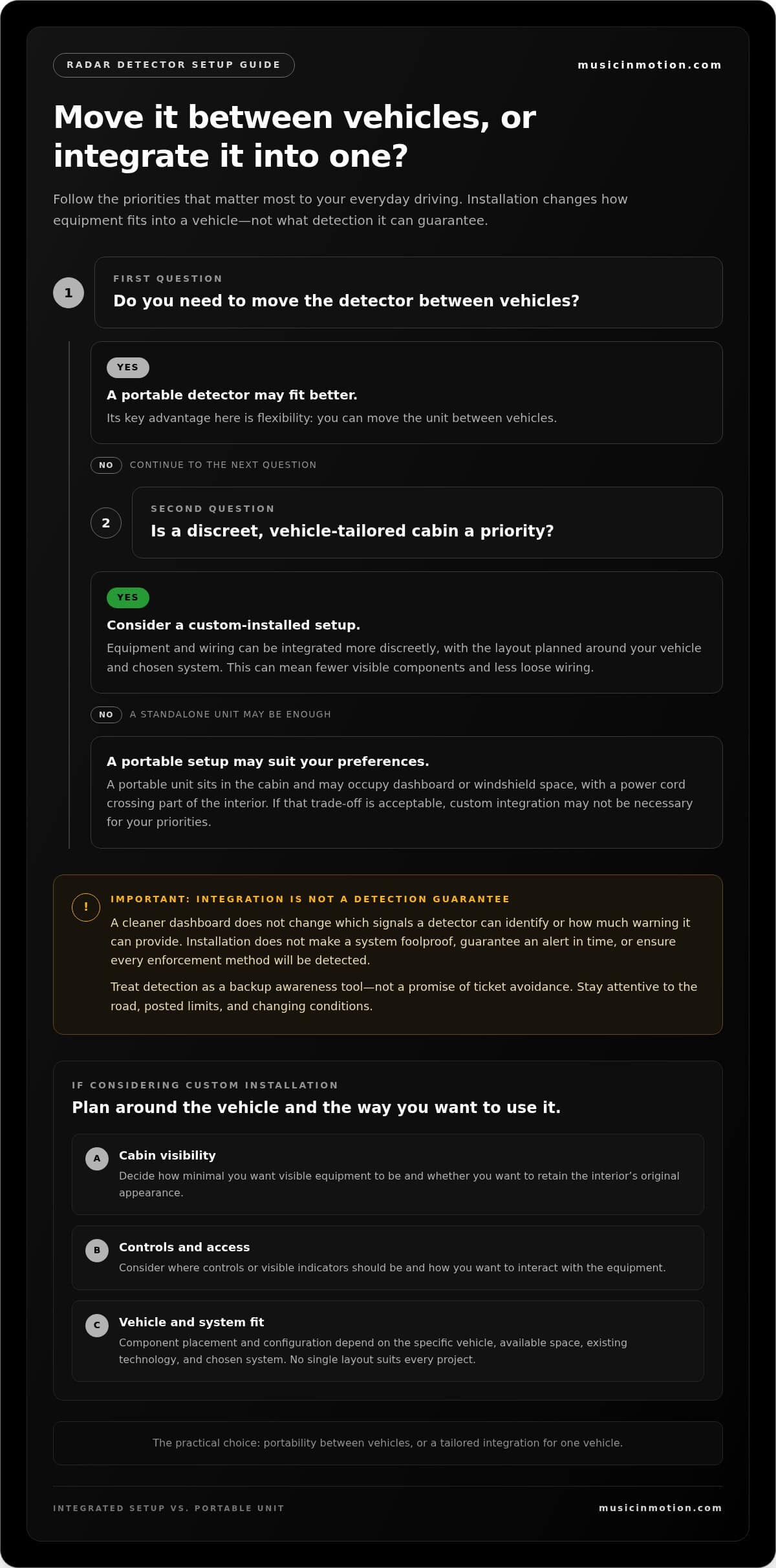
- Compare integrated and portable options based on whether you value a tailored setup or the flexibility to move equipment between vehicles.
- Before planning an installation, identify your priorities, vehicle constraints, and expectations for how the system will fit into your cabin.
- Component placement and integration depend on the vehicle and selected system, so plan the installation around both.
- Music In Motion combines custom installations and radar and laser detection with integration-focused work and straightforward customer service.
What Custom-Installed Radar Detector Benefits Matter Most?
What changes when radar detection equipment is integrated into your vehicle? The most tangible custom-installed radar detector benefits are often in the cabin: fewer visible components, less loose wiring, and an arrangement planned around the vehicle instead of a device placed wherever it fits. For drivers who prefer an uncluttered dashboard, that can make the system feel like a more considered part of the driving environment.
Custom installation integrates detection equipment into a vehicle in a way that’s tailored to the vehicle and chosen system. The goal is a clean, practical result, not a promise of stronger detection or complete protection.
How an integrated setup can change the everyday driving experience
A portable unit can occupy dashboard or windshield space, with a power cord crossing part of the cabin. With a custom-installed setup, equipment and wiring can be integrated more discreetly, depending on the vehicle and system. The result may be a tidier interior with fewer objects competing for attention.
Convenience depends on how you plan to use the system. Consider where you want controls or visible indicators, how often you drive the vehicle, and whether you need to move the detector between vehicles. Those preferences can shape the installation plan alongside the vehicle’s existing technology.
These are comfort and appearance considerations. A cleaner dashboard doesn’t, by itself, change which signals a detector can identify or how much warning it can provide. The custom-installed radar detector benefits that matter most may therefore be practical rather than performance-based.
What radar detection can, and cannot, promise
A radar detector alerts a driver to signals it can detect under the conditions present. Its capabilities depend on the system, and an alert should never be treated as a guarantee that every enforcement method or situation will be detected. For a general explanation of the technology and different detector types, see How Radar Detectors Work.
Detection is not prevention. An alert may not arrive in time for a driver to respond, and a detector can’t replace awareness of the road, posted limits, or changing conditions. Installation also doesn’t make a system foolproof. Treat it as a backup awareness tool, not a promise of ticket avoidance.
Drivers remain responsible for safe, lawful driving at all times. Keep your attention on traffic and road conditions, and follow applicable rules. A detector should support an informed driving experience, not encourage distraction or risky decisions.
That distinction helps clarify what to value: a cabin that suits your preferences, an installation designed around your vehicle, and expectations grounded in the selected system’s actual capabilities. Those are practical gains, without confusing a discreet setup with guaranteed detection.
How Custom Radar Detector Installation Fits Into a Vehicle
A portable detector sits in the cabin as a standalone device. Custom installation takes a different approach: detection equipment is integrated into the vehicle, with component placement and any in-cabin controls planned around the specific vehicle and chosen system. The work is more than hiding a device. It considers how the equipment will fit into the interior and alongside the vehicle’s existing technology.
Integration changes how equipment fits into the vehicle, not what detection it can guarantee. A carefully planned installation can support a clean, functional result, but it doesn’t promise earlier alerts or protection from every enforcement method.
Planning component placement and cabin controls
Placement decisions shape how the setup looks and feels during everyday use. You may want minimal visible equipment, controls that are practical to access, or an interior that retains its original appearance. These preferences can guide the plan, but no single layout suits every vehicle or system.
An installer considers the vehicle’s interior, available space, and how you want to interact with the equipment. The result is specific to the project. Rather than assume a particular mounting point or control arrangement, the aim is to plan around the vehicle and selected system.
Integrating with existing vehicle technology
Professional integration also takes the vehicle’s existing technology into account. Music In Motion works with advanced electronics and existing vehicle technology, bringing that perspective to custom installations and radar detection projects. The vehicle’s interior and systems inform the approach, rather than treating the detector as an isolated purchase.
Adding equipment should be considered in context. The installation plan needs to account for how new components fit alongside the vehicle’s existing features and your preferences. Compatibility and configuration depend on the specific vehicle and chosen system, so a general example should not be mistaken for a universal setup.
It helps to describe your priorities clearly: a low-visibility cabin, convenient access to controls, or an installation that works neatly with existing vehicle technology. Those priorities give the project a practical direction while leaving the technical layout to the specific vehicle and system. You can then assess the custom-installed radar detector benefits as a complete integration, not just as the presence of detection equipment.
Music In Motion approaches this work as a tailored integration project, supported by custom installation, advanced electronics, and attentive customer service. To learn more about how radar detection can fit your vehicle, explore custom radar detection installation.
Custom-Installed vs. Portable Radar Detectors: Which Benefits Fit You?
Choosing between a portable detector and a custom-installed system is about matching the setup to your driving habits. Consider how often you change vehicles, how much visible equipment you’re comfortable with, and whether you prefer a tailored installation or a device you can move. The comparison below focuses on everyday trade-offs, not assumptions that one format always detects better.
| Factor | Portable detector | Custom-installed system |
|---|---|---|
| Visibility | Device and wiring may be visible in the cabin. | Can be planned for a less conspicuous appearance. |
| Portability | Can suit drivers who want to move the unit between vehicles. | Planned around a particular vehicle, so moving it is not the main advantage. |
| Integration | Used as a standalone device. | Installation is tailored to the vehicle and chosen system. |
| Installation needs | Typically set up by placing the unit in the vehicle. | Requires a vehicle-specific installation plan. |
When portability may matter more than integration
A portable unit may make sense if you regularly switch between vehicles, share one detector, or use a rental vehicle and want a removable setup. You can take the device with you rather than plan an installation around each vehicle. The trade-offs are that the unit and power connection may remain visible, and you’ll need to manage placement and setup whenever you move it.
Think about your routine, not just an occasional trip. If moving the device is a priority, portability may outweigh a more integrated cabin appearance.
When a custom-installed setup may make more sense
A custom installation may suit someone who regularly uses one vehicle and values a tailored, less conspicuous arrangement. The plan can reflect that vehicle’s interior and the chosen system, rather than relying on a portable device’s placement. Installation requires a vehicle-specific project, so convenience comes from having the setup planned as a whole, not from assuming every system works the same way.
Consider the custom-installed radar detector benefits in terms of fit and daily use. A different installation style doesn’t establish a detection advantage. Performance depends on the particular system and conditions. Choose integration for its practical fit, not as a guarantee of stronger alerts.
A useful decision test: If moving the detector between vehicles is central to your routine, portability may be the better match. If you mainly drive one vehicle and prioritize a tailored cabin, custom installation may suit you. Weigh those preferences alongside installation needs, then choose the arrangement that supports your use without expecting either format to replace attentive driving.
What to Consider Before Custom-Installing a Radar Detector
A good installation plan starts with your routine, your vehicle, and a clear understanding of what the system can and can’t do. Before deciding, map out your priorities: what you want from the setup, what the vehicle can accommodate, how the equipment will integrate, and what outcomes are realistic. This keeps the focus on a useful result rather than assumptions about detection.
Questions that clarify your priorities
Start with the choices that will shape everyday use. Do you value moving equipment between vehicles, reducing visible cabin clutter, or having a setup planned around one vehicle? Consider who regularly drives the vehicle and whether it’s used for commuting, longer trips, or both. Those details help define what “convenient” means for you.
Then identify the vehicle’s relevant constraints, such as cabin layout and existing technology. A tailored plan needs to account for the vehicle as it is, rather than rely on a generic arrangement. At Music In Motion, custom installations are integration projects, with advanced electronics considered alongside existing vehicle technology.
Setting realistic expectations before installation
Before moving forward, clarify the intended role of the equipment and its limits. Radar detection and laser detection aren’t interchangeable: they refer to different functions, and having one doesn’t automatically mean a system provides the other. Be specific about what equipment is part of the planned setup, and don’t treat any detector as a promise of ticket prevention.
Results depend on the selected equipment, the vehicle, the installation, and real-world conditions. Don’t base a decision on assumed detection range or guaranteed warning time. Instead, focus on installation goals you can evaluate directly, such as how the equipment fits the cabin and whether the plan reflects your vehicle and preferences. This puts the practical custom-installed radar detector benefits in perspective.
- Define your priorities. Rank portability, a discreet appearance, driver access, and vehicle-specific integration.
- Identify vehicle constraints. Consider who uses the vehicle and how its interior and existing technology affect the project.
- Discuss integration. Set out how you want the equipment to fit into the cabin and clarify which functions the selected system includes.
- Set expectations. Separate appearance and integration goals from detection outcomes that can’t be guaranteed.
Also verify the rules that apply to your vehicle and intended use before installation. Requirements can vary by jurisdiction and vehicle type, so consult current, authoritative government sources for relevant state and local information rather than relying on outdated summaries.
Ready to plan a setup around your vehicle and priorities? Explore custom radar detector installation with Music In Motion.
How Music In Motion Approaches Custom Radar Detector Installation
Music In Motion brings together Custom Installations and Laser Detectors & Radar Detection with an integration-focused approach. The goal is to consider detection equipment as part of the vehicle, not as a standalone purchase. That means taking the vehicle and your priorities into account while shaping a straightforward, practical solution.
For drivers weighing the custom-installed radar detector benefits, that distinction matters. A tailored installation can address how equipment fits into the cabin and relates to existing vehicle technology. It doesn’t guarantee detection outcomes, prevent tickets, or make every system suitable for every vehicle. The value is in planning the work around a specific project and setting clear expectations.
A tailored installation built around the vehicle
Vehicles differ in their interiors and existing technology, so an installation plan should begin with the vehicle itself. Music In Motion brings advanced electronics together with existing vehicle technology, guided by custom installation expertise and a focus on a functional result. The details are shaped to the vehicle and selected equipment, rather than assumed from a one-size-fits-all layout.
World-class fabrication and OEM integration are part of the broader expertise behind this approach. They reflect a focus on fitting technology into a vehicle thoughtfully, without suggesting a particular fabrication method, component location, or detector configuration for every project. Clear planning connects the technical work to the experience you want from the cabin.
From understanding the benefits to taking the next step
Before choosing an installation, clarify your main considerations: whether you need portability, how discreet you want the cabin to look, how you use the vehicle, and what you realistically expect the system to do. These factors help distinguish the practical benefits of integration from claims about detection performance. A useful plan accounts for both what you want from the installation and the limits of the selected equipment.
Music In Motion emphasizes straightforward solutions and attentive customer service. We approach custom installation as a tailored project, connecting advanced electronics to the vehicle in a way that makes sense for the driver. The conversation can stay grounded in your priorities, the vehicle’s existing technology, and the intended role of the equipment.
To explore how these considerations could shape a vehicle-specific setup, explore Music In Motion’s vehicle electronics solutions.
Make Your Next Step a Clear One
Before choosing a setup, turn your preferences into a simple project brief: note how you use the vehicle, what you want the cabin experience to feel like, and what you expect detection equipment to do. That gives the installation conversation a useful starting point and keeps the focus on a result that fits your needs. The value of custom-installed radar detector benefits comes from the fit between the system, vehicle, and driver, not from assuming any setup offers complete protection.
Music In Motion brings OEM integration, world-class fabrication, and attentive customer service to its custom installation work. The emphasis is on thoughtful solutions, with technical details guided by the vehicle and your priorities.
Ready to take the next step? Explore Music In Motion’s custom installation solutions and start shaping an approach that feels right for your vehicle. A well-planned project can make advanced technology feel like a natural part of the drive.
Frequently Asked Questions
Can a custom-installed radar detector be moved to another vehicle?
It may be possible, but moving a custom-installed system can require additional installation work. The equipment and how it was integrated into the original vehicle affect what transferring it involves. If you’re changing vehicles, plan for the system to be assessed and fitted to the new vehicle rather than expecting a simple unplug-and-reconnect. If you anticipate changing vehicles often, consider that use pattern before choosing between portability and an installed setup.
Will a custom-installed radar detector work in every vehicle?
No single installation configuration should be assumed to work the same way in every vehicle. Interior design and existing electronics can affect how a project is planned, so a car, truck, and SUV may call for different considerations. Include the specific vehicle and how it’s used in the planning conversation. That keeps expectations grounded in the actual vehicle instead of generic placement or compatibility assumptions.
Does a radar detector guarantee that I will not get a speeding ticket?
No. A radar detector can’t guarantee that you’ll avoid a ticket, since alerts depend on the equipment, conditions, and enforcement method. Treat it as an electronic alerting aid, not permission to exceed the speed limit or a substitute for watching the road. Keep your attention on traffic, signs, and changing conditions, and follow posted limits and applicable laws whether or not the system gives an alert.
Are radar detectors legal everywhere in the United States?
No, you shouldn’t assume radar detectors or related equipment are permitted in every place or circumstance. Rules may depend on jurisdiction, vehicle type, and how equipment is used. Before driving with a system, check current official state and local sources for the rules that apply to your route and vehicle. Rely on up-to-date government information rather than an old online summary or assumptions based on availability.
Can a custom-installed radar detector also detect laser speed measurement?
Not necessarily. Radar detection and laser detection are distinct capabilities, and installation alone doesn’t establish which signals a system can detect. The equipment and configuration determine what functions are included. Review the documentation for the specific system being considered, and distinguish detection from any other laser-related function. This helps ensure that the system’s described capabilities match what you intend to have installed, rather than relying on broad category wording.
Is a custom-installed radar detector less distracting than a portable unit?
It may feel less distracting to some drivers if the setup reduces visible equipment, but that depends on the system’s design, placement, and how the driver uses it. Consider whether you prefer fewer items in your direct line of sight or need controls that are easy to reach. Those preferences can guide the installation plan. A custom installation can be tailored, but it can’t guarantee that every driver will find the system distraction-free.