The best radar detector for avoiding tickets 2026 may not be the one with the longest feature list. A detector can provide alerts, but it can’t prevent a ticket or replace attentive, lawful driving. If alerts are constant or arrive too late to help, even advanced technology can create a false sense of security.
Choosing a detector means weighing clear alerts against distractions and understanding which features matter for your driving. Radar detection, laser alerts, and filtering all work differently. Laser detection, for example, doesn’t guarantee advance warning, and detector laws vary by location.
This guide compares practical features, explains what detectors can and can’t do, and covers legal points to keep in mind. It also outlines how to compare testing claims and decide whether a standalone device or an integrated installation suits your vehicle. The goal isn’t to outrun enforcement. It’s to make an informed choice while keeping your attention on the road.
Key Takeaways
- Choose the best radar detector for avoiding tickets 2026 by weighing alert clarity, filtering, usability, and the quality of available evidence.
- Compare options against your driving habits and preferred installation style, not just a long list of advertised features.
- Check current official rules for your location and vehicle before using or mounting a detector.
- Learn how to interpret alerts and manage frequent false warnings so the device supports, rather than distracts from, attentive driving.
- For a more integrated setup, consider how professional radar and laser detection installation can fit your vehicle and existing technology.
What a Radar Detector Can and Cannot Do to Avoid Tickets
A radar detector is an alerting device that can identify certain radar signals and notify the driver. It doesn’t measure your speed, change the posted limit, or give you permission to drive faster. Its role is awareness, not avoidance. An alert may indicate a signal in the area, but it doesn’t guarantee you’ll have time to respond or prevent a citation.
How radar detectors support driver awareness
Radar-based speed measurement uses radio signals. A detector listens for certain signals and alerts the driver when it senses one. Treat the alert as information to assess, not an instruction to accelerate, brake abruptly, or evade enforcement. Keep your eyes on the road, check your speed, and respond calmly and lawfully.
Radar detection and laser detection are related, but they aren’t the same. Radar detectors receive radio-frequency signals; laser detection is designed to sense light pulses used for speed measurement. Laser is narrowly targeted, so an alert may come only when the vehicle is already being measured. For a general overview of device types and how they work, see What is a Radar Detector?
An alert might prompt you to check your speed or notice a signal nearby. It doesn’t tell you why the signal is present, and it can’t replace observing signs, traffic, and road conditions. Treat each alert as one piece of information, not a command.
Why a detector cannot guarantee ticket avoidance
Detection depends on the signal and the circumstances. A detector can’t alert to a signal it doesn’t receive, and a warning may arrive too late to affect the outcome. Some enforcement methods provide little advance warning. Because laser is narrowly targeted, an alert may come only once measurement is underway. Performance also depends on the device and its setup, so don’t assume every alert will be early, precise, or actionable.
A radar detector can alert you to certain signals, but it can’t guarantee an early warning, correct speeding, or prevent a citation. Keep that limitation in mind when comparing the best radar detector for avoiding tickets 2026. A detector is an added source of information, not protection from the consequences of a driving decision.
Attention remains essential. Focusing on alerts instead of the road can mean missing a speed-limit sign, changing traffic, or another hazard. Follow posted limits and make driving decisions based on the conditions in front of you. A detector may support awareness, but attentive, lawful driving is the dependable way to reduce ticket risk.
Radar Detector Features That Matter for Real-World Driving
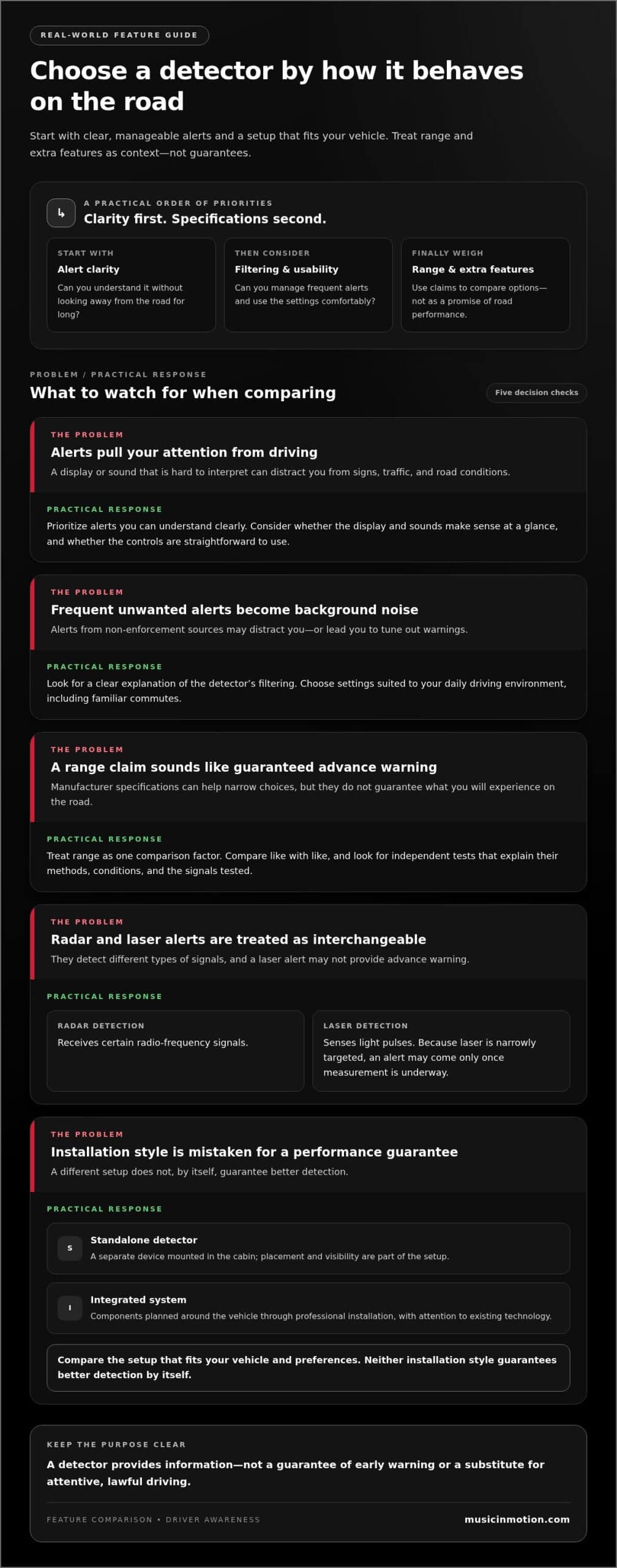
A detector’s value depends on more than a headline range claim. Consider how clearly it communicates, how manageable its alerts are on familiar roads, and whether its controls suit your routine. A feature is useful only if you understand it and can use it without taking attention away from driving.
Start with clear, manageable alerts and a setup that fits your vehicle. Then weigh range and extra features in context. This is a more practical starting point than choosing by specifications alone.
Which detector capabilities should you compare?
Start with alert presentation. Consider whether the display and sounds would be easy to understand, and whether the settings are straightforward to use. Filtering matters, too: frequent alerts from non-enforcement sources can become distracting or lead you to tune out warnings. Look for a detector that suits your daily driving environment, not just one that looks impressive on a feature list.
Range claims and manufacturer specifications can help narrow your choices, but they don’t guarantee what you’ll experience on the road. Compare like with like, and look for independent tests that explain their methods, conditions, and the signals tested. Results from one setup may not predict performance in every vehicle or driving situation.
- Range: Treat it as a comparison factor, not a promise of advance warning in every encounter.
- Alert clarity: Consider whether you can understand an alert without looking away from the road for long.
- Filtering: Look for clear explanations of how the device handles frequent or unwanted alerts.
- Usability: Consider whether the controls and settings suit your routine, including familiar commutes.
Standalone detector or integrated radar detection system?
A standalone detector is a separate device mounted in the cabin, so placement and visibility are part of the setup. An integrated system is planned around the vehicle, with components incorporated through professional installation. The right approach depends on your vehicle, preferences, and how you want the finished setup to work with existing technology. Neither installation style guarantees better detection by itself.
If you’re considering radar and laser detection together, remember that these are distinct approaches with different characteristics. Our guide to laser defense systems for cars explains the laser side in more detail. Music In Motion installs radar and laser detection systems with attention to integrating electronics with existing vehicle technology. Explore custom radar detection installation for a more integrated approach.
When comparing the best radar detector for avoiding tickets 2026, prioritize evidence you can assess and features that support calm, attentive driving. A longer list of capabilities doesn’t automatically mean a better fit. Choose a setup you can use comfortably, understand clearly, and incorporate responsibly into your everyday drive.
How to Compare Radar Detectors Without Chasing a False Promise
A “best overall” label can be a useful starting point, but it can’t tell you whether a detector suits your commute, vehicle, or tolerance for alerts. Compare options against the way you actually drive. The goal is a setup that fits your habits and priorities, not a promise of ticket-free travel.
Match detector priorities to your driving habits
Think about where you drive most often and what you want from the experience. A routine commuter may value simple controls and manageable alerts on familiar roads. For frequent highway travel, clear alert presentation and ease of use over longer drives may matter more. Enthusiasts may want more control over settings, provided they’re comfortable managing them.
| Decision factor | What to compare | Question to ask yourself |
|---|---|---|
| Use case | Routine commuting, highway travel, or a mix | Where do I drive most, and how often do I want to adjust settings? |
| Installation style | A visible standalone device or a professionally integrated setup | Do I prefer a separate cabin-mounted unit or an installation tailored to my vehicle? |
| Alert needs | Clarity, ease of understanding, and alert management | Can I interpret alerts without drawing attention away from driving? |
| Evidence quality | Recent, transparent testing and clearly described methods | Does the review explain how its conclusions were reached? |
Use the table to rank your priorities before comparing features. If frequent alerts would frustrate you, for example, prioritize alert management and straightforward controls over a long list of advanced settings. If a clean, integrated finish matters, include installation style in the comparison instead of treating the device alone as the whole decision.
How to read reviews and testing claims
Reviews can help, but rankings and model details change. Check the publication date, test conditions, devices evaluated, and the reviewer’s method. Look for a clear distinction between measured results, personal impressions, and manufacturer claims. Affiliate disclosures can also help you understand how a publication may earn revenue from recommendations.
Third-party models such as the Uniden R8 or Escort Redline 360c may appear in detector comparisons. Treat those names as examples from the wider market, not as Music In Motion products, and verify current specifications and test findings before relying on them. A ranking without a clear date or methodology offers limited help.
The best radar detector for avoiding tickets 2026 is the one that fits your needs and is supported by evidence you can assess. No category winner can promise ticket-free driving. Use reviews to compare trade-offs, then make your choice with realistic expectations and your driving habits in mind.
Use a Radar Detector Responsibly: Laws, Alerts, and Everyday Driving
A responsible setup starts before you switch on the detector. Rules can depend on where you drive, the type of vehicle you operate, and how or where the device is mounted. While driving, alerts should support your awareness rather than compete with attention to traffic. Follow a simple sequence: verify the rules, install appropriately, understand alerts, and stay within posted limits.
Check applicable laws before choosing a setup
Don’t assume a detector is allowed everywhere simply because it’s permitted where you live. Before buying, installing, or travelling with one, consult current official government sources for each jurisdiction on your route. Check whether the rules distinguish between passenger and commercial vehicles, and look for restrictions related to device placement or use. If the official guidance is unclear, get clarification from the relevant government authority before using the equipment.
Take care with installation, too. Follow the device’s instructions and consider whether its placement could obstruct your view or conflict with local requirements. Professional installation can help tailor the setup to your vehicle, but it doesn’t replace checking the rules that apply to your trip.
Respond to alerts with attention and judgment
Keep your focus on traffic, road conditions, and posted speed limits. An alert can be incomplete, delayed, or unrelated to enforcement nearby, so don’t treat it as a definitive reading of what’s ahead. Avoid reaching for controls or staring at a display while moving. If you need to adjust a setting, pull over somewhere safe first.
Let detector alerts inform your awareness, but let the road, the posted limit, and your judgment guide your driving.
Use this practical checklist:
- Verify the rules: Check current government guidance for the locations and vehicle categories relevant to your drive.
- Install appropriately: Follow device instructions and position it without compromising visibility or safe driving.
- Understand alerts: Learn what the alert types and settings mean before relying on them during a trip.
- Drive within limits: Maintain a lawful speed and adapt to traffic and road conditions, whether or not the detector alerts.
Navigation apps may provide supplementary information, such as user-reported road or enforcement activity, but reports can be incomplete or out of date. Use them as context, not permission to speed or a substitute for signs, laws, and attentive driving. The best radar detector for avoiding tickets 2026 still can’t make driving decisions for you.
If you’re planning a setup around your vehicle, explore professionally installed radar and laser detection from Music In Motion. A considered installation can integrate electronics with your vehicle while you remain responsible for using the system lawfully and driving with care.
Choose a Radar Detection Setup That Fits Your Vehicle
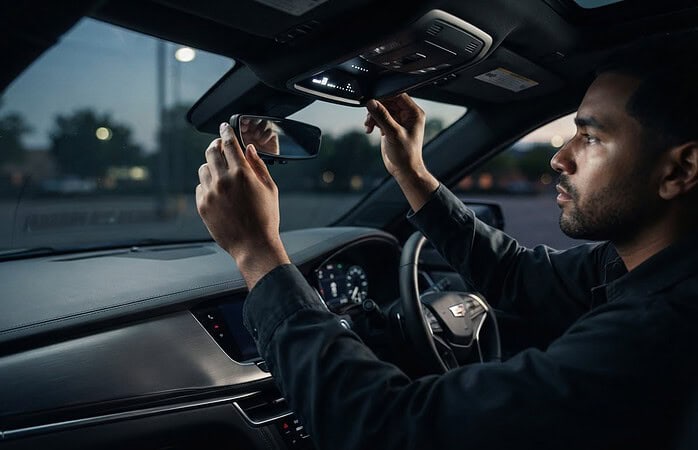
Choosing a detector isn’t only about features. Consider how you want it to fit your vehicle and routine. A portable unit is a separate device in the cabin, which may suit drivers who prefer a straightforward, removable setup. A professionally integrated system is planned around the vehicle and can incorporate electronics as part of a tailored installation.
Neither approach guarantees a particular detection result. The better fit depends on your preferences, vehicle, and how you expect to use the system. Consider whether you’re comfortable managing a separate device or would rather have the setup professionally integrated with existing vehicle technology.
When professional installation may suit your needs
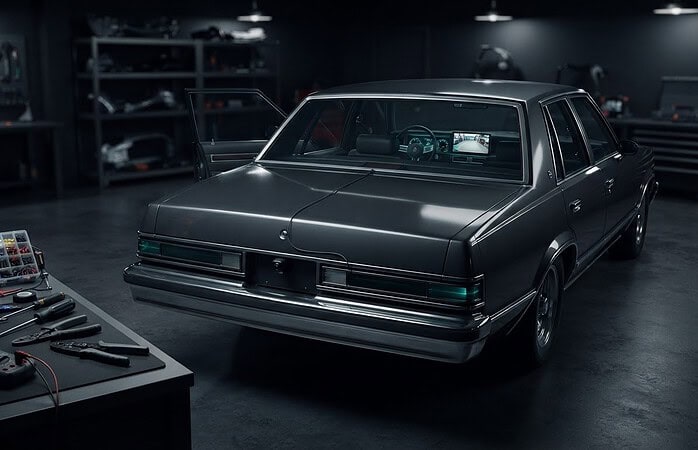
Professional installation may suit you if you want a setup designed around your vehicle rather than a one-size-fits-all arrangement. At Music In Motion, custom installations integrate electronics with existing vehicle technology. The installation can be shaped around the vehicle and intended setup, without assuming a specific product capability or detection outcome.
Radar and laser detection are part of a broader conversation about in-vehicle technology. Reviewing a vehicle safety systems guide can help you consider how detection equipment fits alongside other vehicle electronics. Keep the priorities practical: considered installation, clear day-to-day use, and responsible driving.
Explore a tailored radar and laser detection solution
Music In Motion provides Laser Detectors & Radar Detection systems and professional installation. The approach focuses on solutions, custom integration, and straightforward client service. Installation is tailored to your vehicle and the kind of setup you want, with attention to how the electronics fit into the overall system.
As you consider the best radar detector for avoiding tickets 2026, weigh portability against the appeal of a vehicle-specific installation. Think about your driving routine, preferred cabin setup, and how you want the technology to work with your vehicle. No installation can promise ticket avoidance, but thoughtful integration can make the setup more suited to your needs.
Explore Music In Motion’s radar and laser detection installation solutions to take the next step toward a setup tailored to your vehicle.
Choose a Setup That Feels Right Behind the Wheel
Before choosing, picture how you want the technology to fit into your vehicle and routine. A separate device may suit one driver, while another may prefer professional integration. Consider what feels clear, comfortable, and easy to use on an ordinary drive. The best radar detector for avoiding tickets 2026 is ultimately a setup that supports your awareness without competing for your attention. Keep lawful driving at the center of your decision.
Music In Motion offers Laser Detectors & Radar Detection, with custom installations that integrate electronics with existing vehicle technology. The focus is on practical solutions and straightforward client service, shaped around your vehicle and the finished setup you want.
Ready to explore options for your vehicle? Explore Music In Motion’s radar and laser detection solutions and take a thoughtful next step toward a setup that feels at home behind the wheel.
Frequently Asked Questions
Can a radar detector guarantee that I will avoid a speeding ticket?
No. A detector can’t guarantee a warning before enforcement or change the result of a speed measurement. An alert might occur after an officer has already recorded a vehicle’s speed. Use the device as one source of information, not a safety net. Keep your speed within the posted limit, and don’t make sudden driving maneuvers in response to an alert.
Are radar detectors legal everywhere in the United States?
No. Rules can vary by jurisdiction and vehicle category, and mounting restrictions may also apply. Before using or transporting a detector, check current official state and federal government guidance for your route and vehicle. Don’t rely on an old online chart or assume rules are the same across state lines. If your trip crosses jurisdictions, review each one before you leave.
Do radar detectors detect laser speed measurement?
Some detectors include laser detection, but sensing laser doesn’t necessarily provide useful advance notice. Laser speed measurement targets a narrow area, so an alert may happen only once a vehicle is already being measured. Check the device’s specifications and independent testing for the particular laser capability described. Treat the feature as awareness, not as a reliable way to avoid a citation.
Is a radar detector better than a speed-trap alert app?
They provide different kinds of information. A detector responds to signals it senses; an app may show user-submitted reports or other location-based alerts, depending on the app. Reports can be missing, delayed, or no longer relevant. Some drivers may use both for added context, but neither replaces observing road signs, maintaining a legal speed, and staying attentive to traffic.
How should I compare radar detector range and false-alert filtering?
Compare range claims only when reviews describe their test route, conditions, and signal source. A result from one test doesn’t establish what you’ll experience on a different road or in another vehicle. For filtering, look for evidence about how the detector handles nuisance alerts during ordinary driving. Consider whether the review reports both useful alerts and unwanted ones, rather than judging performance by range alone.
Can a radar detector be professionally installed in my vehicle?
Yes. Music In Motion professionally installs Laser Detectors & Radar Detection systems. A custom installation can be planned around your vehicle and how you want the electronics integrated with its existing technology. If you prefer a coordinated vehicle setup, consider the installation approach rather than treating the detector as a standalone purchase. Installation doesn’t guarantee detection or prevent tickets.
What should I check before buying a radar detector in 2026?
Start by checking whether a detector’s features fit your driving habits, how alerts are presented, and what independent tests actually measured. Confirm that model details and reviews are current, then verify applicable laws through official sources for your location and vehicle. Finally, decide whether a portable device or professional installation better suits your cabin and preferences.