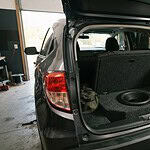
The best audio setup for a leased car improves sound while leaving the factory stereo unmodified. Start with speakers that fit your vehicle, then consider an amplifier or signal processor and a powered subwoofer for fuller bass without replacing the head unit. Keeping the factory unit can also preserve built-in features such as navigation and Bluetooth.
A richer, clearer sound need not create complications when the lease ends. Take a staged approach: choose upgrades suited to the car, its existing features, and your bass preferences, while avoiding changes to the factory unit that could risk lease-related fees.
This guide explains how speaker design affects performance, what amplifiers and signal processors do, and which factory features may be tied to the stereo. It also covers powered subwoofers and enclosures, which can add depth to your music without making the rest of the system an afterthought.
Key Takeaways
- Vehicle-fit speakers can improve sound while keeping the factory stereo in place; matching dimensions helps simplify the upgrade.
- A signal processor or amplifier can enhance the factory system without replacing its head unit.
- Keeping the factory stereo unmodified helps preserve access to features such as built-in navigation and Bluetooth.
- A powered subwoofer combines a subwoofer and amplifier, while an enclosure can add resonance and fuller bass.
1. Speakers and speaker performance levels
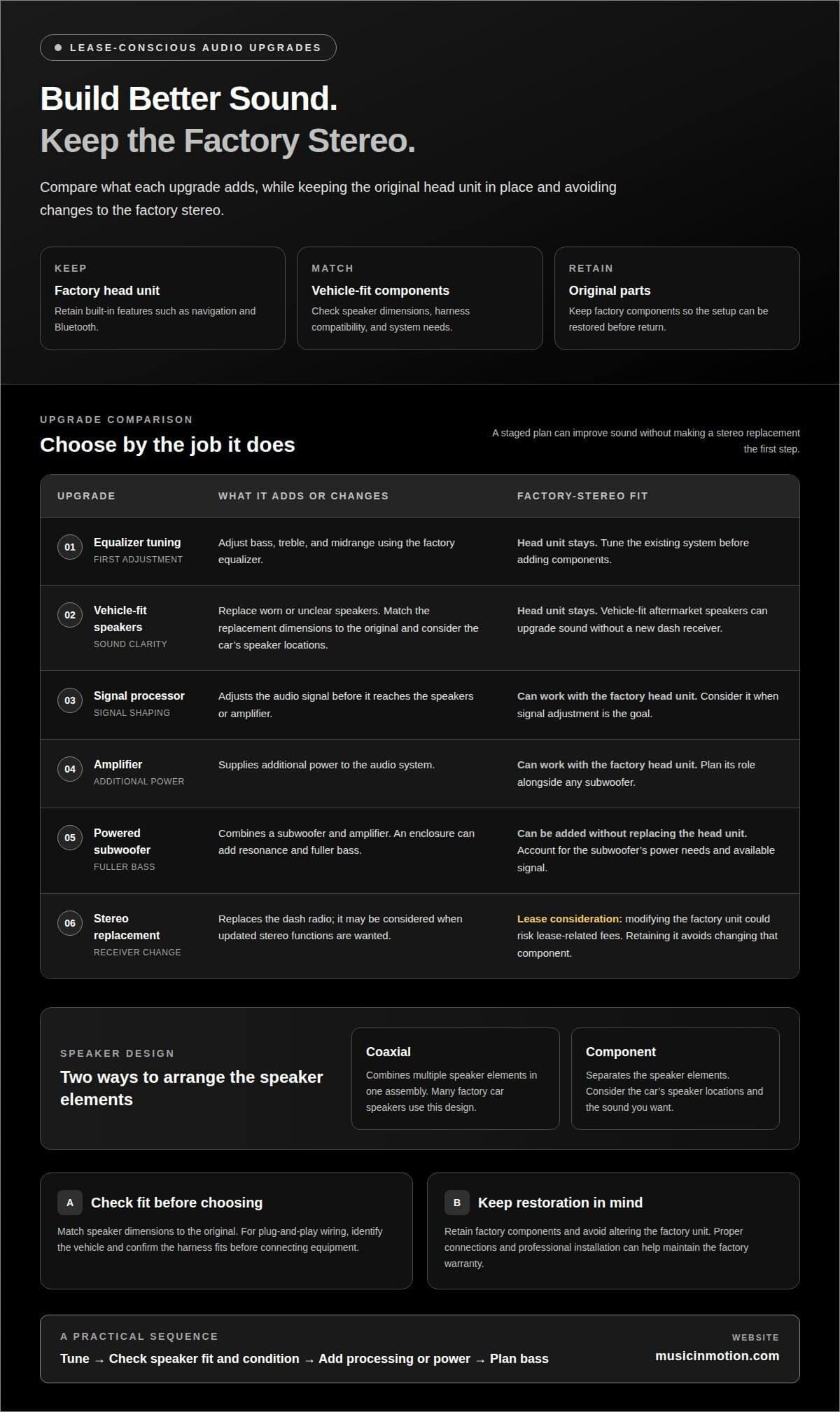
For the best audio setup for a leased car, start with the speakers, not a replacement stereo. Vehicle-fit aftermarket speakers can improve sound while keeping the factory head unit in place. This changes your listening experience without requiring a new dash receiver.
Many factory car speakers use a coaxial design, combining multiple speaker elements in one assembly. A component system separates those elements. The choice affects how the system is arranged, so consider the car’s speaker locations and the sound you want before choosing an upgrade. In either case, matching the replacement’s dimensions to the original can make installation more straightforward.
Worn stock speakers can make music sound less clear over time. Their inner parts are often made of paper, which can degrade with age. If a speaker crackles, distorts, or loses clarity, replacing that unit is a practical first step. Check the original speaker’s dimensions and fit before selecting a replacement, rather than choosing by appearance alone.
What are the best sound-quality upgrades for a leased car on a budget? First, adjust the bass, treble, and midrange on the factory equalizer. Then consider replacing worn speakers with vehicle-fit aftermarket units while keeping the stock head unit. These steps can improve what you hear without adding a stereo replacement to the project.
Can you install an aftermarket stereo or speakers in a leased car without violating the lease? Speaker upgrades can leave the factory stereo untouched, but modifying the factory unit could risk lease violations and potential fees. As vehicle leasing specialists like Fleetsauce advise, keep the original head unit and retain the factory components so the car can be returned to its original configuration.
Plan the system in stages: check speaker fit and condition, then decide whether tuning meets your needs. This keeps the first upgrade focused, helps avoid unnecessary changes, and gives you a clear basis for choosing any later components.
2. Car stereo and amplifier installation
A leased car can have better audio without replacing its factory head unit. A signal processor or amplifier can work with the original audio signal while leaving the dash stereo in place. This lets you build on the existing system rather than making the receiver your first change.
A signal processor adjusts the audio signal before it reaches the speakers or amplifier. An amplifier supplies additional power to the system. Choose based on what you want to address: signal shaping or greater power. Either can work with a factory head unit, making both options worth considering for a lease-conscious installation.
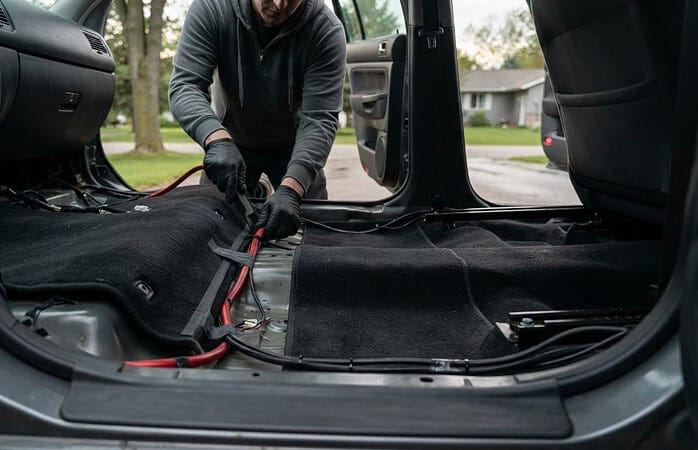
Plan for the subwoofer, too. A car subwoofer needs an amplifier to receive power. Treat the amplifier and subwoofer as matched parts of the system, rather than choosing them separately without considering how they’ll work together. The installation needs to account for the subwoofer’s requirements and the signal available from the factory system.
Replacing the dash radio may make sense in a car that’s more than a few years old, especially if you want updated stereo functions. In a leased vehicle, though, keeping the original unit avoids modifying that factory component. Professional installation can help ensure proper connections and maintain the factory warranty. A planned installation also helps avoid reworking the system as you add components.
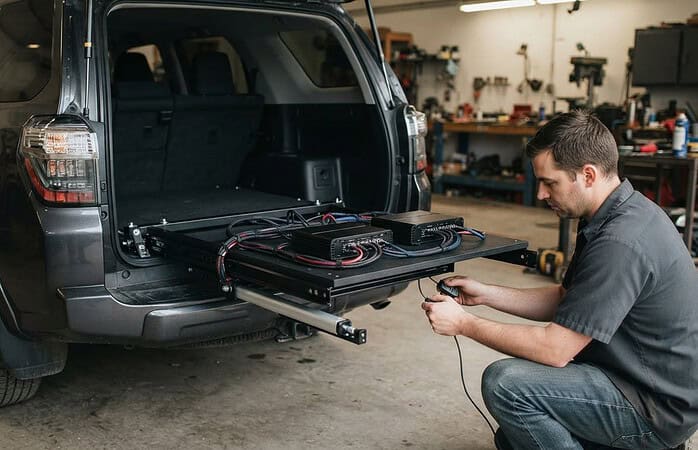
Think through the system in stages: retain the head unit, identify whether signal processing or amplification addresses your needs, then plan subwoofer power accordingly. This gives each component a clear role. For a setup that needs carefully integrated wiring and equipment, custom audio installation can bring the pieces together.
Budget and wiring choices can shape the plan. Professional car electronics installation technicians are described as the easiest route for installing new components, which can help when integrating the wiring and equipment.
Consider whether keeping the factory head unit or choosing an updated receiver better suits your installation plan.
3. Factory vehicle features affected by installation
Leaving the factory stereo unmodified preserves access to built-in features such as navigation and Bluetooth. For a leased car, keeping the original head unit is a practical way to add audio components while retaining those functions.
What is the best audio upgrade for a leased car without permanent modifications? Keep the factory stereo and choose compatible additions that can be removed later. Retain the original parts and avoid altering the factory unit to make it easier to restore the vehicle.
Plug-and-play installation depends on matching the harness to the vehicle. For example, the Metra 70-1761 radio wiring harness fits select Toyota vehicles from 1987 onward and supports power and four speakers. That example applies to select Toyota vehicles, not every car. Identify the vehicle and match the harness before connecting equipment; a compatible connection helps avoid cutting into factory wiring.
DIY kits can suit straightforward installations, but connectors still need to match and be secured correctly. Professional installation is a useful option for lease-conscious upgrades. Dedicated specialists like Han Revolution Car Audio demonstrate how expert installation can cleanly integrate and tune components without replacing the factory stereo. The best approach depends on the factory system and the components being added.
Will aftermarket audio modifications affect a lease return inspection or fees? Modifying the factory unit could risk violating the lease agreement and incurring potential fees. Keeping the original stereo and components, then restoring the setup before return, helps limit changes to the vehicle.
Does upgrading a leased car’s audio affect its warranty or insurance? Professional installation can help maintain the factory warranty by ensuring proper connections. Insurance outcomes depend on policy terms, so an audio installation alone does not determine whether coverage changes. Keep records of components and installation details with your vehicle paperwork.
When replacing car audio components, matching the new parts’ dimensions to those being replaced can make installation easier. Check fit as part of your preparation, rather than waiting until replacement work begins.
A car audio system can be built in stages because its components are separate. Planning the sequence helps prevent redoing earlier installation work. You do not need to complete the system all at once, but consider how later additions will fit with the components already installed.
4. Powered subwoofers and enclosures
A powered subwoofer combines an amplifier and subwoofer in one unit. This compact arrangement can add low-frequency impact without a separate amplifier beside the subwoofer. For a leased car, consider more than how much bass you want: think about the enclosure’s fit, where the unit will sit, and how it will connect to the factory system.
The enclosure affects how the subwoofer sounds. It can help produce fuller bass inside the cabin, while its size and placement affect cargo space and how easily the unit can be removed. Compare the available trunk or cargo area with the enclosure’s footprint before choosing a setup.
Can you add a subwoofer to a leased car without drilling or damaging the interior? Choose a removable installation that avoids drilling and uses existing mounting points where suitable. A powered subwoofer can simplify equipment placement, but its wiring and mounting still need careful planning to protect interior trim and keep the unit secure.
Consider three things before installation: the bass level you want, the space you can spare, and how you’ll remove the system later. A smaller enclosure can preserve more cargo room, while a larger one takes up more space. Keep the original trim and vehicle components intact, and plan cable routing so it does not interfere with everyday use.
A custom enclosure can be shaped around the available space and the system’s intended role. That matters when a standard box blocks cargo access or doesn’t fit the vehicle’s layout. Music In Motion builds custom subwoofer enclosures for audio installations. For a leased car, make removability and interior protection part of the design from the start.
Music In Motion: Car Audio Upgrades
Music In Motion offers Car Audio Upgrades and Custom Installations for drivers planning a lease-conscious sound system. Turn to the team for help matching speakers, signal processing, amplification, and bass components to your vehicle and listening goals. A cohesive plan can account for the factory stereo and the possibility of removing added equipment later.
For bass-focused builds, Music In Motion can create Custom Subwoofer Enclosures as part of an audio installation. The right setup depends on your vehicle’s layout, available cargo space, and preferred sound. Share those priorities to shape the installation around how you use your car.
To discuss your audio setup, contact Music In Motion.
Plan an Upgrade That Fits Your Next Drive
The best audio setup for a leased car suits your listening habits and plans for the vehicle. Before choosing equipment, decide what matters most: clearer vocals, stronger bass, or a more balanced sound. Then consider how much interior or cargo space you’re willing to use and whether you want added components to be removable when the lease ends.
Music In Motion offers Car Audio Upgrades and Custom Installations to shape a system around your priorities. The team also works with Marine Audio Systems, bringing specialized audio experience across different vehicles. For your car, contact Music In Motion to turn your sound preferences and lease considerations into a practical installation plan.
Start a conversation about the audio experience you want. Contact Music In Motion and take the next step toward a setup that feels right behind the wheel.