A car audio system needs more than a powerful amplifier; it needs a well-planned power path. Using a distribution block for car audio lets one power cable from the battery feed multiple components, such as amplifiers. The block organizes the wiring and makes a multi-component setup easier to manage.
When adding equipment, it’s reasonable to wonder how the connections fit together and how to avoid overloading the vehicle’s electrical system. A distribution block splits a power feed among components, but the wiring layout still needs to match each component’s requirements.
Learn what a distribution block does, how it connects the battery to audio components, and how it can help organize power wiring and reduce cable clutter. We’ll also explain what a professional considers when integrating a block into a car audio system, so you can understand how the installation supports reliable sound.
Key Takeaways
- A distribution block routes power from one battery cable to multiple audio components, helping keep a multi-component system organized.
- Component power needs guide how a professional plans the connections and distributes power through the system.
- A properly planned setup can help reduce strain on the vehicle’s electrical system, but the block must be part of a suitable overall wiring design.
- Professional installation can integrate the block with car audio upgrades and custom installations for a tidy, coordinated result.
Connecting the battery to audio components
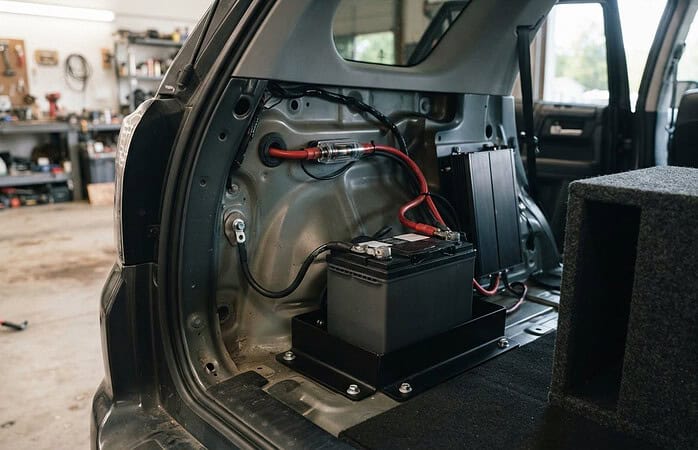
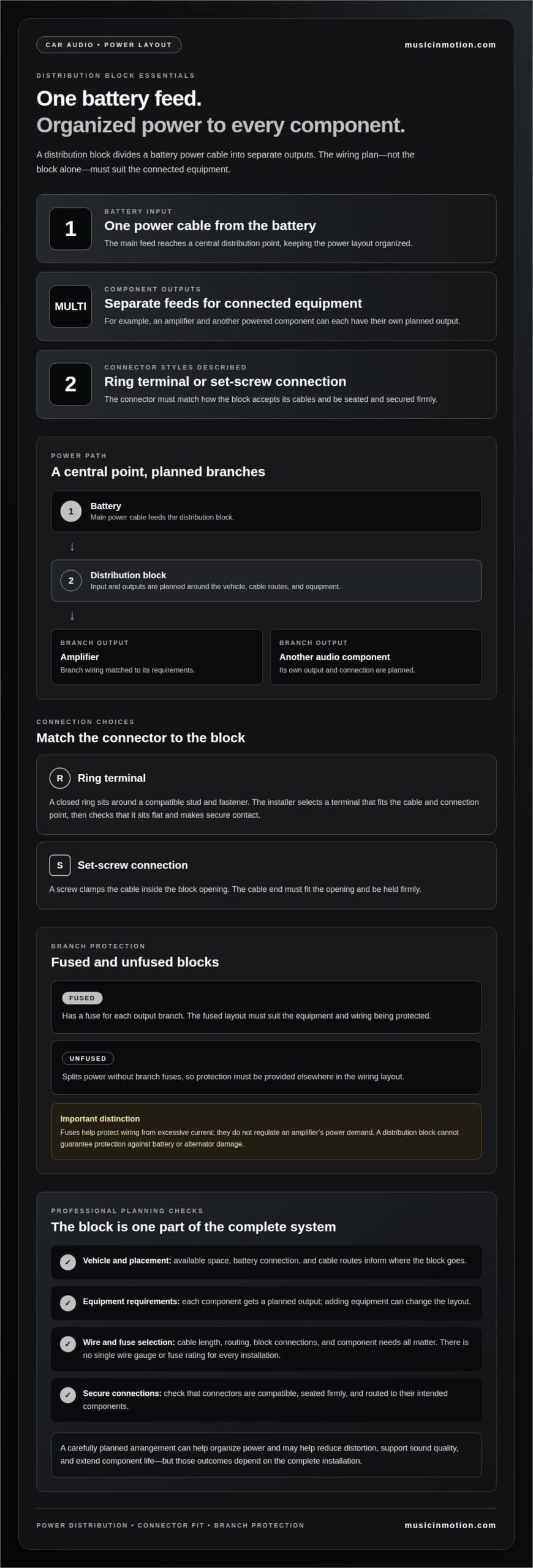
A distribution block takes one power cable from the battery and divides it into multiple outputs for audio components. A professional plans its connections around the vehicle, the components, and the cable routes, rather than treating the block as a stand-alone fix.
For example, one input can feed separate outputs for amplifiers, with shorter cables running from the block to each component. This keeps the main battery connection organized and gives each device its own connection point. Installing a fused distribution block involves planning its position, connecting the input and component outputs, and checking that the connections and fuses suit the system.
Ring-Terminal Connections
A ring terminal makes a bolted connection between a power cable and a compatible connection point, such as a battery terminal or distribution-block stud. Its closed ring stays around the fastener, unlike an open-ended connector that can slip away. The installer selects a terminal that fits both the cable and the connection.
During installation, the professional checks that the ring terminal sits flat and makes secure contact. In a setup with an amplifier and another audio component, each cable end must match its connection point. A poor fit can loosen the connection or disrupt reliable power delivery.
Connector Selection
Connector choice depends on how the distribution block accepts its input and output cables. Some blocks use ring terminals secured with a fastener; others use set-screw connections, where a screw clamps the cable inside the opening. The installer matches the cable end to the block instead of forcing an incompatible connector into place.
A set-screw connection needs a cable end that fits the block’s opening and can be secured firmly. Ring terminals need a matching stud and fastener. In either case, the professional checks that the connector is seated, the cable is held firmly, and each output leads to its intended audio component.
Safe Fused-Block Wiring
Before choosing the block’s position and cable routes, a professional considers the vehicle’s available space, battery connection, and audio components. The fused layout must suit the equipment being powered, so the installer plans each output and connection as part of the complete system.
To plan the installation, identify the vehicle and the audio equipment being added or already installed. An amplifier and a second component, for example, need separately planned outputs. The professional then connects the input and branches, secures the connections, and checks that the finished wiring matches the intended layout.
Managing power flow to components
A distribution block organizes the power connections between a vehicle’s battery and its audio equipment. Using a distribution block for car audio gives the installer a central point for planning separate feeds to components. The block itself doesn’t determine each device’s needs; those depend on the equipment and the complete wiring design.
Consider an audio system with an amplifier and another powered component. The installer plans an output for each device, then matches the branch wiring to that component’s requirements. This avoids treating different devices as if they place identical demands on the system. Planned cable routes and connections also determine how the power feed is arranged.
A distribution block splits power; it doesn’t balance a system automatically. Each output connects to a component, and the system design must account for that component’s requirements. Adding another amplifier, for example, changes which equipment the wiring serves. The installer should account for that change in the layout instead of assuming the existing branch plan still fits.
A carefully planned arrangement can help distribute power to connected components. This may help reduce distortion, support sound quality, and extend component life, although these outcomes depend on the complete installation. Using a distribution block for car audio is most useful as part of a coordinated setup that accounts for the block, wiring, and equipment together.
During installation, the component list and intended system layout guide how the outputs are assigned. The installer can assess whether the distribution arrangement suits the equipment and keeps connections organized. If you’re planning a system with several components, professional car audio system planning can bring the power layout and listening goals together.
Protecting the vehicle’s electrical system
A distribution block can organize power delivery, but it cannot replace suitable wiring and fuses. Using a distribution block for car audio safely means planning protection for the full system, including its individual branches.
Fused or Unfused Blocks
A fused block has a fuse for each output branch; an unfused block splits power without branch fuses. A professional chooses between them by reviewing the protection plan, wiring, and connected components. Separate amplifier branches, for example, may call for individual fuses, while an unfused block requires protection elsewhere in the layout.
Fuses help protect wiring from excessive current, but they don’t regulate an amplifier’s power demand. A block can organize power flow and reduce strain on the vehicle’s electrical system, but it can’t guarantee protection against battery or alternator damage.
Wire Gauge and Fuse Ratings
There’s no single wire gauge or fuse rating for every installation. The professional considers cable length, routing, the block’s connections, and each component’s requirements. Using a distribution block for car audio means matching fuse choices to the wire and branch they protect, rather than selecting them by amplifier size alone.
To choose a fuse for an amplifier branch, the installer reviews the amplifier specifications and the capacity of the branch wiring. Two amplifiers with different requirements, for example, may need different branch protection. The main feed and each output are considered as parts of the same system.
Installation Mistakes and Safety Risks
Common mistakes include loose terminals, unsuitable wire or fuse choices, and connecting an amplifier to the wrong branch. A loose connection can interrupt power or generate heat; an incorrectly selected fuse may not protect the wiring as intended. An unfused branch also needs suitable protection elsewhere in the overall design.
A professional checks that cables fit their terminals, branch fuses suit their wiring, and connections follow the planned layout. Adding an amplifier without reassessing the power plan can leave the installation mismatched. These checks help identify wiring and protection problems before the audio system is used.
Car-audio distribution blocks
A distribution block splits battery power into outputs for audio components and can make wiring easier to manage. The right choice depends on the system, its connections, and where the block can be mounted.
Choosing a Power Distribution Block
A professional selects a block by reviewing the connected equipment and planned wiring layout. The number of outputs must suit the components, and the input and output connections must fit their cables. An amplifier and a second audio component, for example, need suitable connections for each branch.
The installer also considers whether the system’s protection plan calls for a fused block. The components’ requirements and the vehicle’s available installation space shape the choice. A suitable block supports an organized layout, but it must work with the complete wiring plan.
Distribution Block Cost
The cost of a car audio distribution block depends on its configuration and the system requirements. The number of outputs, connection style, and use of branch fuses all affect which block suits the installation. The wiring work is another consideration when planning a complete system.
There isn’t one price that applies to every setup. For a car audio installation, the price depends on the project and is provided after a quote request. The system layout and installation requirements shape the quote, distinguishing the block itself from the broader work needed to integrate it.
Mounting Location
A professional chooses a mounting point that suits the vehicle’s layout and lets the input and output cables reach their connections without being cramped. The location should keep the block secure and accessible for installation and inspection. A position that interferes with routine access to vehicle components, for example, is a poor fit.
Cable routing helps determine the final position. A central point near the connected audio equipment may keep branch runs organized, while the main feed still needs a practical route from the battery. The installer weighs these paths against available space and the need to protect connections from routine disturbance.
For a professionally planned system, discuss a custom car audio installation that brings the block, wiring layout, and components together.
Music In Motion
Music In Motion helps drivers plan car audio upgrades and custom installations, including the wiring that connects multiple components. If you’re considering a distribution block, the team can plan how it fits your audio system, vehicle layout, and installation requirements. That means looking beyond the block itself to the connected equipment and finished wiring. The goal is a coordinated system, not simply another component added to the vehicle.
Bring your audio plans and details about the equipment you want connected. Music In Motion can shape the installation around your needs, whether you’re upgrading an existing setup or planning a custom system. Contact Music In Motion to plan your car audio installation.
Plan a System That Fits Your Next Move
Think about how you want your audio system to grow, not just what you’re adding today. Using a distribution block for car audio is one part of planning a setup that fits your vehicle, equipment, and listening priorities. A professional can turn those goals into a complete installation, with attention to how the system works as a whole.
Music In Motion offers car audio upgrades and custom installations, as well as marine audio systems for boats. Whether you’re refining your current setup or starting a new project, share what you want your system to do. That conversation can help shape an installation around your plans and the finished experience you want.
Contact Music In Motion for car audio help and take the next step toward a system built around your drive.
Frequently Asked Questions
What is a Car Audio Distribution Block?
A car audio distribution block routes battery power to multiple parts of an audio system. It gives installers a central point for organizing connections, such as power feeds for amplifiers. Its role is electrical distribution, not audio processing: it doesn’t alter the music signal or replace an amplifier.
What is a car audio distribution block and what does it do?
A distribution block provides a shared connection point for routing vehicle battery power to audio equipment. When a system has more than one powered component, for example, the installer can plan connections around a central block instead of routing separate battery cables to each device. The block and wiring arrangement need to match the components and the overall installation plan.
What car audio distribution blocks are suitable for a system with multiple amplifiers?
A suitable block has enough outputs for the amplifier connections and accepts cables appropriate to the installation. The professional also considers each amplifier’s power requirements and whether the system plan calls for fused branches. Two amplifiers, for instance, may need separate outputs and protection choices based on their individual needs. The right block depends on the complete system, not just the amplifier count.