A convertible’s best stereo isn’t simply the loudest one. Upgrading the stereo in a convertible works best when the system suits your listening habits, the space in your vehicle, and the way sound changes with the top down. At freeway speed, wind can carry sound away, so clarity and balance matter as much as volume.
A richer, more engaging sound doesn’t require buying components that don’t suit your car or listening habits. The right choices depend on what you want to improve, from clearer vocals to stronger bass, and on how the speakers, amplifier, subwoofer, and receiver work together.
This guide explains how to set priorities and a budget, choose components, check receiver fit, and weigh professional installation against a DIY approach. Use it to plan an upgrade that sounds right with the roof up and down.
Key Takeaways
- Start with how and where you listen so the upgrade is designed around your convertible, not just a list of components.
- Balance speakers, amplification, and bass to build a system that delivers clear sound with the top up or down.
- Set priorities before allocating your budget; the best plan focuses spending on the parts that address your biggest audio needs.
- Receiver fit depends on the space and layout in your vehicle, so include compatibility in the professional installation plan.
Planning a professional stereo installation for your convertible
A professional installation starts with your vehicle’s factory layout, existing audio equipment, and preferred cabin appearance. For a convertible, the plan also accounts for changing sound conditions and moisture exposure.
Custom Installation and Stock Appearance
A custom installation can improve audio while keeping the dashboard and cabin close to their original appearance. That’s useful if you want better sound without a prominent aftermarket look.
The installer assesses the receiver position, trim, speakers, and factory controls before recommending changes. A receiver that fits behind the original trim can preserve a clean dashboard, while discreet speaker placement keeps the focus on the interior. If the factory system uses integrated controls, the installation plan should preserve their operation rather than treat the stereo as a standalone component.
Installation Steps and Convertible Risks
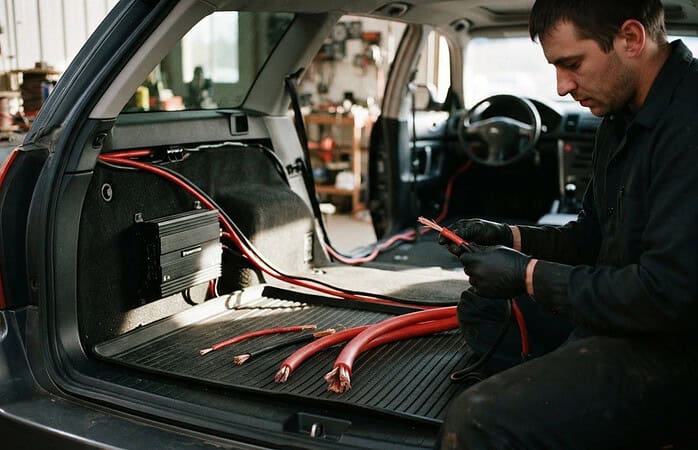
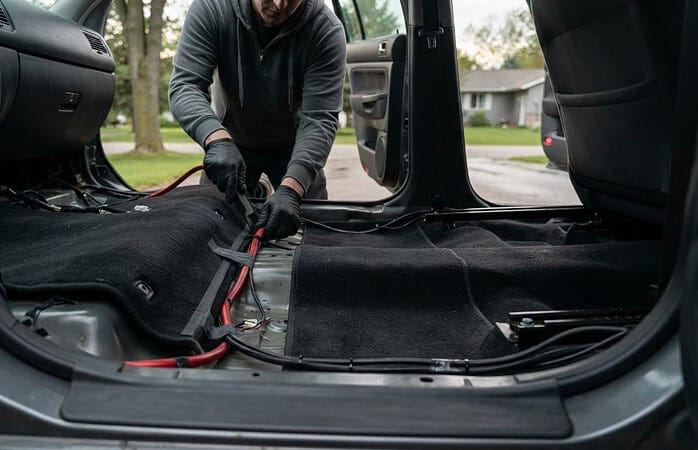
A professional reviews the vehicle’s audio layout and how the receiver, speakers, wiring, and factory features connect. The installer then plans component placement, protects trim while accessing the system, connects the selected equipment, and tests playback and vehicle functions before finishing the interior.
In an open-top vehicle, consider moisture exposure and battery drain. Equipment and connections should be positioned and protected with the convertible’s exposure in mind. Check power connections so the stereo doesn’t continue drawing power when the vehicle is off. Testing after installation can help identify issues before the car returns to regular use.
Airbags and factory security systems rely on vehicle-specific components and wiring, so the installation plan should preserve their connections and functions. A stereo upgrade doesn’t inherently require changing those systems. Warranty implications depend on the vehicle’s terms and whether the installation causes damage, so plan the work around the car’s existing setup.
Choosing speakers, amplifiers, and subwoofers for a professional convertible stereo upgrade
With the top down, wind can carry sound away from occupants’ ears, making component balance important. A professional matches the speakers, amplifier, and bass output to the convertible’s cabin and your intended listening volume.
Choosing Speakers and Subwoofers
Speakers reproduce vocals and instruments, while a subwoofer handles low-frequency sound. Choosing them as a coordinated system helps maintain clarity and fullness. Available mounting locations and cabin layout determine what fits and where each component can perform effectively.
Replacing worn or limited factory speakers may sharpen vocals, while adding a subwoofer can bring depth to music without relying on small speakers for bass. A custom enclosure can be designed for the space available. The installer considers how placement affects cabin use and overall sound.
Amplifier Power
An amplifier supplies power to speakers and can help a convertible system reach your desired listening volume. This matters because wind and road noise can make music harder to hear when driving with the top down.
Choose an amplifier to work with the selected speakers and subwoofer, not as an isolated upgrade. A professional considers intended volume, component requirements, and installation space. Too little power may limit output, while an unsuitable match can keep components from working together as intended. The goal is controlled, clear sound, not volume alone.
Sound Quality With the Top Down
Improving sound with the roof down means building a system that stays clear as wind noise competes with music. Suitable speakers, adequate amplifier power, and well-integrated bass can help preserve detail and balance at the listening position.
A professional can tune the system for the convertible’s cabin, adjusting the balance between vocals, instruments, and bass. Stronger low-frequency output may add fullness outdoors, while clear midrange helps voices stand out. The right combination depends on the vehicle, component placement, and your listening habits. A Custom Subwoofer Enclosure can integrate bass into the system while accounting for cabin space.
Assessing audio needs and budget
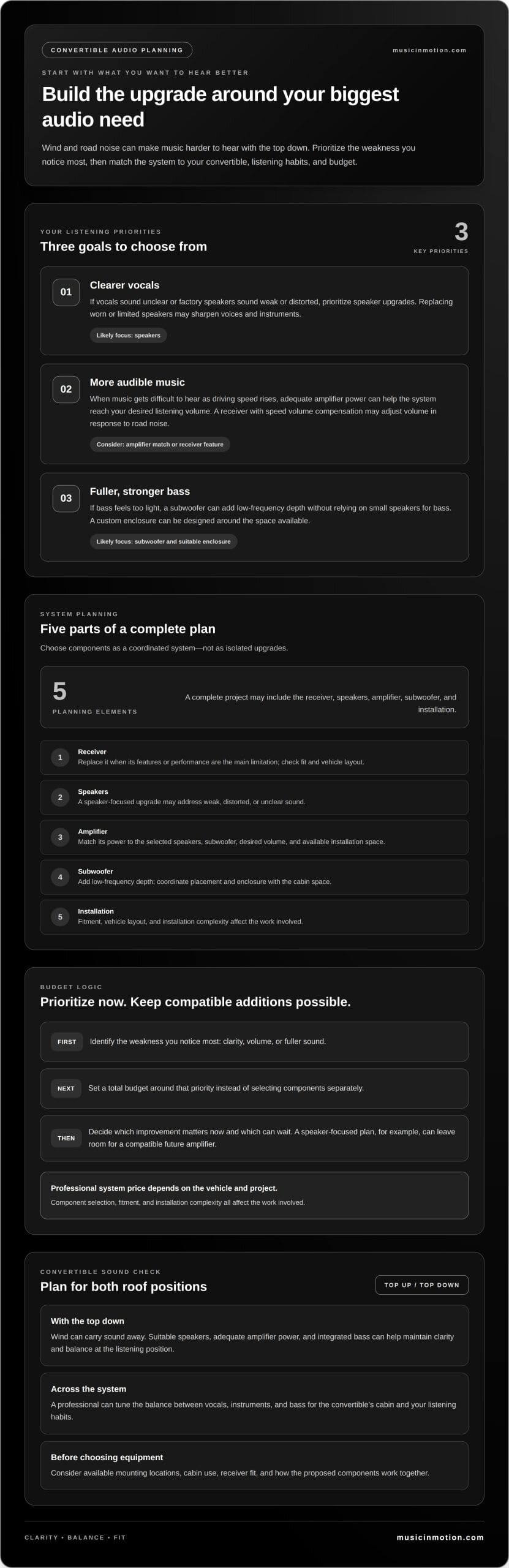
Start by identifying when your current system falls short. Is music hard to hear with the top down, do vocals sound unclear, or is the bass too light? At freeway speed, wind can carry sound away from occupants’ ears. Decide whether clarity, volume, or fuller sound matters most to give upgrading the stereo in a convertible a practical starting point.
Replace the head unit when its features or performance are the main limitation. If it works as needed but factory speakers sound weak or distorted, prioritize speaker upgrades. For example, if you like the receiver’s controls but want clearer vocals, new speakers may help more than a new head unit. Choose the upgrade that addresses the problem you notice most.
Set a total budget around your priorities, rather than choosing components separately. A complete plan may include a receiver, speakers, an amplifier, a subwoofer, and installation. The price of a professional system depends on the vehicle and project. Component selection, fitment, and installation complexity all affect the work involved.
Ask how each proposed component supports a specific listening goal. Clearer vocals may call for speaker changes; stronger bass may require a subwoofer and suitable enclosure. If music becomes difficult to hear as driving speed rises, a receiver with speed volume compensation may help adjust volume in response to road noise. These priorities clarify which upgrades to address first.
Protect your budget by deciding which improvement matters most now and which can wait. A balanced system can start with the component that addresses the clearest weakness, while leaving room for compatible additions. For example, a speaker-focused plan can allow for a future amplifier instead of equipment that may need replacing. The factory system also shapes the plan: some setups can be modified, while others may require replacing more original components. This makes upgrading the stereo in a convertible easier to align with your listening goals. Ask for a clear breakdown of equipment and installation work to keep priorities visible.
Check receiver fit and DIN size for pro installation
Receiver fit depends on the dashboard opening, available depth, and factory connections. Before installation, a professional measures the vehicle’s available space and compares it with the receiver and other selected components.
For wiring and controls, the installer reviews the factory harness, receiver connections, and integrated functions. Compatibility means planning how the new stereo connects while preserving the factory controls you expect to use. After installation, the system is checked to confirm the receiver and retained features work as intended.
Check each speaker mounting location rather than relying on a general size assumption. The installer measures the opening and available depth, then accounts for mounting and clearance. A speaker that fits one door may not fit another location in the same vehicle. These measurements help prevent interference with trim and ensure components sit securely.
DIN describes a receiver’s installation format, but the convertible’s dashboard opening still determines what will fit. The receiver may need a suitable mounting arrangement to align with the dashboard. For example, an installer checks that the unit fits the opening and surrounding trim sits neatly afterward. Measure before choosing a receiver.
Vehicle-specific wiring and controls can shape the installation plan as much as receiver dimensions. Factory systems may use integrated controls or connections that need to be retained, so the installer evaluates them alongside speaker openings and receiver space. The goal is a functional system that fits cleanly, without forcing components into unsuitable openings or leaving factory features disconnected.
If you’re planning a receiver or speaker change, schedule a custom installation designed around your convertible’s fit and factory setup.
Music In Motion
Music In Motion helps convertible owners plan stereo upgrades around their listening priorities and vehicle. Its car audio upgrades and custom installations bring component selection and fitment together, planning the system as a complete result rather than a collection of separate parts.
Turn to Music In Motion for professional help balancing your sound goals with factory controls, available space, and the convertible’s changing cabin conditions. Whether you’re considering a receiver change, clearer speakers, or a more complete system, the installation plan can account for how the choices work together.
Contact Music In Motion to discuss your convertible stereo upgrade.
Make the Upgrade Fit Your Drive
The most satisfying stereo upgrade is one that feels right every time you take the convertible out. Think about the music you enjoy, how you use the car, and how you want the cabin to feel with the roof open. Those preferences give the installation a clear purpose beyond replacing equipment.
That’s the value of a considered approach to upgrading the stereo in a convertible: your listening priorities guide the choices, and professional planning brings them together in a finished system. You don’t need to select every component before you start. A clear idea of what you want to hear is a strong first step.
Ready to shape a system around your convertible and your driving style? Contact Music In Motion for help and take the next step toward a more enjoyable drive.
Frequently Asked Questions
What should I consider when choosing a stereo for a convertible?
Choose a receiver that suits your listening habits, dashboard layout, and factory controls. Consider whether you want hands-free calling, smartphone integration, or simpler playback, then check that the receiver supports the features you’ll use. If you drive with the roof down, sound settings that are easy to adjust while parked can make everyday operation more straightforward.
What are the best weather-resistant speakers for a convertible?
There isn’t one best speaker for every convertible; the right choice depends on the mounting location and exposure. Choose speakers suited to the vehicle’s specific installation rather than relying solely on a weather-resistant label. Marine audio equipment is designed for marine applications, which differ from a car’s cabin. A professional can match speaker construction and placement to your convertible instead of assuming boat speakers are automatically the right fit.
Do convertibles need special amplifiers or subwoofers?
No, convertibles don’t automatically need a special amplifier or subwoofer. An amplifier can help if the system needs more power for your desired listening level; a subwoofer is an option if deeper bass is a priority. If you’re happy with the bass but want cleaner playback, you may focus on amplification. If you want fuller low notes, consider a subwoofer. The decision depends on the sound you want.
Which car stereos are compatible with a convertible’s factory wiring and controls?
A compatible stereo fits the dashboard opening and available depth, connects to the convertible’s factory wiring, and preserves the integrated controls you expect to use. Before selecting a receiver, have a professional check the vehicle’s harness and functions.