What if the most effective way to upgrade your sound system has nothing to do with speakers or subwoofers? We’ve all been there; you turn up a favorite song only to have the experience ruined by vibrating door panels or the constant drone of the highway. It’s a common frustration for drivers who want to enjoy a crisp phone call without competing with tire roar. You’re likely trying to determine if sound deadening doors vs floor worth it for your specific vehicle and budget.
At Music In Motion, we believe every high-performance audio build needs a solid foundation. We’ve spent over 30 years perfecting the art of acoustic optimization; we know that where you apply material matters just as much as the quality of the material itself. This article explores whether treating your doors for better mid-bass response or insulating your floor to block exhaust heat and road noise provides the best return on investment. We’ll provide a clear look at the benefits of each approach, helping you choose the right path to a tighter, more accurate listening environment and a much cooler cabin.
Key Takeaways
- Understand why doors are the most critical area for improving speaker response and eliminating annoying panel rattles during bass-heavy songs.
- Discover how floor treatments tackle low-frequency tire roar and help regulate cabin temperature by blocking drivetrain heat.
- Learn the difference between vibration damping and sound barriers to ensure you’re using the right materials for your specific noise issues.
- Compare the installation difficulty and cost-to-benefit ratio to determine if sound deadening doors vs floor worth it for your driving lifestyle.
- See how our 30 years of custom fabrication experience helps identify the exact resonant frequencies that are holding your audio system back.
The Science of Silence: Why Sound Deadening Matters in 2026
Modern vehicles are essentially metal drums on wheels. When you drive, the energy generated by your tires, engine, and the rushing wind hits the thin sheet metal panels of your car. This causes the metal to flex and vibrate, turning your cabin into a noisy echo chamber that degrades your driving experience. Even high-end luxury cars often lack sufficient acoustic treatment because manufacturers prioritize weight savings and production speed. This gap in quality is why many drivers find themselves asking if The Science of Silence, specifically regarding sound deadening doors vs floor worth it, is the right move for their vehicle.
We see this every day at Music In Motion. A client brings in a powerful truck or a sleek sedan, but the interior feels hollow and loud. Structural resonance is the main enemy here. It’s the physical vibration of the car’s frame that you hear as an exhausting, low-frequency hum. By applying professional-grade materials, we change the way that metal behaves. We transform a thin, ringing panel into a solid, inert surface that stays quiet even at highway speeds.
Vibration Damping vs. Sound Blocking
Effective acoustic treatment requires a two-step process. First, we use Constrained Layer Dampers (CLD), which are high-quality butyl sheets with an aluminum backing. These are designed to stop metal panels from ringing like a bell. Second, we install Mass Loaded Vinyl (MLV) as a secondary layer. While butyl stops vibrations, MLV acts as a dense, literal wall that blocks outside airborne noise from entering the cabin. Using a combination of these materials is the only way to achieve that vault-like luxury car feel. It’s a comprehensive solution that addresses both the source of the noise and its path into your ears.
The ‘Foundation’ for Premium Audio
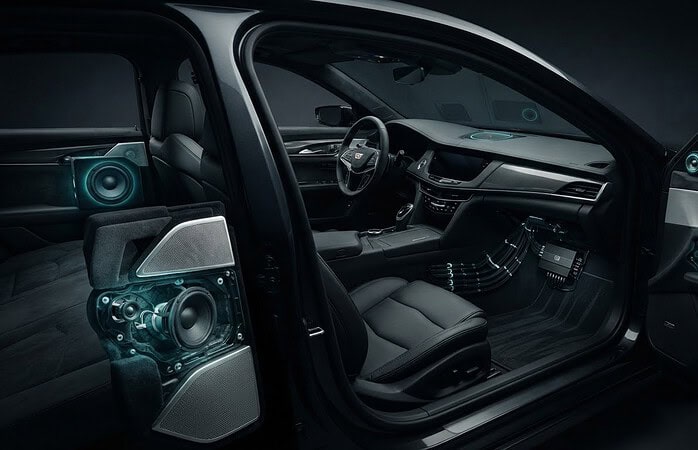
If you’re planning a car audio upgrade, sound deadening isn’t just an add-on; it’s the foundation of the entire system. Without it, your expensive aftermarket speakers are mounted to a vibrating door skin that absorbs their energy. This leads to poor mid-bass response and a loss of musical detail. Acoustic coupling occurs when the energy from the speaker driver causes the door panel to vibrate out of phase with the music, creating unwanted distortion. By lowering the noise floor of the cabin, we allow your speakers to perform at their peak. Whether you’re deciding if sound deadening doors vs floor worth it for a daily commuter or a custom show car, starting with the science ensures you get the clarity you deserve.
Sound Deadening Doors: The Audio Enthusiast’s First Choice
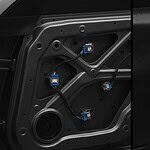
For most audio enthusiasts, the doors are the absolute first priority. We consider them the most critical area for performance because that is exactly where your primary speakers live. Most factory doors are thin sheet metal shells held together by plastic clips. This construction creates a tinny sound when you close the door and allows high-frequency road noise to pour into the cabin. When we apply professional-grade damping, we create that luxury thud that signals a high-end, well-built vehicle.
You might wonder if sound deadening doors vs floor worth it for your specific daily drive. If music quality is your main concern, the doors are the clear winner. Research into Professional Acoustic Treatment highlights how damping materials reduce vibrations on these large, resonant surfaces. We also focus on eliminating mechanical rattles. Loose lock rods, window regulators, and plastic trim pieces often vibrate during bass-heavy songs. Our installation process secures these components, ensuring you hear the music rather than the hardware.
Transforming the Door into a Speaker Enclosure
A speaker requires a solid, sealed environment to produce accurate sound. In a car, the door must act as that enclosure. We seal the inner door skin with damping material to prevent air leaks; this immediately improves mid-bass punch and accuracy. We also utilize specialized foam rings to direct sound energy through the door panel and into the cabin. This prevents back-wave interference from the rear of the speaker, which can cancel out your favorite frequencies and leave your music sounding hollow.
Impact on Daily Driving and Safety
Treated doors offer benefits that go beyond audio. Hands-free phone calls become significantly clearer because side-impact road noise is muffled at the source. High-frequency wind noise is a primary contributor to driver fatigue during long trips. By minimizing this intrusive sound, we help you stay alert and comfortable. This quieter environment also allows you to hear alerts from your vehicle safety systems more easily. If you are ready to stop the rattles and start enjoying your drive, our team can guide you through a custom car audio upgrade tailored to your vehicle.
Sound Deadening the Floor: Tackling Tire Roar and Heat
While doors provide the most immediate improvement for your music, the floor is the hardest working panel in your vehicle. It covers the largest surface area and sits directly above the most significant noise sources. Every time your tires hit the pavement, energy transfers through the chassis and into the cabin as a low-frequency rumble. This is why many long-distance drivers find that Tackling Tire Roar at its source is the only way to achieve a truly peaceful ride.
Thermal Insulation: The Hidden Floor Benefit
A major advantage of floor deadening that often goes overlooked is thermal management. The metal floor of your car acts as a massive heat sink. It absorbs warmth from the sun-baked asphalt and the hot exhaust system running directly beneath your feet. Professional-grade materials provide a thermal barrier that keeps the cabin cooler in the summer and warmer in the winter. This reduces the workload on your AC system and improves overall efficiency. For RV and truck drivers who spend extended time behind the wheel, this thermal stability is just as valuable as the noise reduction.
The Complexity of Floor Installation
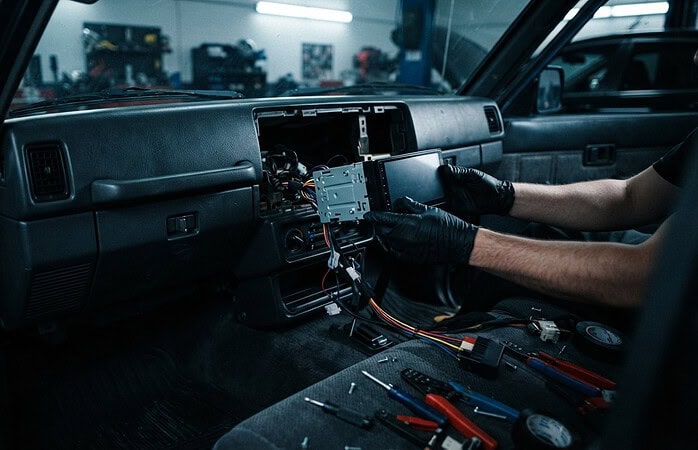
Treating a vehicle floor is a labor-intensive, seats-out process. We must remove the entire interior, including the center console and carpeting, to ensure proper coverage. It’s a precise task. We carefully manage the thickness of the material so that factory trim and carpets fit back into place perfectly. Because a quieter cabin reveals more detail in your music, we often recommend professional car audio tuning after a full floor treatment. This ensures your system is calibrated to the new, lower noise floor of your vehicle. If you want a total transformation of your driving experience, sound deadening doors vs floor worth it depends on your goals, but the floor is where we find the biggest gains in physical comfort.
The Verdict: Is Doors vs. Floor Deadening Worth It?
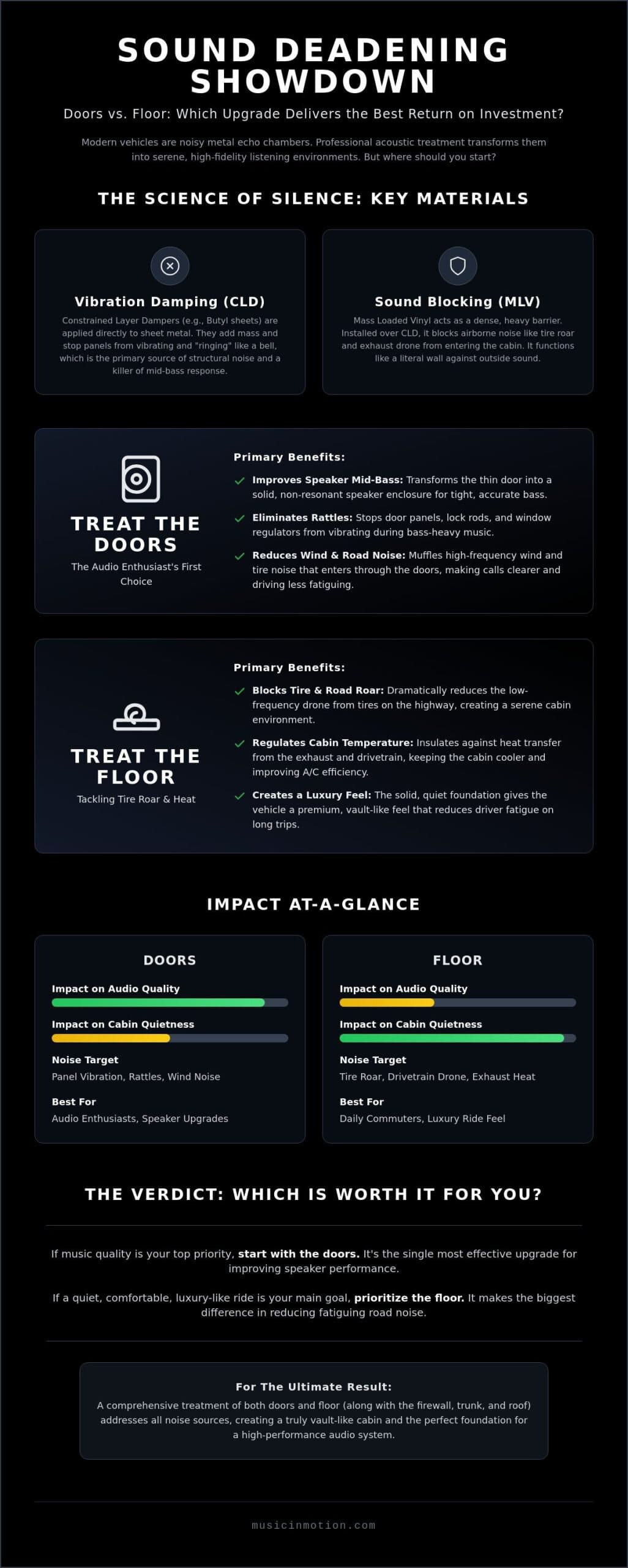
Deciding if sound deadening doors vs floor worth it often comes down to a simple trade-off between installation complexity and your specific driving goals. Doors are the undisputed ‘low hanging fruit’ of the acoustic world. They are relatively easy to access and provide an immediate, dramatic improvement in music quality and perceived vehicle solidity. If you only have the budget for one area, we almost always recommend starting with the doors. They offer the highest acoustic reward for every dollar spent and provide the foundation your audio system needs to shine.
The floor is a different beast entirely. It requires a significant commitment because the entire interior must be stripped to bare metal. However, for those battling high-frequency tire roar or a loud aftermarket exhaust, the floor is the only solution that truly works. In many cases, addressing the source with a set of quiet-running tires from Partner Tires can further diminish the intensity of the road noise entering the cabin. We find that a full vehicle approach is always the gold standard. When you treat the doors and floor together, the total reduction in noise is often greater than the sum of the parts. You eliminate the ‘weak links’ in the cabin’s acoustic seal, creating a truly serene environment.
Prioritization Guide for Different Drivers
Your driving habits should dictate your investment. If you are an audiophile who cares most about mid-bass punch and vocal clarity, prioritize the doors. They transform your car into a proper listening room. For the long-distance commuter, the floor is the better choice. It addresses the low-frequency vibrations that cause physical fatigue over hours of driving. Performance drivers often take a balanced approach. We can apply strategic damping to the doors and rear wheel wells to cut noise without adding unnecessary weight to the vehicle.
Budgeting for Your Acoustic Upgrade
While DIY kits are popular, they come with risks. Broken door clips, improperly sealed vapor barriers, or poor material adhesion can lead to rattles or even moisture issues. Professional installation ensures that every square inch of material is rolled down correctly for maximum energy transfer. When it comes to the floor, we advise against ‘partial’ treatments. Noise is like water; it finds the path of least resistance. If you leave sections of the floor bare, the sound will simply migrate to those untreated areas. Investing in a professional application adds long-term value to your vehicle by improving both resale appeal and daily comfort. If you want to see how we can transform your specific vehicle, contact our team for a custom car audio upgrade quote today.
Professional Acoustic Treatment at Music In Motion
At Music In Motion, we don’t just apply material to surfaces. We use a precise process to identify the specific resonant frequencies that are unique to your vehicle’s make and model. Every car has “hot spots” where vibrations are most intense. Our team uses over 30 years of experience to target these areas with surgical precision. This expert placement ensures that you aren’t just adding weight; you are adding value. When considering if sound deadening doors vs floor worth it, we provide the data and insights to help you make an informed decision based on the actual acoustics of your cabin.
Our work stands apart from standard DIY kits because we treat sound deadening as a component of car audio fabrication. We don’t just slap on a sheet of butyl. We integrate the damping material into the structure of your door or floor to create a finished result that looks and feels like it came from a high-end factory. This level of detail is what allows your aftermarket speakers to perform with the accuracy they were designed for. We prioritize the delivery of a finished result over the mere transaction of goods, ensuring your car feels as good as it sounds.
Why Experience Matters in Sound Deadening
Installing sound deadening is more than just sticking a pad to a panel. It’s about understanding the internal mechanics of your vehicle. We’ve seen many DIY projects go wrong when enthusiasts accidentally block critical drainage holes in the doors or foul up window tracks with thick materials. These mistakes can lead to rust and mechanical failure. We select the ideal material thickness for every specific area of your car, from the thin roof skins to the heavy-duty floor pans. Our commitment is to provide simple, reliable, and high-performance results that improve your daily life behind the wheel.
Start Your Journey to a Quieter Ride
Every project begins with a personal consultation. We listen to your concerns, whether it’s intrusive road noise on your commute or a lack of mid-bass in your favorite tracks. This allows us to determine if sound deadening doors vs floor worth it for your specific lifestyle and budget. We often combine these acoustic treatments with other convenience upgrades, such as remote start installation, to maximize your comfort and security in one visit. We are ready to help you transform your vehicle into the quiet, high-performance sanctuary you deserve. Contact our team today for an expert evaluation of your vehicle’s acoustic needs.
Transform Your Daily Drive with Expert Acoustic Treatment
Choosing the right area to start your vehicle transformation depends on your specific goals. Doors provide the most immediate acoustic foundation for your speakers, while floor treatments deliver unparalleled physical comfort by blocking tire roar and heat. Determining if sound deadening doors vs floor worth it for your vehicle comes down to whether you prioritize musical clarity or a peaceful highway commute. Both upgrades turn a standard cabin into a solid, premium sanctuary.
We bring over 30 years of custom installation expertise to every project we handle. At Music In Motion, we are specialists in custom fabrication and high-end audio integration; our solution-oriented experts focus on your specific driving needs to deliver a finished result that exceeds expectations. We take pride in our craft and remain dedicated to improving your experience behind the wheel. We look forward to helping you build the perfect environment for your next journey.
Experience the difference of professional sound deadening—contact Music In Motion today.
Frequently Asked Questions
Does sound deadening actually make a car quieter?
Yes, professional sound deadening makes a significant difference in cabin volume. By reducing the vibrations of thin metal panels, we stop the car from acting like a resonant drum. High-quality materials like butyl and mass-loaded vinyl can lead to a noticeable reduction in decibels. This creates a much more peaceful environment for conversations and music alike.
Will adding sound deadening to my doors and floor hurt my gas mileage?
The impact on your gas mileage is practically unnoticeable. While professional materials do add weight, a full vehicle treatment typically adds less than 100 pounds to the car. This is roughly equivalent to carrying a few bags of groceries. The massive gain in driving comfort and thermal efficiency far outweighs the tiny change in vehicle weight.
Can I just do the doors and skip the floor?
You can certainly choose to treat only the doors. Many of our clients start here because doors provide the best return on investment for music clarity. If you are debating if sound deadening doors vs floor worth it for your budget, the doors are the logical first step. They address speaker performance and high-frequency wind noise immediately.
How much does professional sound deadening installation typically cost?
The cost of professional installation depends on the size of your vehicle and the depth of the treatment. A partial project focusing on the doors requires less labor than a full seats-out floor installation. We provide custom quotes based on your specific acoustic goals and the amount of material needed to achieve the result you want.
Does sound deadening help with heat inside the car?
Sound deadening provides excellent thermal benefits for your cabin. The same materials that block noise also act as a barrier against heat transfer from the asphalt and the exhaust system. This helps your air conditioning work more efficiently in the summer and keeps the interior warmer during the winter months. It’s a year-round upgrade for your comfort.
Is sound deadening worth it for a factory sound system?
Absolutely, even a factory sound system sounds better in a treated cabin. By lowering the noise floor, you don’t have to turn the volume up as high to hear the details in your music. It reduces the strain on your stock speakers and eliminates the annoying rattles that often occur with thin factory plastic door panels.
What is the best material for sound deadening car doors?
We recommend a multi-layered approach for the best results in car doors. This starts with a butyl-based constrained layer damper to stop metal vibration. We then follow up with closed-cell foam to decouple the door panel from the frame. This combination ensures your speakers have a solid, quiet enclosure to produce the best possible sound.
How long does it take to professionally sound deaden a full vehicle?
A full professional treatment usually takes between one and three days to complete. Treating only the doors can often be finished in a single day. A full floor project is more labor-intensive because it involves removing the seats, center console, and carpeting. We take our time to ensure every piece of material is rolled down perfectly for a permanent bond.