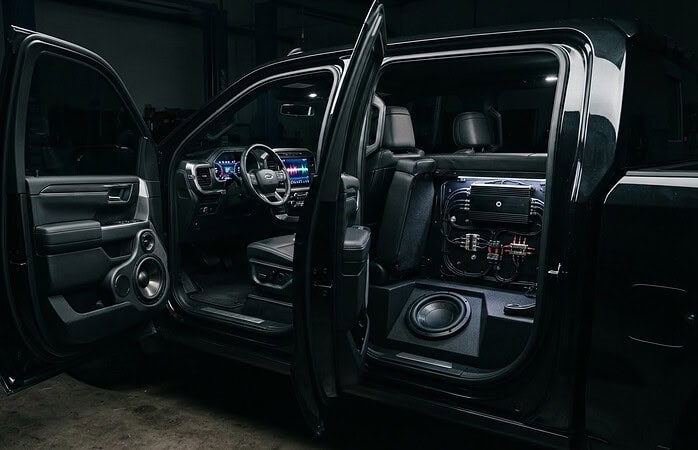
Could the best kick-panel speaker pod be the one that protects your legroom, not the one that holds the biggest speaker? If factory locations don’t support the sound or system layout you want, custom kick panel speaker pods can create another mounting option. The right design depends on fit, listening position, and how you use the cabin every day.
Before installation, it’s worth considering how a pod will look and feel, and whether it will work with your speakers, amplifier, and existing system. A pod can provide a useful mounting location and help position a speaker, but it can’t solve every acoustic or system-design challenge on its own.
This guide compares factory locations, vehicle-specific pods, and custom fabrication, with practical criteria for checking clearance, legroom, installation, and interior appearance. It also explains how speaker choices and system components shape the decision, and what details about your vehicle and listening priorities help plan a coordinated custom-audio project.
Key Takeaways
- Kick-panel pods create an alternative speaker mounting position, but they won’t solve every sound or system-design challenge.
- Assess legroom, trim, occupant comfort, and speaker placement together before choosing a pod approach.
- Compare factory locations, vehicle-specific pods, and custom fabrication for fit flexibility and installation planning.
- Use your vehicle details, current equipment, listening goals, and everyday driving needs to plan custom kick panel speaker pods.
- A coordinated installation brings the mounting choice, audio components, and cabin usability together in a finished system.
What Are Custom Kick Panel Speaker Pods, and What Do They Change?
A kick-panel speaker pod is a mount integrated into the lower front side of a vehicle’s cabin, near the front occupants’ feet. It creates a place to install and position a speaker when the factory mounting points don’t suit the system plan. Custom kick panel speaker pods are shaped or adapted for a particular vehicle and audio project, rather than treated as a one-size-fits-all solution.
The pod’s job is structural and positional: it supports a speaker in a chosen location. The speaker produces the sound, while the source, amplification, wiring, and tuning affect how the system works together. The mount’s design can matter acoustically, too. For background on how an enclosure can influence a loudspeaker’s behavior, see these loudspeaker enclosure design principles.
Where kick-panel pods sit and why location matters
Kick panels sit low in the cabin, generally beside the front footwells and forward of the occupants’ seating positions. Moving a speaker there changes its location relative to the driver, passenger, other speakers, and listening area. Placement is one factor in the system’s overall sound presentation, not a guaranteed improvement. Cabin shape, surfaces, speaker direction, and the rest of the setup all contribute.
What a kick-panel pod does and what it does not do
A pod gives a speaker a mounting point; it doesn’t produce sound or automatically correct the system. A well-planned installation considers how the speaker fits the mount and how the mount relates to the surrounding cabin. The right approach depends on the vehicle, speaker, installation, and wider audio system, so treat the pod as one part of a complete project.
This distinction helps set realistic expectations. A new mounting position may support a layout that factory locations can’t accommodate, but location alone doesn’t determine how music will sound. A speaker in a pod still needs to work with the system’s other speakers and components. Its position and direction may affect how sound reaches each front occupant, while the cabin itself shapes what they hear.
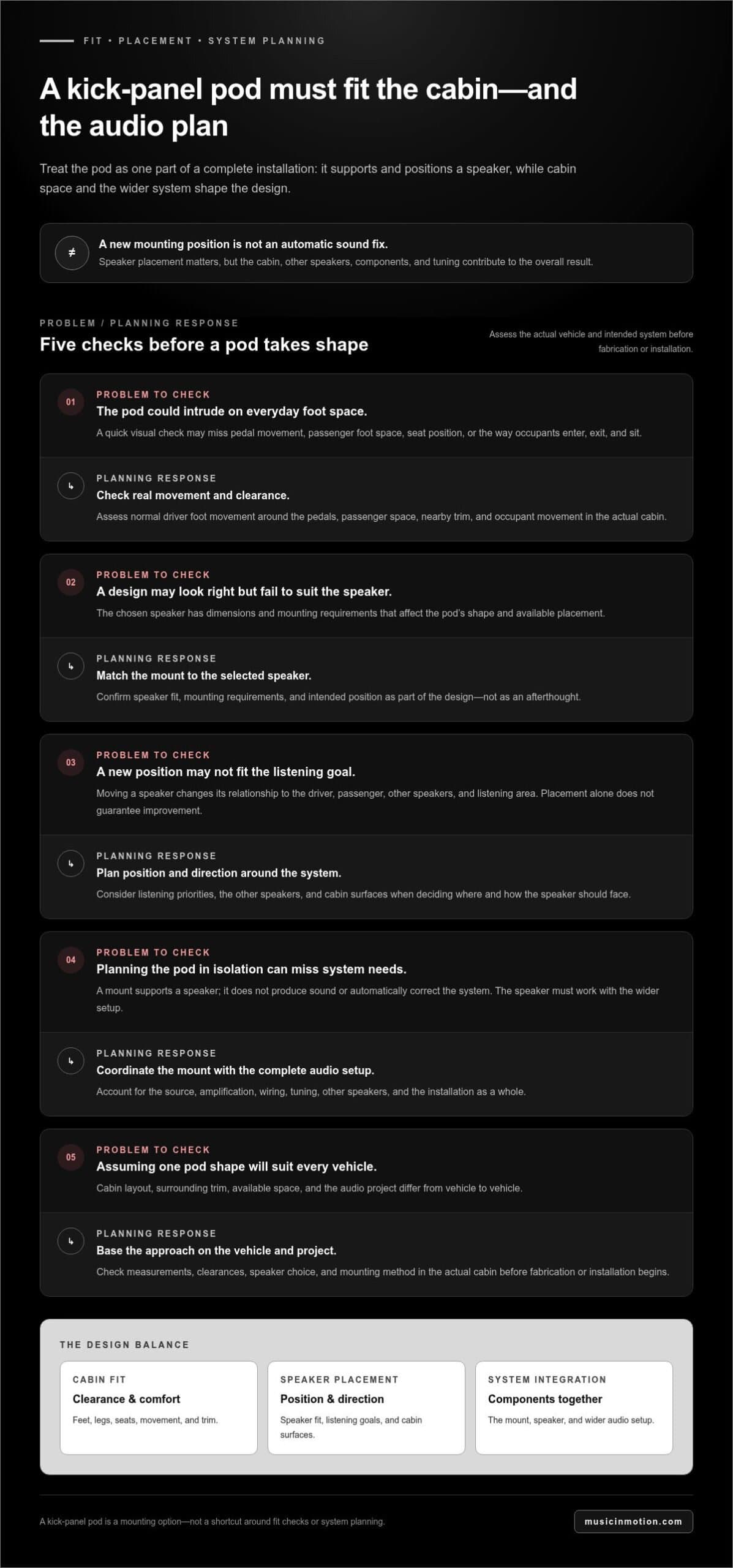
Fit matters as much as the audio plan. A pod occupies space in a part of the cabin used by feet and legs, so the design needs to account for surrounding trim and normal occupant movement. A shape that works in one vehicle may not translate to another. Check measurements, clearances, speaker choice, and mounting method during planning, before fabrication or installation begins.
Think of a kick-panel pod as a potential solution to a mounting challenge, not a shortcut around system design. At Music In Motion, we approach custom fabrication as part of a coordinated vehicle-audio upgrade, shaping the installation around the vehicle and the owner’s listening goals. The aim is a considered finished system, with the mount, speaker, and cabin working together.
How Fit, Speaker Placement, and Cabin Space Shape the Choice
A kick-panel pod has to work in two ways: it must support the audio plan and fit in a cabin people use every day. Start with the vehicle’s layout, then consider where occupants’ feet move, what trim surrounds the proposed mount, and how the speaker should relate to the rest of the system. The decision balances speaker placement with usable cabin space.
Listening goals help guide placement, but there’s no single location that suits every vehicle or listener. You might want a more front-focused presentation, or you may be designing around factory speakers that will remain in place. Either way, the pod’s position and direction need to make sense alongside the other speakers and the cabin’s surfaces. Vehicle acoustics are part of a broader design field, as reflected in Mordor Intelligence’s coverage of the automotive acoustic engineering services market.
Will kick-panel speakers affect legroom or daily comfort?
That depends on the vehicle’s available space and the pod’s shape and position. Before settling on a design, consider clearance around the pedals, natural foot movement, passenger foot space, and how occupants enter, exit, and sit. Assess the actual cabin rather than assuming a pod will either reduce legroom or leave it unchanged.
Go beyond a quick visual check. Consider the driver’s foot movement during normal pedal operation, the passenger’s space, and whether the pod could interfere with nearby trim or routine movement. Seat position can also change how much room a person has. These details help establish workable placement before fabrication, rather than relying on appearance alone.
How speaker and system choices influence pod planning
The selected speaker affects the mount’s design. Its dimensions and mounting requirements need to suit the available space and intended position. If you plan a pod before settling on those details, it may not serve the final system. Amplification and the other components matter as a whole, too. Plan the mount to support the complete audio setup rather than one speaker in isolation.
Custom kick panel speaker pods can be useful when factory locations don’t align with the desired layout, but the best solution depends on the vehicle, equipment, and listening priorities. Through custom car audio fabrication, we shape mounts around practical fit as well as the intended system. If you’re weighing those tradeoffs, Music In Motion’s car audio upgrades can be part of a coordinated plan for your vehicle and cabin.
Custom, Vehicle-Specific, or Factory Locations: Comparing Kick-Panel Options
There’s no single mounting approach that suits every vehicle-audio upgrade. Keeping speakers in factory locations can make sense when you want to refresh the existing system without changing its layout. A vehicle-specific pod may offer an alternate mounting option when its stated fitment matches your vehicle. Custom fabrication gives the project more flexibility when standard mounting points or ready-made options don’t suit the plan.
| Approach | Fit flexibility | Customization | Planning and cabin considerations |
|---|---|---|---|
| Factory locations | Uses the vehicle’s existing speaker positions | Limited changes to placement | Consider how the selected speakers work with the existing openings and system |
| Vehicle-specific pods | Fit depends on the exact vehicle and product fitment | More choice than retaining factory locations, within the pod’s design | Review fitment details and plan for the pod’s position in the cabin |
| Custom-fabricated pods | Can be tailored to the project and vehicle layout | Offers flexibility in shaping a solution around system goals | Requires vehicle-specific planning for mounting, trim, and occupant space |
These are broad distinctions, not guarantees of fit or sound. A stated vehicle fitment applies only to the particular product and vehicle it names. Even a matching description should be considered alongside the speaker choice, installation plan, and available cabin space.
When factory speaker locations may be enough
Retaining factory locations can be a straightforward option if your upgrade goals fit the existing layout. It lets you focus on updating speakers or other system components without introducing a new mounting position. The tradeoff is placement flexibility: if the project calls for a different speaker location or a layout the factory openings can’t support, keeping everything in place may limit your options. A stock stereo upgrade can still be planned around the equipment and locations already in the vehicle.
When a vehicle-specific or custom pod may make sense
A vehicle-specific pod is worth considering when its stated fitment matches your vehicle and its mounting approach aligns with your audio goals. Don’t assume that a pod described for a similar vehicle or model year will fit yours. The exact application matters. Also consider how the pod’s position relates to available space, trim, and the other components in your system.
Custom fabrication is another route when the project needs a tailored mounting solution. It can address a mismatch between standard locations and the intended system, with the design planned around the actual vehicle rather than a general fit category. At Music In Motion, we make custom fabrication part of a coordinated audio upgrade. Choose an approach by weighing existing fit, placement options, customization, and everyday cabin use.
Planning Custom Kick Panel Speaker Pods: A Practical Buyer Checklist
A clear project brief helps turn a pod idea into an installation that fits your vehicle and listening goals. Before planning custom kick panel speaker pods, write down what’s in the cabin now, what you want to change, and how you use the vehicle. These details give us a practical starting point for discussing placement, equipment, and interior constraints.
What to define before a custom-pod project
Gather the basics first. Include the vehicle’s year, make, and model, current speaker locations, and any interior modifications that may affect available space. Add your listening priorities and the audio components you already have, then note how often you carry passengers and any cabin-space concerns. This information helps shape a practical plan without assuming a particular pod or speaker will fit.
- Describe the vehicle. Record its year, make, model, and relevant changes to the interior or existing audio setup.
- Document the current system. List the speakers and other audio components you know are installed, along with their locations. If you’re unsure about a detail, note it for assessment rather than guessing.
- Set listening priorities. Explain what you want from the upgrade, such as a different speaker layout or a listening experience shaped around your preferences. Be specific about what feels lacking in the current system.
- Think through everyday use. Note who rides in the vehicle, how seats are typically positioned, and whether foot space, entry, or exit presents a particular concern.
- Outline the intended changes. Separate components you want to keep from those you’re considering changing. This helps make the proposed pod part of a coordinated system plan rather than an isolated purchase.
What professional integration should account for
Professional assessment connects the idea to the vehicle in front of you. We consider the intended speaker, available mounting area, and surrounding trim together, while keeping the wider audio installation in view. This aligns custom fabrication with the interior’s constraints and the system’s goals. The project plan is based on the actual vehicle, not a universal installation promise.
Bring your notes, equipment details, and priorities into the conversation. Even a simple description of what you like or want to change gives us a stronger starting point for planning fit and integration. If you’re also considering a factory-radio upgrade, our stock stereo upgrade guide offers related planning context.
Ready to shape the idea into a vehicle-specific audio plan? Explore custom car audio installation and discuss your goals with Music In Motion.
Turn a Kick-Panel Pod Idea into a Finished Audio Installation
The right kick-panel solution isn’t simply the pod that holds a speaker. It’s the mounting approach that makes sense for your vehicle, leaves the cabin usable, and supports the listening experience you want. A finished installation brings those considerations together with the speakers and other audio components, so the pod serves a larger plan instead of becoming an isolated add-on.
Why a complete installation matters beyond the pod
A mount provides a place for a speaker, but it doesn’t determine the entire system’s sound or how its components work together. The intended speaker, its position, the surrounding interior, and the other parts of the audio setup all factor into the project. Fabrication is most useful when it responds to those real constraints, rather than focusing only on the pod’s shape.
That’s why a custom solution starts with the vehicle and the listening goals. A mounting idea needs to be considered alongside existing equipment, planned upgrades, available space, and the vehicle’s normal use. These factors inform one another. The goal is a coordinated design that respects the cabin and supports the broader audio plan, not a promise that one pod will suit every vehicle or deliver the same result in every system.
At Music In Motion, our vehicle-audio expertise and custom fabrication connect the mounting approach to the complete installation. We plan around the project, keeping practical fit and system integration in view as the idea takes shape. That means considering the intended result as a whole, from where a speaker belongs to how the proposed components fit into the vehicle’s audio setup.
Choose the next step for your vehicle and sound goals
To get a useful project conversation started, share your vehicle’s year, make, and model, what audio equipment is already installed, and what you’d like to change. Include how you use the cabin and any fit or comfort priorities. You don’t need to arrive with a finished design. A clear description of the result you’re after gives us a practical place to begin planning a custom vehicle-audio project.
Whether you’re exploring custom kick panel speaker pods or a broader audio upgrade, we can plan fabrication and installation as parts of one tailored project. Start with your vehicle, your current system, and the listening experience you want.
Start planning your custom audio installation with Music In Motion.
Shape the Audio Experience You Want
The right next step isn’t choosing a pod in isolation. It’s turning your idea into a plan that suits your vehicle, your system, and the way you want to enjoy music on the road. Share what you drive, what equipment you have, and what you hope to change. From there, custom kick panel speaker pods can be considered as part of a complete installation, not a standalone fix.
Music In Motion is locally owned and operated by Mike and Kim. Founded in 1994, our team brings professional vehicle-audio upgrades and custom fabrication together to shape projects around the vehicle and its owner. We’re here to turn your goals into a practical plan for a finished audio system.
Plan a custom vehicle-audio installation and take the next step toward a system that feels right for your drive.
Frequently Asked Questions
Is a kick-panel speaker pod worth it?
It can be worth considering if your factory speaker positions don’t suit the layout you want. For example, you may be planning a system that needs another mounting position while keeping other speakers where they are. Before deciding, compare that plan with an upgrade using existing openings, and consider how a pod may affect passenger use and cabin comfort. A vehicle-specific assessment helps determine whether the approach fits your priorities.
Can kick-panel speaker pods improve car audio sound?
They provide another speaker-placement option, but a pod alone can’t promise better sound. The result depends on how the speaker, its mounting position, the installation, and the rest of the system work together. Before choosing a pod, identify what you want to change, such as the balance between front and rear speakers or how the system suits your listening habits. That goal helps guide the overall audio plan.
Do kick-panel speaker pods fit every car?
No, one pod design shouldn’t be assumed to fit every car. A product’s stated fitment applies to the specific vehicle application it describes, while a custom design is planned around the individual cabin. Trim changes, previous audio work, or other modifications may affect available space. Use the vehicle’s exact year, make, and model when considering fit, and include relevant interior changes in the installation discussion.
Will kick-panel speaker pods take up legroom?
They may affect available space, but the impact varies with the vehicle and the pod’s design and position. Consider how the driver moves their feet between pedals, whether passenger foot space remains comfortable, and whether the installation changes how people get in or out. A quick visual estimate may miss movement during normal use, so assess the cabin with typical seating and passenger needs in mind.
Can I use my existing speakers with custom kick-panel pods?
Possibly, if the speakers’ dimensions and mounting requirements suit the pod design and the space in your vehicle. A speaker that works in its current opening may still need a different mounting arrangement in a new position. Include the speaker’s model or available specifications, along with details of the rest of your equipment, when planning custom kick panel speaker pods. That helps shape the project around what you already own.
Are custom kick-panel pods better than factory speaker locations?
Neither option is automatically better; the right choice depends on what you want the system to do. Keeping factory locations may suit a project focused on upgrading speakers without changing their positions. A pod may be worth exploring if your desired layout calls for another mounting point. Compare the options against your priorities, including how much you want to change and whether the cabin remains comfortable for regular use.
What should I consider before choosing custom kick-panel speaker pods?
Start with your vehicle details and the audio equipment you plan to keep or change. Then describe your listening priorities in practical terms, such as what feels missing from the current setup or who usually listens in the front seats. Note any interior modifications and passenger-use needs, too. This gives us a clear basis for discussing speaker compatibility, available space, and how the proposed pods relate to the broader system.