You didn’t pay for a premium badge just to hear your favorite tracks turn into a muddy mess the moment you turn up the volume. Most drivers assume that a Bose logo on the door speaker means they’ve reached the pinnacle of automotive sound, but we know the reality is often different. You likely feel the frustration of a proprietary EQ that rolls off the bass and flattens the highs just when the song gets good. It’s a common struggle for enthusiasts who want more than just standard performance from their daily commute.
A professional Bose car audio system upgrade doesn’t have to mean gutting your dashboard or losing those essential steering wheel controls. We can help you unlock the true potential of your vehicle’s acoustics while keeping every factory feature perfectly intact. In this 2026 guide, we’ll show you how to bypass factory limitations to deliver crystal clear highs and the punchy, impactful bass your car deserves. We’ll walk through the latest integration technologies and custom solutions that transform your listening experience into something truly extraordinary without sacrificing the modern features you rely on every day.
Key Takeaways
- Understand the “Bose Paradox” and why mass-market factory hardware often results in muddy audio and disappointing bass levels.
- Learn how a professional Bose car audio system upgrade corrects proprietary DSP bottlenecks without sacrificing your vehicle’s factory functionality, including your steering wheel controls.
- Discover the importance of signal correction and high-performance components in achieving the crystal-clear highs and punchy lows you’ve been missing.
- Explore how custom fabrication and sound deadening create a premium listening environment that looks and feels like a factory-original installation.
- See why our focus on delivering a finished result ensures your new system is reliable, simple to use, and perfectly tuned for your daily commute.
Why Upgrade Your Factory Bose Audio System?
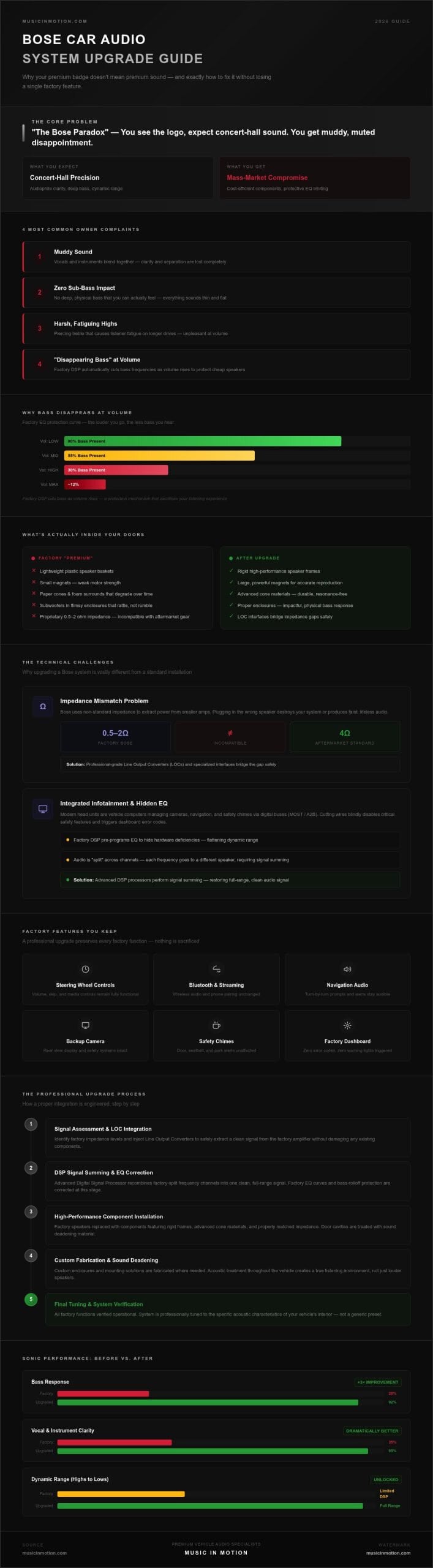
Most drivers experience what we call the “Bose Paradox.” You see the logo on your door panel and expect a concert hall experience, but the reality is often a muted, muddy disappointment. While Bose builds a great brand reputation, their factory hardware is designed for mass production and cost-efficiency, not audiophile precision. Over time, the materials they use, like paper cones and foam surrounds, begin to degrade. This leads to distortion and a loss of clarity that makes your favorite playlist feel tired and flat. A Bose car audio system upgrade isn’t just about volume; it’s about restoring the emotional impact of your music through modern components. We see vehicles every day where the factory “premium” sound has simply reached its physical limit.
Common complaints we hear from owners include:
- Muddiness that obscures vocal clarity and instrument separation.
- A total lack of deep, impactful sub-bass that you can actually feel.
- Harsh, piercing highs that cause listener fatigue on long drives.
- Bass that seems to disappear as soon as you turn the volume up.
The Limitations of Factory Tuning
Manufacturers use aggressive EQ curves to keep their small, inexpensive speakers from blowing out. As you turn the volume up, the factory system automatically cuts the bass frequencies to protect the hardware. This “disappearing bass” phenomenon leaves your music sounding thin and clinical right when you want it to feel powerful. It’s a safety net for the speakers, but a barrier for the listener. Factory systems use pre-programmed DSP settings to flatten the signal and hide hardware deficiencies, which fundamentally limits the dynamic range of your audio. We focus on removing these electronic shackles to let your music breathe, ensuring your daily commute feels like a front-row seat at a live performance.
Hardware vs. Marketing: What is actually in your doors?
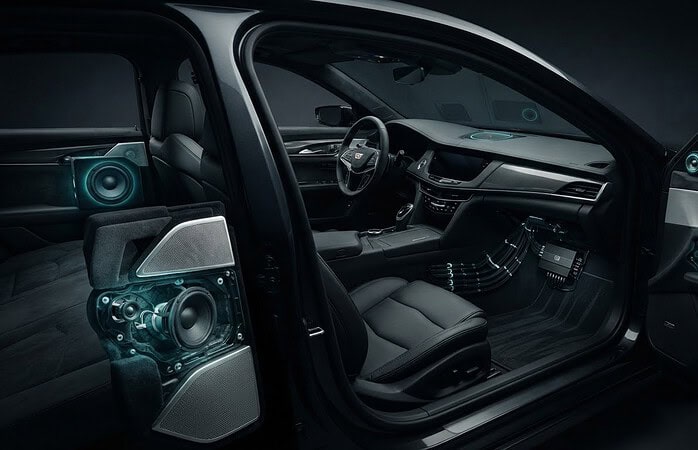
If you look behind the door panel of a factory system, you won’t find high-end materials. You’ll find lightweight plastic baskets and small magnets that lack the motor strength for accurate sound reproduction. These components simply can’t move enough air to create a rich, immersive soundstage. Even the factory “subwoofers” hidden in spare tire wells or rear decks are often just small drivers in flimsy enclosures that rattle rather than rumble. By contrast, 2026 technology offers a level of fidelity that makes five-year-old factory tech feel like a relic. We replace these mass-market parts with high-performance alternatives that offer rigid frames and advanced cone materials for a night-and-day difference. Considering a Bose car audio system upgrade is the first step toward achieving a finished result that exceeds the original manufacturer’s vision.
The Technical Challenges of Bose System Integration
Upgrading a Bose system is vastly different from a standard car audio installation. You aren’t just dealing with speakers and wires; you’re navigating a proprietary ecosystem where every component is tuned to a very specific, often non-standard, frequency response. If you attempt to swap out a single part without a plan for the whole system, the results are usually disappointing. This is why a successful Bose car audio system upgrade requires a deep understanding of how these components communicate with one another.
The Impedance Matching Problem
The most common hurdle is proprietary impedance. While most aftermarket speakers operate at 4 ohms, Bose systems often use loads as low as 0.5 or 2 ohms to extract more power from smaller amplifiers. If you install a standard 4-ohm speaker into this circuit, it will sound faint and lifeless because the amplifier can’t provide enough current. On the flip side, connecting a low-impedance Bose speaker to a standard aftermarket amp can cause the amp to overheat or fail instantly. We use professional-grade line output converters (LOCs) and specialized interfaces to bridge these technical gaps. This allows us to maintain the safety of your factory equipment while providing the clear, powerful signal your new components need.
Integrated Infotainment and Hidden EQ
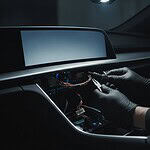
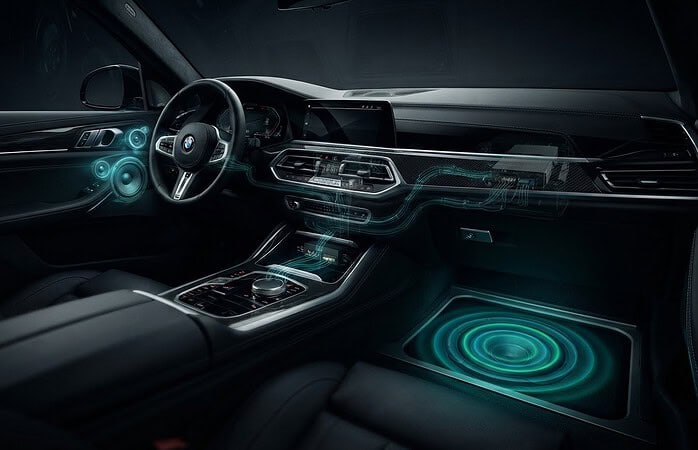
In modern vehicles, the head unit is no longer just a radio; it’s a sophisticated vehicle computer. It manages everything from your backup camera to your navigation prompts and safety chimes. Many of these systems use a digital bus, such as MOST or A2B, to send audio data throughout the car. Cutting into these wires can disable essential safety features or trigger error codes on your dashboard. We utilize advanced digital signal processors (DSPs) to perform signal summing, which recombines the factory-split frequencies into a clean, full-range signal. This ensures that your steering wheel controls and Bluetooth features remain fully functional. By extracting the audio signal before the factory amp applies its “protective” EQ, we can deliver a finished result that sounds truly high-end. If you want to explore the possibilities for your vehicle, our team can design a custom Bose car audio system upgrade that preserves every feature you love.
Step-by-Step Bose Upgrade Strategies
We believe in a modular approach to audio enhancement. You don’t have to overhaul your entire vehicle in a single afternoon to see massive results. A phased Bose car audio system upgrade allows you to prioritize the improvements that matter most to your ears while managing your budget. We typically break these projects down into four distinct stages, moving from the foundation of the sound up to a complete custom overhaul. This path ensures that every new component works in harmony with the existing factory features you want to keep.
Starting with the Bass
Stage 1 focuses on the low end. Factory Bose subwoofers are often small, underpowered, and tucked away in flimsy plastic housings. Replacing this weak link with a custom subwoofer enclosure is the most impactful first step you can take. We use specialized interfaces to tap into the factory signal without cutting a single wire, preserving your lease or warranty. This adds the physical impact and depth that factory systems lack, providing a solid foundation for the rest of your music. By balancing the new bass with your existing door speakers, we can immediately improve the richness of your daily listening experience.
The Power of DSP Calibration
Stage 2 is where we tackle the “Bose sound” head-on through signal correction. A Digital Signal Processor (DSP) is the brain of a modern audio system; it “un-does” the aggressive factory equalization we discussed earlier. This allows us to use time alignment, which compensates for the fact that you sit closer to the left speaker than the right. Through precise adjustments of phase and time delay, our technicians create a phantom center image that makes the singer’s voice appear to float directly above your dashboard. This stage transforms the car from a collection of speakers into a true high-fidelity soundstage.
Once the signal is clean, we move into Stage 3 and Stage 4. This involves replacing the front-stage speakers with high-performance components and adding dedicated amplification to drive them. We focus on the front speakers because they define the clarity and detail of your music. When you’re ready for a total Bose car audio system upgrade, we move into full custom fabrication. This might include custom-molded A-pillars for tweeters or integrated amp racks that look like they came from the factory. Our goal is always a finished result that looks original but sounds like a world-class studio.
Beyond Bose: Choosing High-Performance Alternatives
While the Bose name carries significant weight in the consumer world, moving into the audiophile space reveals a new level of musical detail. Stepping beyond the factory setup allows you to tailor the “flavor” of your audio to your specific tastes. Some listeners prefer a warm, smooth sound, while others want every crisp detail of a high-hat to cut through the cabin. A professional Bose car audio system upgrade gives us the freedom to select components that match your lifestyle rather than settling for a one-size-fits-all solution. We focus on the internal experience of the user, ensuring that every drive feels like a private performance.
Audiophile Speaker Selection
We almost always recommend component speaker systems over standard coaxial designs for the front stage. Component systems separate the tweeter from the woofer, which allows us to place the high-frequency drivers higher up on the dash or A-pillars. This elevates the soundstage, making it feel like the band is performing right in front of you instead of at your ankles. Your choice of tweeter material also plays a huge role in the finished result. Silk dome tweeters are known for their natural, non-fatiguing sound, which is perfect for long commutes and jazz or vocal tracks. Metal domes, often made of aluminum or titanium, provide a brighter and more energetic response that’s ideal for rock and electronic music. We help you navigate these choices to find the perfect match for your vehicle interior.
The Role of Sound Deadening
A premium audio system is only as good as the environment it lives in. Road noise, tire hum, and wind interference act as “sonic pollution” that masks the subtle details of your music. This is why a comprehensive car audio upgrade for stock stereo must include acoustic treatment. We apply specialized damping materials to the inner and outer door skins to transform your car into a quiet, controlled listening room. These treatments serve two purposes:
- They lower the noise floor, allowing you to hear delicate notes at lower volumes.
- They stop door panel vibrations and rattles caused by new, high-power speakers.
For those who want extreme performance, we also look at the vehicle’s electrical foundation. High-output alternators and dedicated wiring ensure that your system has the constant current it needs to deliver deep, undistorted bass without taxing your car’s battery. If you are ready to see how a professional Bose car audio system upgrade can change your daily drive, contact our team at Music In Motion to start your custom project today.
Professional Custom Installation for Your Bose-Equipped Vehicle
We believe a premium audio system is a combination of high-end hardware and elite craftsmanship. At Music In Motion, we prioritize the delivery of a finished result over the mere transaction of goods. Since 1994, our team has specialized in the delicate art of OEM integration. We understand that your vehicle is a significant investment. That’s why we treat every Bose car audio system upgrade with the precision and care it requires to look and function exactly like a factory-original system, only with vastly superior performance. Our goal is to make the technology disappear so that only the music remains.
Custom Fabrication and Integration
Bose engineers often use non-standard speaker shapes and mounting patterns that don’t accept off-the-shelf parts. We solve this through custom fabrication. Our shop utilizes advanced 3D scanning and CNC routing to create bespoke mounting brackets and adapters. This ensures a perfect, airtight fit in your doors or dash without any permanent modifications to your vehicle. Many of our clients prefer a stealth installation. We can hide powerful amplifiers and sophisticated processors behind factory panels, giving you world-class sound with zero visible changes to your interior. This approach maintains the resale value of your car while providing an unmatched listening experience.
The Final Tune: Why it Matters
Even the best speakers in the world will sound poor if they aren’t tuned to the specific acoustics of your car’s cabin. Glass reflects sound, while seats and carpets absorb it. These factors create acoustic peaks and valleys that ruin the balance of your music. We use Real Time Analyzers (RTA) to visualize the sound inside your vehicle. This data allows us to precisely adjust the DSP, fixing those harsh frequencies and ensuring the bass is perfectly timed with the rest of the system. This final calibration is what separates a DIY project from a professional Bose car audio system upgrade. We take the time to ensure the soundstage is perfectly centered and the tonality is natural.
Our commitment to your vehicle doesn’t end when you drive out of our bay. We provide the peace of mind that comes from working with dedicated specialists who focus on the safety and functionality of your standard utility systems. Whether we’re integrating with your factory infotainment or adding new safety technology, we ensure every connection is secure and every feature remains operational. Ready for a sound transformation? Contact us for a custom audio consultation and let’s discuss how we can improve your daily drive.
Take the Next Step Toward Superior Sound
We’ve explored how a professional Bose car audio system upgrade transforms a muddy factory signal into a high-fidelity soundstage. By addressing proprietary impedance and using advanced digital signal processing, we unlock the clarity and impactful bass your vehicle was truly meant to deliver. You don’t have to choose between modern convenience and premium performance. We ensure your steering wheel controls and infotainment features stay fully functional throughout the entire process. Our goal is to make the technology disappear so that only the music remains.
Our team brings over 30 years of professional installation experience to every project we handle. We are specialists in OEM integration and have earned national recognition for our custom fabrication excellence. We prioritize the delivery of a finished result that improves your daily life behind the wheel. Every drive should be an opportunity to enjoy your music exactly as the artist intended. It’s the lifestyle benefit you deserve for your daily commute.
Upgrade Your Bose System with Music In Motion and discover how we can customize your vehicle for a superior listening experience today. We look forward to helping you achieve the perfect balance of power and precision.
Frequently Asked Questions
Can I replace just the speakers in my Bose system?
You can, but we don’t recommend it as a standalone fix. Bose systems use proprietary impedance levels, often ranging from 0.5 to 2 ohms, which differ from standard 4-ohm aftermarket speakers. If you simply swap the drivers, the new speakers will likely sound faint or could potentially overheat the factory amplifier. A successful Bose car audio system upgrade requires matching the hardware to the specific signal requirements of your vehicle’s existing electronics.
Will upgrading my Bose system void my vehicle warranty?
Upgrading your audio system won’t void your entire vehicle warranty. Under the Magnuson-Moss Warranty Act, a manufacturer cannot deny a warranty claim unless they can prove the aftermarket part caused the failure. We use specialized harnesses and integration modules that avoid cutting factory wires. This preserves the integrity of your car’s electrical system while providing the high-performance sound you’re looking for during your daily commute.
Why does my Bose system sound worse at high volumes?
Your system sounds worse because the factory amplifier uses protective equalization to prevent the speakers from blowing. As you increase the volume, the internal processor automatically rolls off the bass and compresses the signal. This results in the “muddy” or thin sound many owners complain about. We solve this by using signal correction tools that bypass these factory limitations, allowing for clear, consistent audio at any volume level.
What is a DSP and do I need one for a Bose upgrade?
A Digital Signal Processor (DSP) is a specialized computer that allows us to fine-tune every aspect of your audio signal. For a Bose car audio system upgrade, a DSP is essential for “un-doing” the aggressive factory tuning that limits your sound quality. It allows for precise time alignment and equalization, ensuring that the music hits your ears perfectly. We use these tools to create a balanced, professional soundstage tailored to your cabin.
Can I add an aftermarket subwoofer to a factory Bose amp?
You can add an aftermarket subwoofer by tapping into the factory signal before it reaches the Bose speakers. We use high-quality line output converters or integration processors to extract a clean bass signal from the factory amp. This allows you to add a dedicated amplifier and a custom subwoofer enclosure without replacing the entire system. It’s the most effective way to add the physical impact and low-end depth that factory systems lack.
How long does a professional Bose system upgrade take?
The timeline depends on the complexity of your specific project. A simple Stage 1 subwoofer addition typically takes a single day in our shop. More comprehensive projects involving full speaker replacement, custom fabrication, and DSP tuning can range from two to four days. We prioritize a meticulous, organized process to ensure every detail is perfect. We’ll provide a specific timeframe during your initial consultation so you can plan accordingly.
Will I lose my steering wheel controls if I upgrade my Bose system?
You won’t lose any factory functionality when we perform your upgrade. We use advanced integration modules designed to communicate with your vehicle’s digital bus system. This keeps your steering wheel buttons, voice commands, and navigation prompts working exactly as they did on the day you bought the car. Our goal is to improve the internal experience of the user without sacrificing the safety or convenience of your standard utility systems.
Is it better to bypass the Bose amp or work with it?
We generally recommend bypassing the factory amplifier’s processing whenever possible. Modern integration tools allow us to grab a clean, pre-EQ signal directly from the head unit. If a total bypass isn’t feasible, we use sophisticated signal summing to “clean” the output before it reaches your new high-performance components. This ensures that your new speakers receive a full-range signal that isn’t hampered by factory protective limiting or artificial frequency boosts.