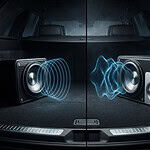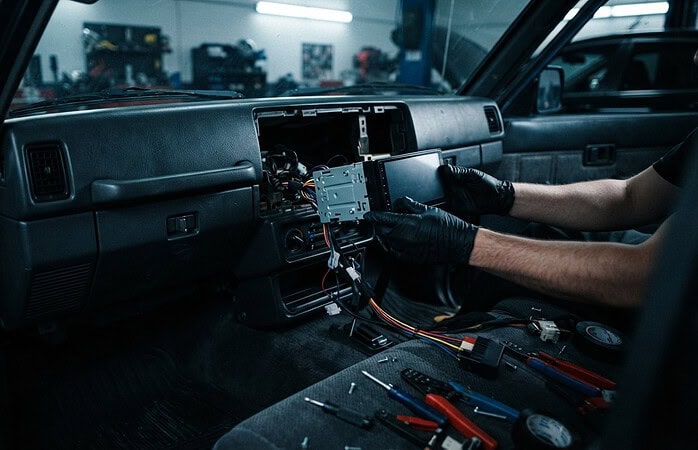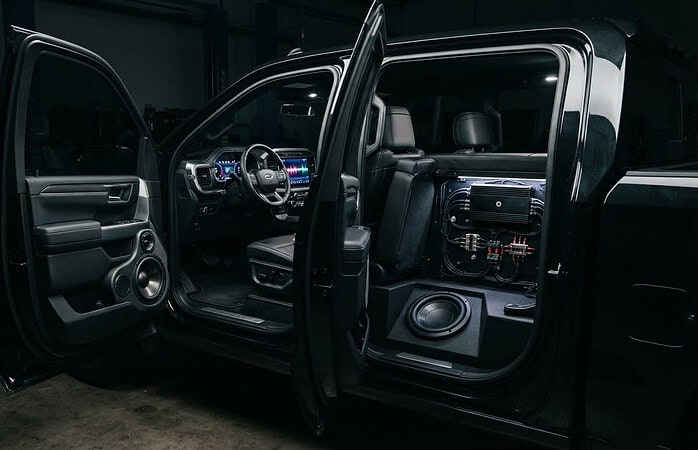
Bolting high-dollar drivers into your vehicle won’t deliver studio-grade clarity if speaker placement and frequency isolation work against you. If you’re tired of muffled factory audio, muddy midrange vocals, and harsh highs firing straight at your knees, you aren’t alone. You’re likely evaluating component vs coaxial speakers for sound quality, wondering whether dedicated tweeters and separate crossovers genuinely justify the extra wiring and fabrication effort.
We know the feeling. Nobody wants to overpay for complex gear without hearing a real acoustic transformation behind the wheel. In this guide, you’ll discover how component and coaxial architectures shape soundstage height, vocal presence, and overall fidelity so you can confidently pick the right build for your cabin and budget. Here is a clear look at how both systems perform, how proper installation unlocks their full potential, and which architecture will elevate your daily drive.
Key Takeaways
- Explore how component vs coaxial speakers for sound quality stack up across soundstage height, instrument separation, and vocal realism.
- Uncover how external crossover networks outperform integrated speaker capacitors by preventing harmonic distortion and frequency bleed.
- Determine whether your vehicle cabin architecture favors plug-and-play coaxial drivers or dedicated A-pillar component tweeter pods.
- Learn why professional door treatment and rigid baffle fabrication are vital to unlocking the full acoustic output of any speaker upgrade.
Coaxial vs Component Speakers: Fundamental Architecture and Design Differences
Upgrading your vehicle audio requires understanding how driver architecture shapes what you actually hear. While generic shopping guides categorize gear purely by physical dimensions like 6.5-inch or 6×9-inch cutouts, driver arrangement dictates how acoustic energy disperses through the cabin. Weighing component vs coaxial speakers for sound quality comes down to two divergent engineering philosophies: integrated point-source design versus physically separated driver modules.
Anatomy of a Coaxial Speaker
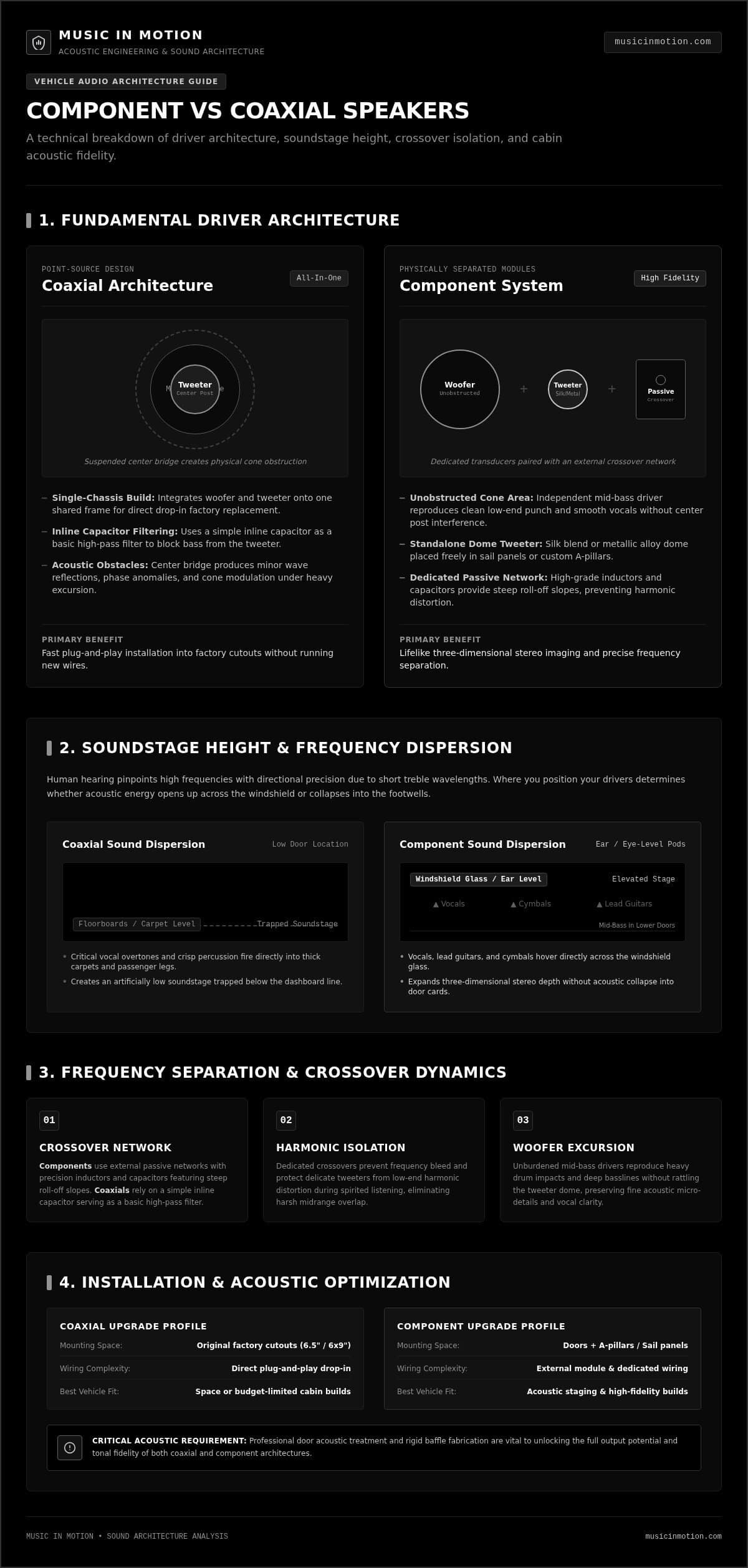
Coaxial speakers combine multiple reproduction elements into a single physical unit. At its center, a bridge or post suspends a small tweeter directly over the middle of the mid-bass cone. The classic coaxial loudspeaker design creates a compact point source where both high and low frequencies emit from the exact same axis. To keep things compact, manufacturers wire a simple inline capacitor onto the frame to serve as a basic high-pass filter, blocking low bass frequencies from destroying the delicate tweeter.
- Single-chassis build: Drops straight into original factory cutouts without running new wires.
- Acoustic trade-offs: The center bridge creates an obstacle in front of the woofer cone, producing phase anomalies and minor wave reflections.
- Straightforward installation: Ideal for fast drop-in replacements where space or budget takes priority.
Anatomy of a Component Speaker System
Component speaker systems separate the acoustic elements into dedicated parts: an independent mid-bass driver, a standalone tweeter, and an external crossover module. Eliminating the central pole gives the woofer an unobstructed cone surface, delivering cleaner mid-bass response and smoother vocal reproduction. Standalone dome tweeters, built from fine silk blends or stiff metallic alloys, can be positioned away from the door floorboards.
External passive crossovers split incoming frequencies with high-grade inductors and capacitors. These networks feature steep roll-off slopes, preventing harsh mid-range overlap and protecting the tweeter from low-end distortion during spirited listening sessions. You gain the freedom to place the tweeters precisely where sound waves travel directly to your ears, such as the upper door cards, sail panels, or custom A-pillars.
When you compare component vs coaxial speakers for sound quality, this physical separation is decisive. Coaxials prioritize convenience by bundling drivers together, while components isolate each transducer to achieve authentic stereo depth and precise tonal balance.
Sound Quality Breakdown: Imaging, Clarity, and Frequency Separation
Loudness is easy to achieve, but true high-fidelity listening demands acoustic structure. Many enthusiast discussions reduce system performance down to pure decibel volume, yet genuine fidelity relies on where sound originates inside the vehicle cabin. Comparing component vs coaxial speakers for sound quality reveals that physical placement determines whether a performance feels open and lifelike or boxed into your floorboards.
Soundstage Height and Stereo Imaging
Human ears pinpoint high frequencies with exceptional accuracy. Because treble wavelengths are short, you immediately perceive their directional source. When coaxial drivers sit low in door cavities, critical vocal overtones and crisp percussion fire into thick carpet and passenger legs. The result is an artificially low soundstage that feels trapped beneath the dashboard.
Mounting dedicated tweeters at eye or ear level completely reshapes that experience. As noted in an educational guide to car audio, separate drivers allow you to lift the sonic field, creating the illusion that vocals, lead guitars, and cymbals hover directly across your windshield glass. Stereo imaging sharpens instantly. You can easily identify where each instrument sits across a wide, three-dimensional plane rather than hearing audio collapse into the side door cards.
Frequency Separation and Tonal Accuracy
Tonal clarity requires drivers to operate without mechanical conflict. When a coaxial unit asks a single assembly to deliver both punchy bass strokes and fragile treble notes, acoustic compromises arise. Heavy cone vibrations can physically modulate higher registers, causing muddy midrange articulation during dynamic song sections.
- Unburdened woofer excursion: Isolated mid-bass drivers reproduce heavy drum impacts and deep basslines without rattling the delicate tweeter dome.
- Micro-detail retention: Independent tweeters articulate fine acoustic string reverberations and clean cymbal decays, free from woofer back-pressure.
- Controlled dynamics: Music stays composed and crisp at highway speeds instead of blurring into harsh, shrill noise.
This distinct separation makes component vs coaxial speakers for sound quality a central consideration for any audio overhaul. If you want to transform muddy cabin acoustics into an authentic concert experience, our team at Music In Motion can help tailor your system layout through custom car audio upgrades designed specifically for your vehicle.
The Hidden Differentiator: Crossover Networks and Power Handling
Driver materials often get all the attention, but crossover engineering quietly dictates your vehicle’s acoustic threshold. A speaker cone can only perform as well as the audio signal it receives. When evaluating component vs coaxial speakers for sound quality, frequency distribution reveals why these two architectures behave so differently under real listening conditions.
Passive Crossovers vs Inline Capacitors
Coaxial speakers rely on bare-bones filtration. Most designs solder a solitary electrolytic capacitor directly to the speaker frame, creating a gentle 6dB-per-octave high-pass filter for the tweeter. This shallow slope allows low-frequency energy to bleed into the high-frequency driver, introducing harmonic distortion and severe phase cancellation around the vocal crossover point.
Component systems eliminate that bleed using dedicated outboard crossover enclosures. Inside these boxes, heavy-gauge air-core inductors and high-grade film capacitors create steep 12dB or 18dB-per-octave cutoff slopes. This aggressive filtering yields several practical listening benefits:
- Acoustic isolation: Woofers receive only mid-bass frequencies while tweeters manage pristine highs, preserving absolute clarity at concert-level output.
- Mechanical protection: Shielding delicate tweeter voice coils from violent low-frequency travel prevents premature thermal breakdown.
- Tailored output levels: Most component networks include onboard attenuation switches (typically 0dB, -3dB, or +3dB) to balance brightness against cabin reflections.
Amplification Requirements and Power Dynamics
Clean power is essential. Coaxial speakers often feature higher sensitivity ratings, frequently exceeding 90dB, allowing them to produce acceptable volume directly from modest factory radio power. They get adequately loud without demanding extra current, making them practical for quick replacements.
Component speaker sets operate under different electrical demands. Built with robust voice coils, substantial motor assemblies, and complex crossover networks, components require real amplifier current to control cone movement accurately. Driving high-performance components solely with a weak factory radio pushes built-in chips into clipping, sending distorted square waves that degrade sound quality and threaten delicate tweeters. To understand how clean wattage transforms your listening experience, explore our car audio upgrade for stock stereo guide to plan the right amplification match.
Ultimately, judging component vs coaxial speakers for sound quality requires looking beyond the drivers themselves. A component system’s external crossover ensures each driver stays in its acoustic sweet spot, providing the clean dynamic headroom that serious cabin fidelity requires.
Component vs Coaxial: How to Choose the Right Speaker Architecture
Selecting the right drivers goes beyond raw technical specifications. Your decision hinges on your vehicle cabin, your daily listening habits, and how you allocate your overall budget. While audiophile debates often frame component vs coaxial speakers for sound quality as an open-and-shut case, each architecture serves a distinct practical purpose in a balanced mobile audio setup.
When Coaxial Speakers Make the Most Sense
Coaxial speakers excel in scenarios where simplicity, space, and cost control lead the conversation. They deliver crisp, full-range reproduction without demanding extensive cabin alterations:
- Rear-seat fill: Rear passengers need balanced sound, but crisp front staging shouldn’t be pulled backward. Coaxials placed in rear doors create a pleasant ambient backdrop without stealing your front-stage focus.
- Classic cars and vintage doors: Older vehicles often lack factory tweeter grilles. Coaxials preserve clean factory upholstery without requiring custom holes cut into original trim panels.
- Stock power configurations: If you plan to retain your factory headunit amplification, high-efficiency coaxials provide an immediate boost over aging paper cones without straining low-power channels.
When Component Speakers Are Worth Every Penny
Front-row clarity demands dedicated driver separation. If you commute daily and view your vehicle cabin as your personal listening lounge, component systems justify every bit of their installation effort. They shine brightest when:
- You demand lifelike front staging: Dedicated tweeters mounted on sail panels or upper pillars recreate the physical width of a live concert hall across your windshield.
- Your vehicle features factory split locations: Many modern trucks and sedans already provide empty dash pods or upper door spots, making separate driver integration clean and straightforward.
- You listen to intricate, dynamic genres: Classical symphonies, jazz brass sections, and complex rock tracks require the clean frequency control and high headroom that standalone drivers provide.
- Outboard amplification is on your radar: If you run multi-channel amplifiers or digital signal processors (DSPs), component sets take full advantage of that clean, dedicated power.
Smart builds often combine both formats. Many enthusiasts mount high-resolution component sets upfront for the driver’s seat, paired with high-efficiency coaxials in the rear doors for subtle passenger fill. Ready to build a tailored acoustic layout suited perfectly to your cabin? Check out our professional custom installations to turn your driving environment into a true mobile sanctuary.
Maximizing Sound Quality Through Professional Installation and Fabrication
Top-tier audio drivers mean very little if they sit in poorly prepared vehicle doors. A speaker works as a precision air pump. Screwing an exotic driver directly into thin, flexing sheet metal turns the door itself into an acoustic leak, draining mid-bass punch and muddying vocal clarity. When settling the debate of component vs coaxial speakers for sound quality, installation integrity determines whether your hardware reaches its full acoustic potential.
Cabin Acoustic Preparation and Speaker Baffles
Treating vehicle doors transforms an echo-prone metal cavity into a rigid, simulated speaker enclosure. Uncontrolled sheet metal vibration creates out-of-phase reflections that cancel out mid-bass response. Professional cabin prep resolves these acoustic shortfalls systematically:
- Resonance damping: Constrained-layer butyl mats adhered to the outer door skin add mass, stopping metallic ringing and road noise dead in its tracks.
- Rigid custom baffles: Swapping fragile factory plastic brackets for precision-machined, high-density polyethylene (marine HDPE) rings provides an immovable mounting platform that eliminates driver flex.
- Acoustic decoupling: Closed-cell foam rings and silicone baffles seal the gap between the speaker face and the interior door card, channeling every cycle of sound energy straight into the cabin rather than trapping it inside the panel.
Custom Tweeter Placement and System Integration
Aiming high-frequency drivers requires surgical precision. Pointing tweeters directly at each other across the dash or aiming them off-axis toward the opposite passenger ear evens out high-frequency response, delivering balanced stereo width to both front seats. Seamless integration preserves the vehicle’s original aesthetics while moving the soundstage up where it belongs.
Our team leverages more than 30 years of vehicle integration experience to handle modern installation challenges. Advanced vehicle cabins feature side-curtain airbags, delicate pillar clips, and intricate data harnesses that leave zero room for error. Discover how our custom car audio fabrication crafts factory-matched A-pillar pods and sail mounts that integrate cleanly with your interior lines while avoiding vehicle safety hardware.
Your hardware choice between component vs coaxial speakers for sound quality is only the starting point. Delivering acoustic deadening, precision baffling, and vehicle-specific tuning unlocks the warm, lifelike reproduction you paid for. Explore our complete range of tailored car audio upgrades to get the absolute most out of every mile behind the wheel.
Elevate Your Cabin Audio with the Right Architecture
Upgrading your vehicle sound system transforms how you experience every mile behind the wheel. When assessing component vs coaxial speakers for sound quality, remember that driver positioning and frequency isolation define your listening field far more than brand badges alone. While coaxial drivers offer dependable convenience for rear passenger fill or straightforward replacements, dedicated component systems bring the performance directly to your dashboard with lifelike depth and effortless vocal clarity.
Unlocking true studio-level clarity takes more than just hardware; it requires thoughtful vehicle integration. Backed by over 30 years of vehicle audio craftsmanship, our team specializes in tailored acoustic system design and precision custom fabrication that preserves your original interior styling while maximizing speaker potential. Experience breathtaking sound with custom car audio upgrades from Music In Motion, and turn your daily commute into an inspiring listening session.
Frequently Asked Questions
Do component speakers really sound that much better than coaxial speakers?
Yes, component systems provide a noticeable step up in fidelity, instrument separation, and soundstage height. When evaluating component vs coaxial speakers for sound quality, dedicated tweeters let you lift the audio field up to ear level. You hear distinct vocal textures and crisp high-frequency details across your dashboard instead of listening to muffled treble firing down into carpet and footwells.
Can I run high-performance component speakers off a stock factory radio?
You can connect them, but you will severely limit their acoustic potential. Component speakers feature heavier motor structures, stiffer cones, and external passive crossovers that soak up power. Weak factory amplification pushes built-in chips into harmonic clipping at higher volumes. Pairing components with dedicated multi-channel amplification gives drivers the clean current needed to deliver dynamic, distortion-free mid-bass.
Why do rear car doors usually use coaxial speakers instead of components?
Rear doors function primarily as non-directional ambient fill for the front passengers. High-end component tweeters in the back seat pull the primary acoustic image behind the driver’s head, destroying front-stage realism. Using coaxial drivers in the rear doors provides passengers with full-range audio while preserving the focused stereo depth established by front-mounted components.
Do I need to cut holes in my vehicle interior to install component tweeters?
Not necessarily, because many modern vehicles include factory tweeter cutouts in the upper door panels, mirror sail panels, or dashboard corners. In those vehicles, aftermarket tweeters mount neatly behind original grilles using custom bracket adapters. For vehicles without factory locations, flush-mounting surface cups or custom-wrapped A-pillar pods integrate smoothly without compromising cabin aesthetics or vehicle safety hardware.
Not necessarily, because many modern vehicles include factory tweeter cutouts in the upper door panels, mirror sail panels, or dashboard corners. In those vehicles, aftermarket tweeters mount neatly behind original grilles using custom bracket adapters. For vehicles without factory locations, flush-mounting surface cups or custom-wrapped A-pillar pods integrate smoothly without compromising cabin aesthetics or vehicle safety hardware. Enthusiasts seeking seamless interior integration often look to automotive customization specialists such as Vanguard Motors Dubai for high-end aesthetic enhancements that protect factory styling.
A 2-way system pairs a mid-bass woofer with a tweeter, while a 3-way system inserts a dedicated midrange driver between them. Adding that third driver handles critical vocal bands from roughly 300Hz to 3,500Hz. This removes vocal strain from the door woofer, allowing each transducer to operate strictly within its ideal bandpass for reduced distortion and sharper detail.
How much difference does sound deadening make when installing new speakers?
Acoustic treatment transforms thin vehicle metal into a rigid, sealed speaker enclosure, often yielding a 30% to 50% improvement in perceived mid-bass response. Damping door skins with constrained-layer butyl mats prevents sheet metal resonance and rattles. Sealing access holes stops back-wave cancellation, ensuring forward speaker energy projects cleanly into the passenger compartment.
Are coaxial speakers completely phased out of high-end car audio builds?
No, premium coaxial drivers still hold a respected place in serious vehicle audio builds. High-end coaxial options utilizing point-source alignment, cast-aluminum baskets, and outboard crossovers make exceptional solutions for tight spaces. They work brilliantly as rear-fill drivers or as primary upgrades in classic cars where preserving original factory door panels remains an absolute priority.