Your factory dashboard is no longer just a radio; it’s the central nervous system of your vehicle. For many drivers, the desire for better sound is often overshadowed by the fear that a simple upgrade might break the delicate balance of steering wheel controls, backup cameras, or integrated safety alerts. You shouldn’t have to choose between modern convenience and high-fidelity audio. We believe that a true upgrade should enhance your driving experience without compromising the technology you rely on every day. Professional OEM integration for aftermarket amplifiers is the bridge that makes this possible.
We understand the frustration of dealing with confusing terms like signal summing and digital signal processing. You want a system that sounds crisp and powerful, yet looks like it came straight from the showroom floor. In this 2026 pro guide, we’ll demystify the integration process and show you how to achieve a stealthy, high-performance installation. You’ll learn how we retain every factory feature while delivering the acoustic correction and signal restoration your music deserves. Let’s explore how to transform your factory stereo into a world-class audio powerhouse.
Key Takeaways
- Modern vehicles require specialized tools to bridge the gap between integrated infotainment screens and high-performance power.
- Successful OEM integration for aftermarket amplifiers ensures you keep every factory feature, from backup cameras to steering wheel controls, while enjoying premium sound.
- You’ll discover how to bypass smart radio load-sensing circuits that can mute your system or cause errors after an upgrade.
- We explain the difference between basic converters and advanced processors so you can choose the right path for your specific vehicle and budget.
- Professional calibration is the secret to a finished result that prioritizes signal integrity and long-term reliability over a simple hardware swap.
The Evolution of OEM Integration for Aftermarket Amplifiers
OEM integration for aftermarket amplifiers is the process of extracting a clean audio signal from a factory-installed source unit. It serves as the essential bridge between your car’s complex computer system and the raw power of high-performance speakers. Looking back at the history of vehicle audio systems, we’ve seen a dramatic shift from simple analog circuits to high-speed digital networks. In 2026 vehicles, the “radio” is no longer a standalone component. It’s a central hub that manages everything from navigation to vehicle diagnostics. This means traditional installation methods like basic wiring harnesses are now obsolete. We use advanced data interfaces that communicate directly with the vehicle’s brain to ensure your new system works in perfect harmony with the original electronics.
Why You Can’t Just Replace the Radio Anymore
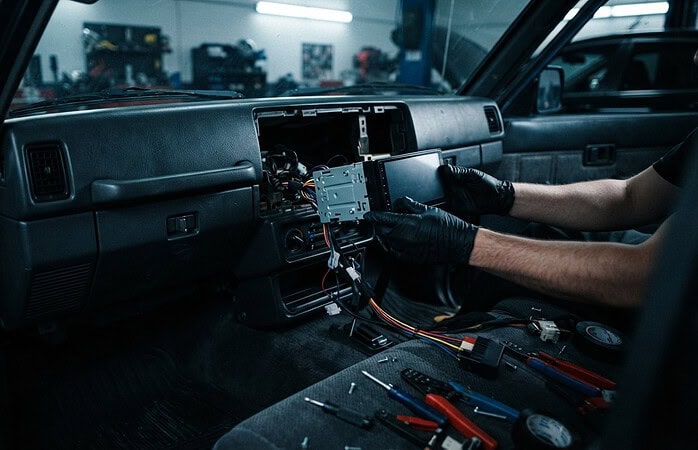
In modern vehicles, the dashboard screen is the command center for your entire driving experience. It controls your climate settings, safety sensors, and integrated cameras. Replacing this screen isn’t just difficult; it’s often impossible without losing critical vehicle functions. Modern OEM integration for aftermarket amplifiers allows us to tap into these systems without cutting a single factory wire or losing a single feature. Building custom dash kits for massive 15-inch displays is also incredibly expensive. Our approach preserves your vehicle’s factory aesthetics and resale value while delivering a massive jump in audio performance. We focus on a solution that keeps your interior looking original while making it sound extraordinary.
The Goal: A Clean, Full-Range Audio Signal
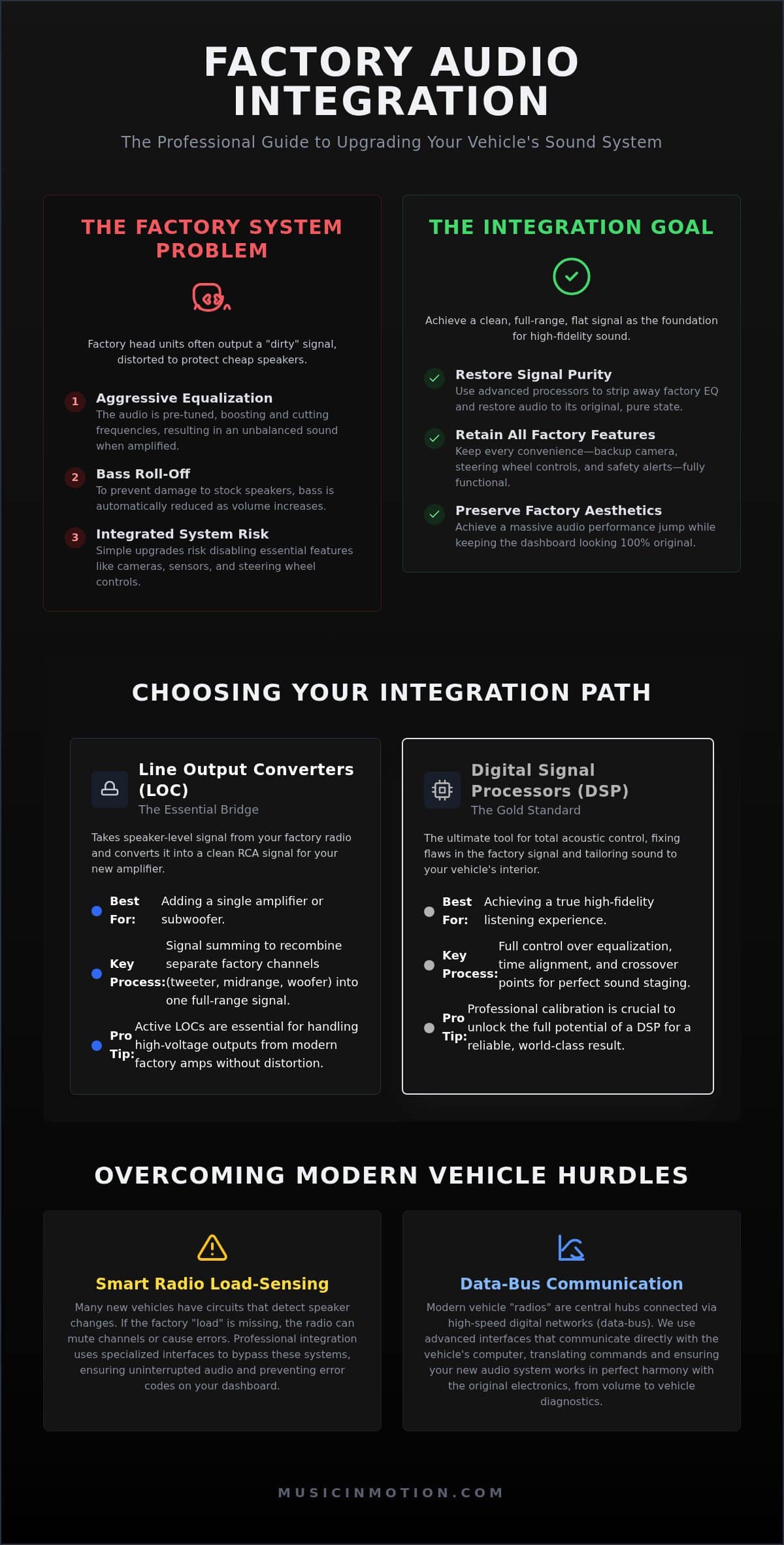
Most factory head units output what we call a “dirty” signal. Manufacturers know their stock speakers are cheap, so they use aggressive equalization to protect them. They might roll off the bass as you turn up the volume or boost certain frequencies to hide the flaws of low-quality components. If you feed this distorted signal into a high-powered amp, your music will sound harsh and unbalanced. You’ll likely experience clipping or even damage your new equipment.
Achieving a flat frequency response is the foundation of any successful car audio upgrade for stock stereo. We use specialized processors to strip away the factory EQ and restore the audio to its original, pure state. This gives your aftermarket amplifier a clean slate to work with. We don’t just sell you a box of parts; we prioritize the final acoustic result. Whether you’re driving a luxury sedan or a rugged utility truck, we ensure your audio system provides the clarity and punch you’ve been missing. It’s about more than just volume; it’s about the internal experience of the user and the feeling of being behind the wheel with a world-class sound system.
Essential Hardware for Seamless Amplifier Integration
Successful OEM integration for aftermarket amplifiers begins with selecting the right hardware for your vehicle’s specific electronic architecture. We categorize these tools based on how they interact with your factory source unit. A basic setup might only need a simple converter, while a modern luxury vehicle often requires a sophisticated data-bus interface to function correctly. We focus on choosing components that maintain signal integrity while providing the flexibility needed for a truly high-end result. Matching the hardware to the complexity of your factory “premium” audio system is the first step toward a successful upgrade.
Line Output Converters (LOC) and Signal Summing
A Line Output Converter is the most common tool for adding a single amplifier. It takes the speaker-level signal from your radio and converts it into an RCA signal your new amp can use. However, many modern systems use separate channels for tweeters, midranges, and woofers. This is where signal summing becomes critical. We use active summing processors to recombine these split signals into one full-range output. Active LOCs are almost always superior to passive versions. They handle the high-voltage output of modern factory amplifiers without overheating or distorting the sound. This ensures your new equipment receives a strong, clean signal from the start.
Digital Signal Processors (DSP): The Gold Standard
For those seeking the ultimate listening experience, a Digital Signal Processor is the only choice. Integrated DSPs allow us to fix the acoustic flaws inherent in factory interiors. These devices provide total control over equalization, crossover points, and time alignment. We use them to perform de-equalization, which is the process of stripping away the factory’s pre-set sound signature. This creates a clean, flat signal that we can then tune to match your specific musical tastes. A properly tuned DSP can make a set of aftermarket speakers sound like they were custom-engineered for your cabin. It transforms a standard interior into a high-fidelity soundstage.
Data-Bus Integration Modules
The most advanced vehicles use a CAN bus system to send audio data digitally. In these cases, we use modules like the iDatalink Maestro or PAC AmpPRO. These tools tap into the digital stream before the factory amplifier can add its own processing or distortion. This method is the cleanest way to perform OEM integration for aftermarket amplifiers because it avoids “fixing” a bad signal by never letting the signal get bad in the first place. These modules also ensure you keep your factory chimes, OnStar, and Bluetooth features. If you’re ready to see which hardware fits your car, our team provides expert custom installations that guarantee a perfect fit and a finished result.
Overcoming Hurdles: Load Sensing and Factory EQ
Modern vehicle electronics are more protective than ever. Many 2024 and newer head units are designed to monitor the health of the audio system constantly. This “Smart Radio” technology creates a major hurdle for DIYers and inexperienced shops. If the radio doesn’t detect the specific electrical resistance of a speaker, it may mute the output entirely or trigger a “service audio system” error on your dashboard. Successful OEM integration for aftermarket amplifiers requires a deep understanding of these diagnostic protocols to ensure your system remains stable and reliable. We focus on solving these digital roadblocks before they become permanent headaches.
The Load Sensing Dilemma
Class D factory head units are common in recent models, and they are particularly sensitive to impedance changes. When you disconnect a speaker to tap into the signal, the radio sees an open circuit and assumes the hardware is failing. Load resistors trick the factory radio into “seeing” a speaker, preventing diagnostic error codes. We utilize specialized Load Generating Devices (LGDs) to provide the exact resistance the vehicle expects. This stabilizes the signal path and prevents the “no audio” condition that plagues many modern installs. It’s a technical detail that makes the difference between a system that works and one that leaves you in silence.
Another danger involves “clipping” the factory signal. When drivers try to get more volume out of a restricted factory unit, they often push the source beyond its clean operating range. This sends a distorted, square-wave signal to your new amplifier. We use professional tools to find the maximum clean volume of your factory radio before we start the install. This prevents equipment damage and ensures your music stays crystal clear at any volume level.
Defeating the Factory EQ Curve
Factory engineers design audio systems to protect cheap, paper-cone speakers. The most common trick they use is bass roll-off. As you turn the volume knob up, the radio automatically reduces the bass frequencies to prevent the stock speakers from blowing. If you add a powerful subwoofer without addressing this, your bass will feel thin and weak just when you want it to hit the hardest. It’s a frustrating experience that ruins the impact of your favorite tracks.
We solve this by using integration processors that restore these lost low-end frequencies in real-time. During the tuning process, we employ Real Time Analysis (RTA) to visualize the factory EQ curve. This allows us to see exactly where the signal is being manipulated by the manufacturer. By applying the opposite curve, we flatten the signal and provide your aftermarket equipment with the full-range audio it needs to perform. This meticulous calibration is how we deliver a finished result that sounds better than anything the factory intended. We take pride in restoring the life and energy to your music.
Choosing Your Integration Path: A Practical Guide
Your upgrade journey depends entirely on your specific goals for the vehicle. We’ve developed a tiered approach to help you decide which level of OEM integration for aftermarket amplifiers fits your lifestyle. Level 1 is a popular starting point; it involves adding a dedicated subwoofer to a non-amplified factory system to provide the low-end punch that stock speakers lack. Level 2 moves into a full system upgrade, incorporating 4-channel amplification and signal correction to breathe new life into every corner of the cabin. For the true enthusiast, Level 3 offers audiophile-grade integration using a standalone DSP and custom fabrication to create a tailored acoustic environment that rivals high-end home audio.
Assessing Your Factory System
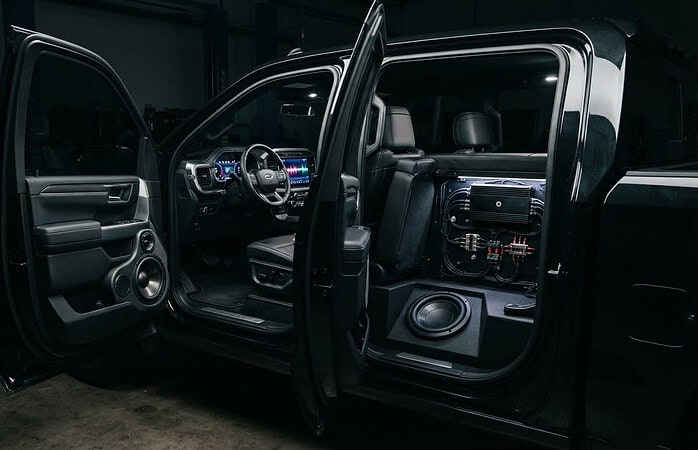
Standard systems are often straightforward, but premium packages like Bose, Revel, or Harman Kardon require a more nuanced approach. These high-end systems often use digital processing that makes a simple connection impossible. We must identify if your factory amplifier is tucked away in the trunk or integrated behind the dashboard, as this dictates our point of entry for the signal. In many complex installs, car audio fabrication is the key to a stealthy result. It allows us to mount high-performance components in locations that look completely original while providing the structural integrity needed for superior sound.
Wiring and Installation Best Practices
Reliability is the backbone of our work, and it starts with how we connect to your vehicle. We prioritize T-Harnesses because they offer a plug-and-play solution that avoids cutting or splicing your factory wiring. This is a critical step for maintaining your vehicle’s warranty and ensuring long-term electrical stability. Proper grounding is equally vital; we use dedicated points to eliminate alternator whine and ground loops that can ruin your listening experience. Whether we use high-quality shielded RCA cables or high-level signal leads, we focus on absolute signal purity. If you’re ready to transform your drive, our team is ready to provide the custom installations your vehicle deserves.
Professional Integration: The Music In Motion Standard
At Music In Motion, we believe that the hardware is only half the story. While many shops focus on shifting inventory, our philosophy centers on the finished result. We’ve been perfecting our craft since 1994; we know that professional OEM integration for aftermarket amplifiers is a delicate balance of science and art. It isn’t enough to just make a connection. We must ensure that the signal remains pure and that the installation respects the complex electronic architecture of your vehicle. Our team treats every car, boat, or motorcycle as a unique canvas, focusing on a solution-oriented approach that prioritizes your daily experience behind the wheel.
Precision Tuning and Calibration
We don’t rely on guesswork or “ear-tuning” to set up your system. Our team uses precision tools like oscilloscopes to set amplifier gains perfectly. This process ensures you get maximum power without the risk of distortion or equipment failure. We also focus heavily on phase correction. By adjusting the timing and output of each speaker, we create a solid center image that makes it feel like the artist is performing right on your dashboard. This level of detail transforms a simple car audio upgrade into a true sensory experience. Every project concludes with rigorous road-testing. We verify that your new audio system doesn’t interfere with lane-departure warnings, parking sensors, or any other integrated safety systems. Your safety and the functionality of your utility systems are always our first priority.
Future-Proofing Your Audio System
Modern vehicles are essentially computers on wheels, and their software is constantly evolving. We design our integration systems to be as future-proof as possible. If your manufacturer releases a software update that changes how the head unit communicates, we can often update your integration modules to match. This long-term reliability is a core part of our brand promise. Because we are experts in complex vehicle electronics, we offer professional warranties on both our parts and our labor. You aren’t just buying a sound system; you’re investing in a partnership with experts who care about the longevity of your property. We take pride in our growth and evolution, yet we remain grounded and faithful to our local customer base. If you’re ready to move beyond basic upgrades and experience the Music In Motion standard, contact our team to discuss a tailored solution for your specific vehicle. We have the specialized knowledge to enhance any medium of transport you own.
Elevate Your Driving Experience Today
Whether you are in our local area or researching top-tier shops across the country, it helps to know what standards to look for; you can check out PFM Performance Auto Group to see how elite specialists approach these complex installations.
Achieving world-class audio in a modern vehicle doesn’t mean you have to sacrifice the safety features or dashboard controls you’ve come to rely on. We’ve explored how specialized hardware like digital signal processors and data-bus interfaces overcome complex factory hurdles like load sensing and aggressive EQ curves. By focusing on signal restoration rather than just a simple connection, we ensure your new system delivers the power and clarity you deserve while keeping your factory aesthetics completely intact. You can have the best of both worlds: modern convenience and high-fidelity sound.
Our team has been a leader in expert custom fabrication since 1994. We are dedicated specialists in high-end vehicle safety and audio integration, ensuring every project meets our rigorous standards for long-term reliability. Successful OEM integration for aftermarket amplifiers is about more than just hardware; it’s about delivering a finished result that improves your daily life. If you’re ready to transform your vehicle into a high-fidelity sanctuary, consult with our integration specialists today. We look forward to helping you rediscover your favorite music every time you get behind the wheel.
Frequently Asked Questions
Will adding an aftermarket amplifier void my vehicle warranty?
Adding an amplifier won’t void your entire vehicle warranty. Under the Magnuson-Moss Warranty Act, a dealer must prove that an aftermarket part caused a specific failure to deny a claim. We use non-invasive T-Harnesses to ensure your factory wiring remains untouched. This professional approach keeps your vehicle safe and your coverage intact while adding the power you want. It’s a reliable way to upgrade without worry.
Can I keep my steering wheel controls and factory Bluetooth?
You can absolutely retain all your factory features. Modern OEM integration for aftermarket amplifiers uses specialized data-bus modules to maintain communication between your steering wheel buttons and the audio system. We prioritize these stealthy installations so your dashboard looks and functions exactly as it did the day you bought it. You get significantly better sound quality without losing the convenience of your original integrated technology.
What is the difference between a high-level input and a Line Output Converter?
A high-level input is a feature built into some amplifiers that accepts speaker wires directly. A Line Output Converter is an external device that transforms those speaker signals into RCA cables. While high-level inputs are convenient, active converters often provide better signal handling and higher voltage. This results in a cleaner, more powerful signal for your aftermarket equipment to process, ensuring a more professional finished result.
Do I need a DSP if I already have an aftermarket amplifier?
A DSP isn’t strictly required, but it’s the best way to achieve high-fidelity sound. While an amplifier provides raw power, a DSP allows us to fix the acoustic flaws in your car’s interior. It handles time alignment, equalization, and crossover points. If you want a truly finished result with a solid center image, a DSP is the most effective tool in our arsenal for acoustic correction.
What is signal summing and when is it necessary?
Signal summing is the process of recombining audio signals that the factory amplifier has split into different frequency ranges. This is necessary when your car has separate outputs for tweeters, midranges, and woofers. Without summing, your new amplifier would only receive a partial signal, leading to missing notes in your music. We use active processors to restore a full-range signal for your new high-performance gear.
Why does my car audio sound worse at high volumes after adding an amp?
This usually happens because of factory bass roll-off or signal clipping. Many manufacturers automatically reduce bass as volume increases to protect cheap stock speakers. If your integration doesn’t account for this, the sound will feel thin or distorted at higher levels. We use specialized processors to flatten the factory EQ curve. This restores the full dynamic range and impact of your favorite tracks at any volume.
Can I integrate an amplifier into a leased vehicle?
You can definitely upgrade a leased vehicle. Because we use plug-and-play T-Harnesses and custom fabrication techniques that don’t involve cutting factory wires, the entire system is completely reversible. You can enjoy premium audio throughout your lease and then have the equipment removed before returning the car. It’s a solution-oriented approach that gives you the best sound without violating your lease agreement or damaging the property.
How do I stop engine noise or “hiss” in my integrated system?
Engine noise is often caused by poor grounding or improper gain settings. We solve this by using high-quality shielded cables and establishing solid, dedicated ground points. We also use oscilloscopes to set amplifier gains precisely, ensuring the signal-to-noise ratio is optimized. This eliminates annoying “hiss” or alternator whine, leaving you with nothing but crisp, powerful audio. Our focus is always on the safety and functionality of your system.