A “waterproof” label on a speaker box is often the first step toward a major system failure. Many boat owners assume that car audio logic applies to the water, only to find their investment corroded by salt or silenced by the wind within a single season. At Music In Motion, we believe your time on the water should be defined by crystal-clear sound, not equipment troubleshooting. This waterproof marine audio components guide cuts through the confusion to show you exactly what it takes to build a high-fidelity system that defies the elements.
We understand the frustration of “washed out” sound and the technical headache of deciphering IPX6 versus IPX7 ratings. You want a system that’s loud, reliable, and perfectly integrated into your vessel’s aesthetic. You’ll learn how to master 2026 standards, using digital signal processing and multi-zone control to overcome harsh open-air acoustics. We’ll look at everything from the latest Hertz PortoFino speakers to high-efficiency amplifiers. This is your blueprint for a system that handles the spray and delivers the performance you deserve.
Key Takeaways
- Use this waterproof marine audio components guide to select hardware specifically engineered to withstand salt spray, UV rays, and the unique challenges of the 2026 marine environment.
- Learn to decode IP ratings and ASTM testing standards to ensure your speakers and head units offer true protection against water intrusion and sun-induced fading.
- Master the art of acoustic mapping and custom fabrication to create a soundstage that remains clear and punchy even at full throttle against wind and engine noise.
- Understand the importance of professional integration, including why tinned-copper wiring is a non-negotiable requirement for preventing internal corrosion and “wicking.”
Why Specialized Waterproof Marine Audio Components Are Essential in 2026
The open water is a beautiful but brutal environment for technology. At Music In Motion, we’ve seen countless “water-resistant” systems fail after just a few months because they weren’t truly engineered for the sea. True marine-grade audio is about more than just surviving a splash. It’s about hardware built to withstand constant salt spray, intense UV radiation, and the relentless humidity of the coast. When we design a system using a waterproof marine audio components guide, we prioritize materials that won’t degrade when the conditions get tough. This specialized engineering ensures your investment provides a high-fidelity experience year after year, rather than becoming a pile of corroded scrap by next season.
The “Open Air” challenge is another reason why specialized gear is non-negotiable. Unlike the enclosed cabin of a car, a boat has no acoustic boundaries. Sound waves simply dissipate into the horizon. To overcome wind noise and engine roar, marine systems must be significantly louder and clearer than their land-based counterparts. We focus on high-efficiency components that maintain clarity at high volumes. This prevents the “washed out” sound that plagues inferior setups. Additionally, professional-grade Marine electronics are designed with shielded internal components to ensure your audio upgrades don’t cause electromagnetic interference with critical navigation or communication tools. Safety and entertainment must work in harmony.
Car Audio vs. Marine Audio: The Critical Differences
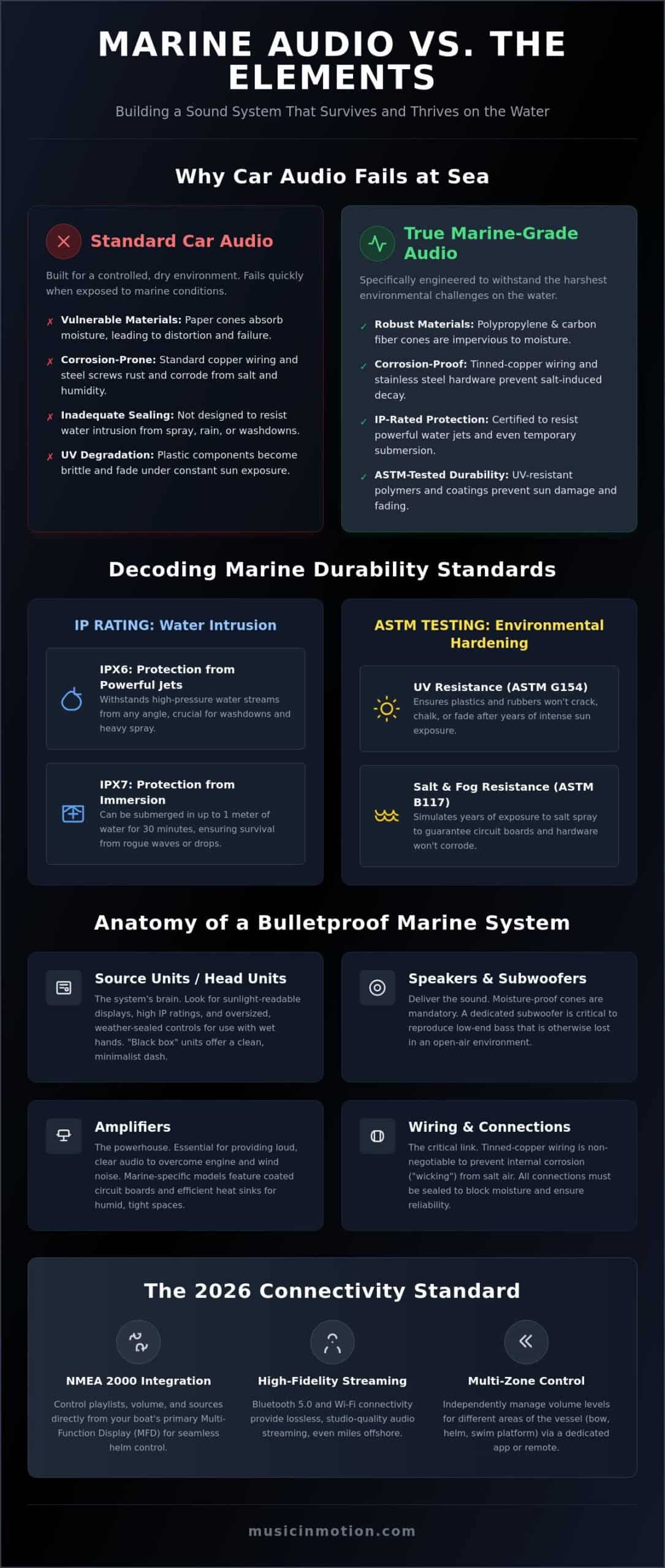
The differences start at the molecular level. While car speakers often use paper cones that would turn to mush in a humid bilge, marine speakers utilize polypropylene and carbon fiber. These materials are impervious to moisture. We also look for non-corrosive hardware; stainless steel terminals and plastic-coated circuit boards are standard in our builds. Marine amplifiers are also built to manage heat differently. They often feature cast aluminum heat sinks designed to shed thermal energy in open, humid spaces where airflow might be limited or salt-heavy.
The 2026 Standard for Marine Connectivity
Modern boating in 2026 demands seamless integration. We now see systems that connect directly to NMEA 2000 networks, allowing you to control your playlist directly from your multi-function display (MFD) or chartplotter. High-fidelity Bluetooth 5.0 and Wi-Fi streaming are now the benchmarks for lossless audio, providing studio-quality sound even miles offshore. We also emphasize app-based zone control. This allows you to independently manage volume levels at the bow, the helm, and the swim platform, ensuring the perfect atmosphere for every passenger on board.
The Core Anatomy: Essential Components for Your Marine Sound System
Engineering a high-performance system requires looking at the sum of its parts. A single weak link can ruin the entire experience, especially when you’re miles from the shore. This waterproof marine audio components guide focuses on how each piece of hardware contributes to the finished result. We don’t just look for “waterproof” labels; we look for a network of components that work together under pressure. From the brain of the system to the hardware that delivers the punch, every selection matters.
The receiver, or head unit, serves as the central command. In 2026, we prioritize sunlight-readable displays that remain clear even at high noon. Weather-sealed buttons and oversized rotary knobs are essential for operation with wet hands. When selecting these units, we pay close attention to Ingress Protection (IP) ratings to ensure the internal circuitry remains dry and functional. It’s about reliability you can see and feel.
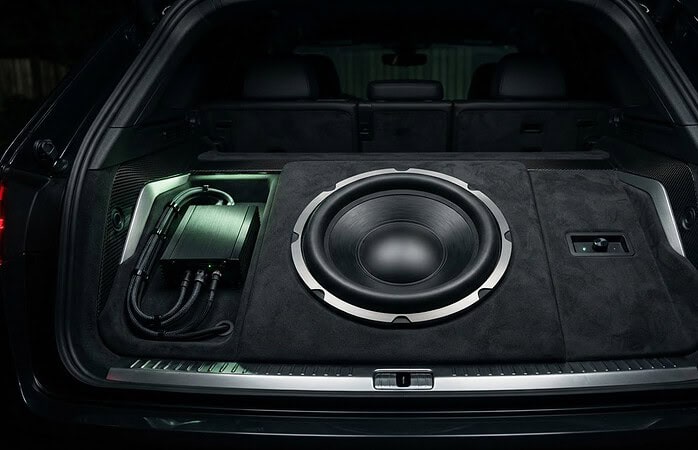
Speakers and subwoofers are where the engineering meets the ear. Marine speakers must balance power with extreme durability. We often use coaxial options for standard installs, but component systems allow us to place tweeters higher for better sound imaging. Subwoofers are equally critical. Bass frequencies dissipate almost instantly on the open water. A dedicated subwoofer provides the low-end foundation needed to keep your music sounding full and rich while you’re cruising at 30 knots.
Source Units and Multi-Zone Control
Many modern boaters now prefer “black box” source units. These hideaway modules mount out of sight, keeping your dash clean and minimalist. You control everything through a sleek remote or a smartphone app. Managing “Zones” is a game changer for social trips. Our team can configure your system so the kids can have low volume at the bow while the wakeboarder enjoys high-output sound from the tower. Adding wired remotes at the transom or swim platform ensures you never have to climb back into the cockpit just to skip a track.
Marine-Grade Amplification and Power Management
The amplifier’s primary job is maintaining clarity at high volumes without distortion. Class D amplifiers are the gold standard for marine use because they run cooler and draw less current. This efficiency is vital when you’re running on battery power away from the dock. To survive the salt air, these units feature sealed chassis and conformal-coated circuit boards. This protective layer is a non-negotiable requirement for resisting internal corrosion. We also focus on power management to ensure your audio system never leaves you stranded. If you’re planning a build, we can design custom marine audio systems that balance high-output performance with total vessel safety.
Decoding Waterproofing Standards: IP Ratings and ASTM Testing
Marketing labels like “water-resistant” or “all-weather” are often too vague to trust when your investment is on the line. To build a system that truly lasts, we have to look at the measurable engineering standards that define durability. This waterproof marine audio components guide focuses on the rigorous testing protocols that separate professional gear from entry-level knockoffs. Understanding these benchmarks allows us to predict how your speakers will handle a high-pressure wash-down or a season of relentless coastal humidity. We don’t guess; we rely on data to ensure your sound stays clear regardless of the conditions.
Beyond moisture, we also have to account for the physical violence of the sea. High-speed maneuvers and heavy chop create significant vibration and shock. Marine-grade components feature reinforced internal mounting points and heavy-duty solder joints to prevent circuit boards from cracking under pressure. It’s a level of mechanical resilience that car audio simply doesn’t require. When we select hardware, we’re looking for a total package of protection that addresses every environmental stressor simultaneously.
IPX Ratings Explained for Boat Owners
The Ingress Protection scale is the most common metric you’ll encounter. IP ratings are the global standard for measuring protection against solids and liquids. For most deck-mounted speakers, an IPX5 or IPX6 rating is the target. These ratings signify protection against high-pressure water jets, which is exactly what happens during a thorough boat cleaning. If you have components mounted near the waterline or on a swim platform, IPX7 becomes essential. This rating confirms the device can survive temporary immersion in one meter of water for up to 30 minutes. We use these ratings to map out exactly where each component should live on your vessel.
The Role of ASTM Testing in Component Longevity
Moisture is only half the battle. Salt-spray testing, specifically the ASTM B117 standard, is the industry benchmark for long-term coastal durability. Manufacturers place components in a “salt-fog” chamber for hundreds of hours to simulate years of exposure to briny air. If the hardware can’t resist corrosion in this accelerated environment, it won’t survive on your boat. We also prioritize ASTM D4329 for UV stability. This test measures how well plastics and rubber surrounds resist sun-induced fading and material breakdown. Without high UV resistance, your speaker cones will become brittle and crack, destroying your sound quality. By sticking to these verified standards, we ensure your finished result looks as good as it sounds for years to come.
Strategic System Design: Custom Fabrication and Placement
Strategic design is the difference between a collection of parts and a finished result. Our waterproof marine audio components guide highlights that even the most expensive hardware will fail to impress if it isn’t positioned correctly. We use acoustic mapping to identify the ideal locations for each speaker. This ensures even sound distribution across the entire deck. Every passenger should hear the music clearly, regardless of where they’re sitting. It’s about creating an immersive environment that matches the scale of the open water.
Aesthetics are just as important as performance. We use custom fabrication to create speaker pods that match your boat’s specific lines and colors. This creates a cohesive look that appears factory-installed but performs at a custom level. We also integrate RGB LED lighting into speaker grilles to enhance the night-time experience. For those who prefer a minimalist look, we specialize in stealth installations. We hide amplifiers and processors in ventilated, dry compartments to keep your dash and storage areas clutter-free while protecting the heart of your system.
Custom Enclosures for Marine Subwoofers
Custom enclosures for marine subwoofers are vital for achieving deep bass in an open environment. Since 1994, we’ve refined the process, proving that custom subwoofer enclosures are the best way to maintain low-end response against wind and engine noise. We never use wood in these builds. Instead, we use fiberglass and marine-grade synthetics that withstand constant moisture. Depending on your boat’s layout, we might recommend a ported design for extra volume or a sealed enclosure for precise, punchy bass.
Tower Speakers and Wakeboard Integration
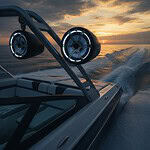
Tower speakers require specialized engineering to project sound far behind the boat. This is essential for wakeboarding and tubing. We use heavy-duty swivel mounts that allow you to direct the sound exactly where it’s needed. To maintain a clean aesthetic, we route all wiring through the internal structure of the tower. This protects the cables from the sun and prevents a cluttered appearance. We focus on balancing weight and performance to ensure your tower remains safe and functional while delivering incredible sound.
Our team is ready to help you engineer a system that looks as good as it sounds. Let us build your next marine audio system with the precision and reliability your vessel deserves.
Professional Integration: Moving from Parts to a Finished Result
We don’t just sell hardware; we deliver a complete sensory experience. The Music In Motion philosophy is rooted in the belief that a successful project is defined by the finished result rather than the mere transaction of goods. While a waterproof marine audio components guide provides the technical foundation, the professional integration of those parts determines the system’s lifespan and performance. We approach every installation as a partnership. This ensures that high-end technology remains simple, reliable, and perfectly suited to your lifestyle on the water.
A reliable system starts with what you can’t see. We prioritize the structural integrity of every connection, ensuring that your investment survives the harshest conditions. Our team focuses on the practical needs of the user, making complex custom projects feel intuitive and easy to operate. We take pride in our growth since 1994, yet we remain grounded in our commitment to safety and functionality for every client.
The Importance of Marine-Grade Wiring and Hardware
Standard automotive wiring is a recipe for failure on the water. It lacks the specialized protection needed to stop moisture from “wicking” up the cable, which causes internal corrosion within months. We use only tinned-copper marine-grade wire to resist the oxidation that kills electrical conductivity. We also utilize heat-shrink connectors to create airtight seals at every junction. Using stainless steel mounting hardware prevents unsightly rust streaks on your fiberglass. Proper circuit protection, including marine-rated breakers and fuses, is essential for vessel safety and prevents electrical hazards in the engine compartment.
Expert Tuning for Open-Air Acoustics
Tuning a boat is vastly different from tuning a car. Most boat speakers operate in an “infinite baffle” environment, meaning they don’t have a traditional enclosure behind them. This requires precise Digital Signal Processing (DSP) to prevent the sound from becoming thin or distorted. We use DSP to calibrate the system for your boat’s specific layout. We adjust time alignment so the music hits the helm perfectly, creating a focused “sweet spot” for the captain. Our team also fine-tunes the EQ settings to compensate for the frequencies typically lost to wind and engine roar. Ready for a superior on-water experience? Explore our premium marine audio systems.
Long-term maintenance is the final step in protecting your investment. During winterization, we recommend a thorough inspection of all seals and connections. Off-season storage in a dry environment prevents moisture buildup in hidden compartments. A little preventative care ensures that when the first warm day of spring arrives, your system is ready to perform at its peak. We’re here to make sure your sound system remains a source of joy for years to come.
Engineering Your Perfect Day on the Water
Building a world-class system requires more than just buying the right parts. Success lies in the synergy between IPX-rated hardware, custom-fabricated enclosures, and professional-grade wiring. This waterproof marine audio components guide provides the roadmap, but the final result depends on expert integration. Since 1994, we’ve specialized in marine audio solutions that withstand the brutal reality of salt, sun, and open-air acoustics.
We take pride in our ability to push creative boundaries while maintaining the safety and functionality of your vessel. Whether you’re looking for a simple upgrade or a complex multi-zone masterpiece, our focus remains on providing a reliable system that looks as good as it sounds. We invite you to Design Your Custom Marine Sound System with Music In Motion. Let’s work together to ensure every moment on the water is accompanied by high-fidelity sound that never fades. Your ultimate 2026 audio experience starts with a partner who truly understands the craft.
Frequently Asked Questions
Can I use car audio speakers on my boat if they are under a cover?
No, you shouldn’t use car audio speakers on a boat. Even if they are protected from direct rain, the high humidity and salt air will quickly rot paper cones and corrode untreated steel baskets. Marine speakers use synthetic materials like polypropylene and stainless steel hardware to survive the moisture that exists in every corner of a vessel.
What is the difference between water-resistant and waterproof audio gear?
Water-resistant gear is designed to handle light mist or humidity, but it won’t survive direct contact with water. Waterproof gear is built to withstand high-pressure jets or temporary submersion. Our waterproof marine audio components guide emphasizes looking for specific IPX ratings to ensure your equipment can handle a thorough wash-down or a heavy storm without failing.
Do I need a second battery for my marine audio system?
A second battery is highly recommended for any high-output system. We suggest installing a dedicated deep-cycle “house” battery to power your electronics while you’re anchored at the sandbar. This setup ensures your starting battery remains fully charged, so you never have to worry about being stranded after a day of listening to music.
How do I protect my marine speakers from sun damage and fading?
The best protection starts with choosing gear that meets ASTM D4329 standards for UV stability. These components are engineered with special plastics and coatings that resist the material breakdown caused by intense sunlight. Additionally, using physical covers when your boat is docked will significantly extend the life and color of your speaker grilles and rubber surrounds.
What is an IPX rating and which one do I need for my boat?
IPX ratings are the global benchmark for measuring a device’s resistance to liquids. For most speakers mounted on the deck or tower, IPX6 is the standard you need because it protects against powerful water jets. If your components are mounted near the waterline or swim platform where they might be briefly submerged, you should look for an IPX7 rating.
Can I connect my boat’s sound system to my GPS or Chartplotter?
You can absolutely integrate your audio with your navigation electronics. Most modern marine head units use NMEA 2000 networking to communicate with your multi-function display (MFD). This creates a streamlined helm where you can manage your music, view track info, and adjust volume directly from your GPS touch screen.
Why does my boat’s stereo sound distorted when I’m driving fast?
Distortion at high speeds usually happens because your system is being pushed beyond its limits to compete with wind and engine roar. When you turn the volume up too high on an underpowered system, the amplifier clips the signal. Adding a high-efficiency amplifier and dedicated subwoofers provides the power needed to maintain crystal-clear sound even at full throttle.
Is professional installation necessary for marine audio components?
Professional installation is the best way to ensure the safety and longevity of your system. Marine electrical work is complex and requires specialized materials like tinned-copper wiring and heat-shrink connectors to prevent corrosion. We focus on the finished result to make sure your system is reliable, safe, and tuned perfectly for the unique acoustics of your boat.