What if the alert from your radar detector isn’t a warning, but a confirmation that you’ve already been caught? It’s a sinking feeling we’ve all experienced. You see the patrol car, hear the beep, and realize your technology was too slow to make a difference. Many performance drivers ask us, how do radar and laser shifters work to actually prevent a speed reading rather than just announcing one? We know the confusion between different signal types can be overwhelming, especially when you’re trying to avoid heavy fines and insurance spikes without cluttering your dash with ugly, hanging wires.
We believe your vehicle should feel like a sanctuary, not a science experiment. In this guide, we’ll demystify the complex technology behind modern speed enforcement and explain how shifting technology gives you the precious seconds needed to adjust your speed safely. We’ll show you how a professional, stealthy installation provides total awareness of police presence while maintaining the clean, factory look of your interior. From the physics of signal jamming to the benefits of custom integration, you’re about to gain a complete understanding of how to protect your driving record in 2026.
Key Takeaways
- Learn the critical difference between passive radar detection and active laser shifting, and why a complete defense requires both technologies.
- Discover how do radar and laser shifters work to identify police signals and provide you with enough time to adjust your speed safely.
- Understand why professional, stealthy integration is essential for maintaining your vehicle’s factory look while maximizing defense coverage.
- Find out why sensor leveling and precise alignment are the most important factors in ensuring your system functions when it matters most.
- Explore our philosophy of delivering a finished result that prioritizes reliability, simplicity, and total awareness on every drive.
Understanding the Core Difference: Radar Detection vs. Laser Shifting
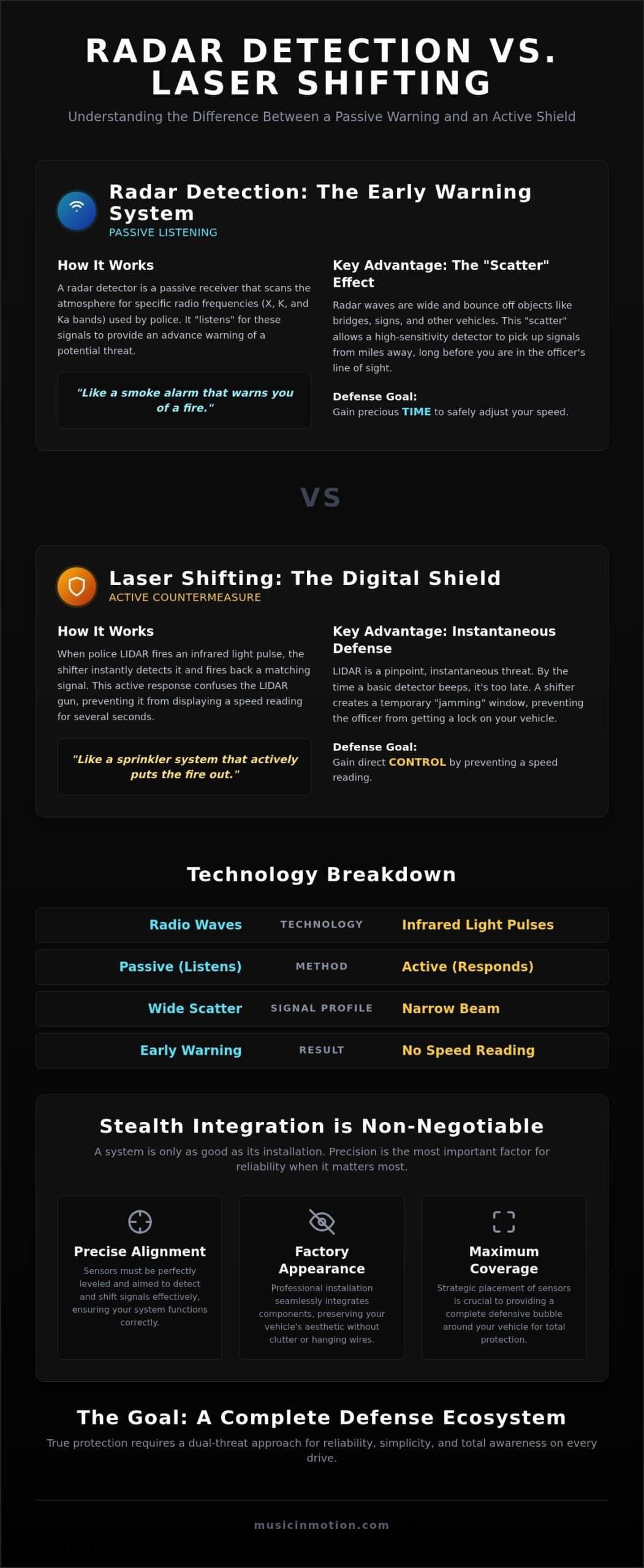
To understand how do radar and laser shifters work, you first need to realize they are two entirely different technologies designed to solve two different problems. A radar detector is a passive receiver that “listens” for radio signals. In contrast, a laser shifter is an active transceiver that communicates back to the police officer’s equipment. We often compare a detector to a smoke alarm that warns you of a fire, while a shifter acts like the sprinkler system that actively puts it out. A laser shifter is an active light countermeasure that prevents a speed reading.
We believe that true protection requires a dual-threat approach because law enforcement uses two distinct methods for speed enforcement: radio waves and light pulses. Radar waves spread out over long distances, making them easier to hear from a mile away. Laser pulses are narrow, pinpoint accurate, and nearly impossible to detect before they’ve already hit your vehicle. Detection gives you the gift of time. Shifting gives you the power of control. We integrate both to ensure you have a complete defense ecosystem rather than just a simple warning light on your dash.
Passive Radar Detection: The Early Warning System
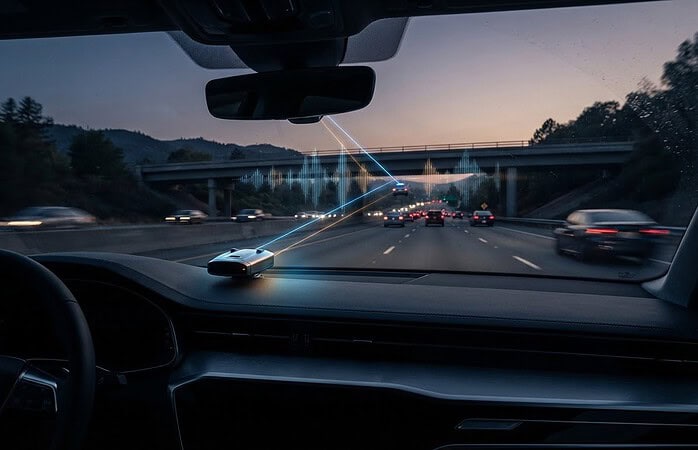
A Radar detector works by scanning the atmosphere for specific radio frequencies used by police, specifically the X, K, and Ka bands. These radio waves are relatively large and have a tendency to bounce off bridges, signs, and other vehicles. This “scatter” effect is a massive advantage for drivers. It allows a high-quality detector to pick up the signal long before the patrol car is within line-of-sight. Because radar cannot be effectively or legally jammed in the United States, your defense relies on long-range sensitivity. Our approach focuses on mounting these sensors in optimal locations to catch those stray waves as early as possible, providing you with ample time to check your surroundings and adjust your speed naturally.
Active Laser Shifting: The Digital Shield
Police LIDAR is a much more dangerous threat because it is instantaneous. By the time a standard detector goes off, the officer likely already has your speed. This is why we specialize in active laser shifting. When the police gun fires an infrared light pulse at your car, the shifter detects it and immediately fires back a matching signal. This confuses the police equipment, preventing it from displaying a speed reading for several seconds. This window of time is your digital shield. For a deeper look at these specific light-based threats, explore our Laser Defense System for Cars: The 2026 Guide to LiDAR Countermeasures. We focus on delivering a finished result where these sensors are seamlessly integrated into your vehicle’s exterior, providing maximum protection without compromising the aesthetic of your car.
The Science of Radar Detection: Passive Scanning and Early Warning
Police equipment relies on the Doppler Effect to measure your vehicle’s speed. When a patrol car fires a radar gun, it emits radio waves that bounce off your car and return to the source. If you’re moving, the frequency of those waves changes. When performance drivers ask us how do radar and laser shifters work, we always start with this invisible science. Radar is passive, meaning our systems are essentially high-performance ears tuned to listen for those specific radio frequencies before the officer can get a clear lock on your position.
This technology works in your favor because of the “scatter” effect. Unlike a laser beam, radar waves are wide and prone to bouncing off objects like road signs, bridges, and other vehicles. This allows a high-sensitivity detector to pick up the signal long before you’re in the officer’s direct line of sight. While understanding how laser speed guns work helps explain why light is so dangerous, radar is a completely different beast based on radio waves that fill the air around you. Our goal is to catch that scatter early, giving you the maximum amount of time to react.
The biggest challenge for any driver is “Instant-On” radar. This is when an officer keeps the radar gun in standby mode and only fires it when they have a target in sight. High-sensitivity detectors combat this by picking up the faint scatter from the officer tagging a car miles ahead of you. Modern radar detectors filter out ‘noise’ from blind-spot monitors and automatic doors. This ensures that when your system alerts you, it’s a legitimate threat rather than a nearby SUV’s safety sensors. If you’re tired of the “box on the dash” look, we can help you design a custom radar and laser defense system that fits your vehicle perfectly.
Navigating the Frequency Spectrum
Understanding 2026 speed enforcement means knowing your frequencies. Police primarily use X, K, and Ka bands. X-band is largely obsolete, while Ka-band remains the most common for high-speed enforcement. The real threat today is MultaRadar (MRCD and CT), which uses low-power, modulated signals that older detectors simply can’t see. We prioritize systems with GPS-based lockout technology. This allows your car to “remember” fixed false alerts like grocery store doors and mute them automatically, keeping your drive quiet and focused.
The Role of Stealth in Radar Detection
In certain regions, police use Radar Detector Detectors (RDD) like the Spectre Elite to find drivers using defense systems. High-end units prevent this by using magnesium housings and specialized shielding to stop signal leakage. This makes your system electronically invisible to law enforcement. This is why the question of how do radar and laser shifters work isn’t just about the hardware, but about the specific frequencies they monitor. For those looking to build a complete safety net, check out our Vehicle Safety Systems Roundup: Essential Aftermarket Upgrades for 2026.
The Mechanism of Laser Shifting: Active Light Countermeasures
LIDAR is a precision tool. Unlike radar, which uses broad radio waves, police laser guns fire narrow beams of infrared light. These pulses travel at the speed of light to hit a specific point on your car, usually a headlight or license plate. By measuring how long it takes for those pulses to bounce back, the gun calculates your distance over time to determine your speed. This pinpoint accuracy creates a major problem for standard detectors. If your device only warns you that you’ve been hit, the officer already has your speed. We solve this by moving from passive listening to active shifting.
Many performance drivers ask us how do radar and laser shifters work when they realize a simple beep isn’t enough to stop a ticket. The answer lies in the transceiver’s ability to “talk back” to the police equipment. When your car is targeted, our integrated sensors detect the light and immediately fire a matching signal back toward the officer. This shifting creates a digital error on the officer’s gun, buying the driver time to adjust their speed safely. It’s a sophisticated game of digital tag where we ensure your car doesn’t lose.
How a Laser Shifter Executes a Defense
The defense process happens in milliseconds. We break it down into four distinct stages to ensure our customers understand the reliability of their system:
- Step 1: The sensor detects a 905nm infrared pulse from the police LIDAR gun.
- Step 2: The internal processor identifies the gun’s specific Pulse Repetition Frequency (PRF).
- Step 3: The shifter fires back a perfectly timed light pulse to flood the gun’s receiver with “noise.”
- Step 4: The officer receives a “no reading” or “error” message while you receive an alert and adjust your speed.
Combating Advanced 2026 LIDAR
Speed enforcement technology doesn’t stay still. In 2026, we see a massive rise in Variable Pulse Rate (VPR) guns, such as the DragonEye. These devices change their pulse patterns rapidly to try and defeat older shifting technology. If your system isn’t running the latest firmware, it might fail to recognize these complex patterns. We prioritize systems that allow for easy updates to stay ahead of these threats. Additionally, we advocate for the “Target Zone” philosophy. Because laser beams are so narrow, a single sensor isn’t enough. We use multiple shifter heads to provide full coverage across the front of your vehicle, ensuring there are no blind spots for an officer to exploit. This is how we deliver a finished result that you can actually trust on the open road.
Why Stealth Installation is Critical for Performance and Protection
Having the best technology on the market is only half the battle. To truly understand how do radar and laser shifters work in a real-world scenario, you have to look at where and how they are mounted on your vehicle. A sensor that is slightly off-angle or obscured by a trim piece won’t perform when you need it most. We treat every installation as a precision engineering project because the margin for error is measured in millimeters. If a sensor isn’t perfectly level with the road, the shifting signal might fire into the pavement or above the police officer’s head instead of hitting the target.
Our “Target Zone” philosophy dictates exactly where we place our hardware. When an officer uses LIDAR, they aim for the most reflective parts of your vehicle, which are typically the headlights, the front grille, and the license plate. We strategically mount our shifter heads to create an overlapping field of protection across these specific areas. This ensures that no matter where the beam hits, our system is ready to respond. A poorly aimed shifter is as ineffective as no shifter at all. This is why we use specialized leveling tools and custom brackets to ensure every component is aligned with the trajectory of incoming threats.
Beyond performance, we believe your defense system should never detract from your car’s design. We specialize in integrating controls and displays directly into the factory interior. Whether it’s a hidden controller in the center console or a subtle alert LED integrated into the rearview mirror, the goal is a clean, factory-original look. If you are ready to upgrade your vehicle with a professional setup, contact us to discuss a custom radar and laser defense system tailored to your car.
Custom Fabrication for Invisible Protection
We take stealth seriously. Many of our clients drive high-performance vehicles where a bulky plastic sensor would ruin the aesthetic. We often use custom-fabricated, IR-transparent acrylic panels to hide sensors behind grilles or bumper vents. This material allows the infrared shifting signals to pass through perfectly while keeping the hardware completely hidden from view. We also take great care to ensure our placements don’t interfere with your car’s modern safety systems, such as adaptive cruise control or parking sensors. It is a delicate balance of protection and functionality that requires years of experience to master.
The ‘Music In Motion’ Standard
Since 1994, our team has prioritized a “finished result” over a simple transaction of parts. We don’t just hand you a box and a bill; we walk you through a collaborative design process to ensure the system fits your lifestyle and your driving habits. This commitment to craftsmanship is the same approach we take with our other services, which you can explore in our guide to Custom Car Audio Fabrication: The Art and Science of Superior Sound. We aren’t just installers; we are specialists who take pride in making advanced technology feel like a natural part of your vehicle.
Integrated Defense: The Music In Motion Approach to Total Protection
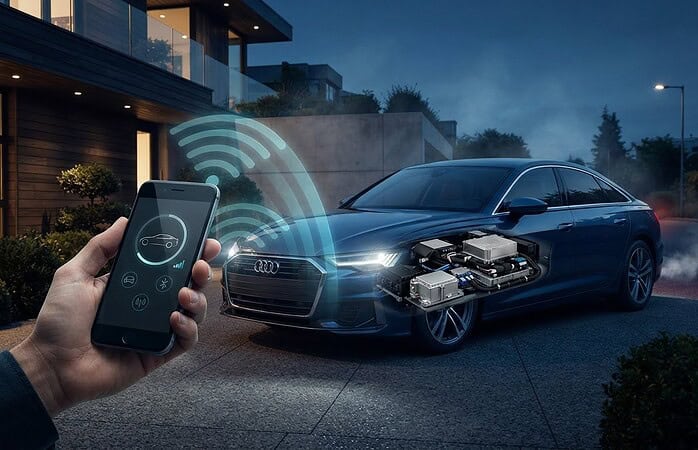
We have moved beyond the era of suction cups and dangling power cords. A truly effective defense isn’t a single gadget. It’s an integrated ecosystem that works in harmony with your vehicle’s electronics. When clients ask us how do radar and laser shifters work in a modern performance car, they’re often surprised to learn it involves a sophisticated network of sensors and processors hidden entirely from view. Our 2026 philosophy centers on providing reliable, sophisticated, and user-friendly protection that doesn’t require a degree in physics to operate. We believe your focus should stay on the road while our technology handles the threats.
Our team bridges the gap between high-end technical mastery and your daily driving experience. We want you to feel confident, not distracted by constant false alerts or bulky equipment. This is why professional calibration is the final, most critical step of our process. We don’t just bolt hardware to your frame and call it a day. We verify signal strength and use precision tools to check alignment angles. This ensures the system reacts with mathematical accuracy when it encounters police equipment. This level of detail transforms a box of parts into a finished result that preserves your vehicle’s integrity.
Universal Application for Land and Water
Our expertise isn’t limited to high-end sports cars. We apply these same defense principles to motorcycles, RVs, and powersports vehicles. Every driver deserves the same level of protection, regardless of their mode of transport. We design custom solutions for every vehicle type, ensuring that sensors are positioned for maximum coverage without interfering with the vehicle’s unique aerodynamics or utility. We’re committed to the long-term reliability of these systems. As police technology evolves, we provide the firmware updates and support necessary to keep your defense current. We take pride in being a versatile partner for all your specialized vehicle needs.
Ready to Drive with Confidence?
Settling for a DIY suction-cup mount is a compromise in both safety and aesthetics. These portable units often fail to detect off-axis signals and lack the active shifting power needed to stop a pinpoint LIDAR reading. Our goal is to ensure your vehicle remains the ultimate sanctuary of performance and peace of mind. You deserve a system that works every time without cluttering your dash. We invite you to experience professional vehicle defense with Music In Motion. Let us help you take control of your drive with a custom-integrated system that is invisible to the eye but unbeatable on the road.
Take Control of Your Drive in 2026
Modern driving requires a proactive approach to speed enforcement. By understanding how do radar and laser shifters work, you can transition from being a passive target to having an active defense. We’ve explored the critical differences between radio-wave detection and infrared light countermeasures. You’ve also seen why a professional, stealthy installation is the only way to ensure your sensors are perfectly aligned for maximum performance while keeping your interior looking factory-fresh. A system is only as good as its calibration, and we prioritize that precision in every project.
Since 1994, our team has specialized in high-performance vehicle electronics and custom fabrication. We don’t just sell hardware; we deliver a finished result that integrates seamlessly with your vehicle’s design and your lifestyle. We’re ready to help you bridge the gap between advanced technology and a clean, clutter-free dashboard. It is time to stop worrying about the next patrol car and start enjoying the internal experience of being behind the wheel. Design your custom defense system with Music In Motion and experience the confidence of total protection. We look forward to helping you protect your drive.
Frequently Asked Questions
Is it legal to use radar detectors and laser shifters in the United States?
Radar detectors are legal in passenger vehicles in 49 states, with Virginia and Washington D.C. being the only exceptions. Laser shifters are regulated differently because they use light rather than radio frequencies. As of 2026, several states have specific laws prohibiting active laser countermeasures. We always recommend checking your local state statutes to ensure your defense system complies with regional regulations.
Can a police officer tell if I am using a laser shifter?
An officer might suspect you are using a shifter if their LIDAR gun repeatedly displays an error code instead of a speed reading. This is why we teach the “Jam to Kill” technique. If you slow down and immediately deactivate the shifting signal, the officer will receive a clean reading of your new, lower speed. This makes the encounter feel like a standard traffic observation rather than a technological block.
What is the difference between a laser jammer and a laser shifter?
The difference between a laser jammer and a laser shifter is primarily in the terminology and the intended user behavior. Technically, both devices fire infrared light to confuse a police gun. We use the term “shifter” because it reflects a more sophisticated approach. Instead of just jamming the signal indefinitely, these systems allow you to shift the officer’s reading to a safe speed before the system resets.
Why do I need a professional to install my radar defense system?
You need a professional because how do radar and laser shifters work depends entirely on precision alignment and leveling. A sensor that is tilted just a few degrees off-axis can leave your vehicle completely vulnerable to a laser beam. We use specialized calibration tools and custom fabrication to ensure your sensors are perfectly positioned and hidden, providing a finished result that performs better than any DIY setup.
Will a radar detector stop me from getting a ticket from a laser gun?
No, a radar detector will not stop a laser ticket because it is a passive receiver that only listens for radio waves. Laser guns use light pulses, which are much narrower and faster than radar. While a detector might beep when hit by laser, it’s usually too late to react. You need active laser shifters to fire back a signal and prevent the officer from getting an instantaneous speed reading.
What does ‘Jam to Gun’ (JTG) mean in the world of laser defense?
‘Jam to Gun’ (JTG) refers to the act of jamming a police laser signal all the way until you pass the officer’s vehicle. This practice is highly discouraged because it prevents the officer from ever getting a reading, which is a clear red flag that you’re using a countermeasure. The goal should always be to slow down and then “kill” the jammer so the officer gets a normal speed reading.
Do laser shifters work in rain, snow, or fog?
Laser shifters can experience a decrease in performance during heavy rain, thick fog, or falling snow. Since both the police LIDAR and your shifter rely on infrared light pulses, moisture in the air can scatter those signals. While modern high-performance systems are built to handle some atmospheric interference, extreme weather conditions will naturally reduce the effective range and reliability of any light-based defense technology.
How many laser shifter heads do I need for my SUV or truck?
Most SUVs and trucks require three or four laser shifter heads to provide complete front-end protection. These vehicles have much larger surface areas, including oversized grilles and headlights, which give police more target options. We carefully analyze the “target zones” on your specific make and model to ensure we eliminate any gaps where a laser beam could slip through and get a reading.