More amplifier power alone won’t guarantee better sound. A BMW factory amplifier upgrade should suit the car’s existing audio system, and careful DSP tuning of frequency response and time alignment can matter more than raw power. The right setup works with the factory signal path rather than treating every BMW as if it had the same equipment.
It’s reasonable to expect a stronger amplifier to deliver clearer, fuller music, but the speakers, wiring, and factory audio configuration all shape the result. This guide explains how to identify your BMW’s system, when vehicle-matched wiring can simplify installation, and how to compare speaker and amplifier options. You’ll also learn why power ratings don’t tell the whole story and how distortion and tuning affect what you hear from the driver’s seat.
Key Takeaways
- Identify your BMW’s factory audio configuration before choosing components; S676A HiFi uses an 8-channel amplifier, while S688A Harman Kardon uses a 10-channel amplifier output.
- Prioritize DSP tuning that balances frequency response and speaker timing, rather than choosing an amplifier by power rating alone.
- Use a vehicle-matched plug-and-play harness to integrate upgraded equipment with the factory wiring while keeping the installation reversible.
- Compare amplifier power with speaker requirements and listen for distortion at your usual volume to guide a balanced system choice.
BMW Amplifier: How to step-up BMW sound system experience?
A well-matched amplifier can improve a BMW system, but tuning also shapes the result. Start by identifying the factory configuration, then match the signal processing to the vehicle and your listening preferences.
Factory Audio System Identification
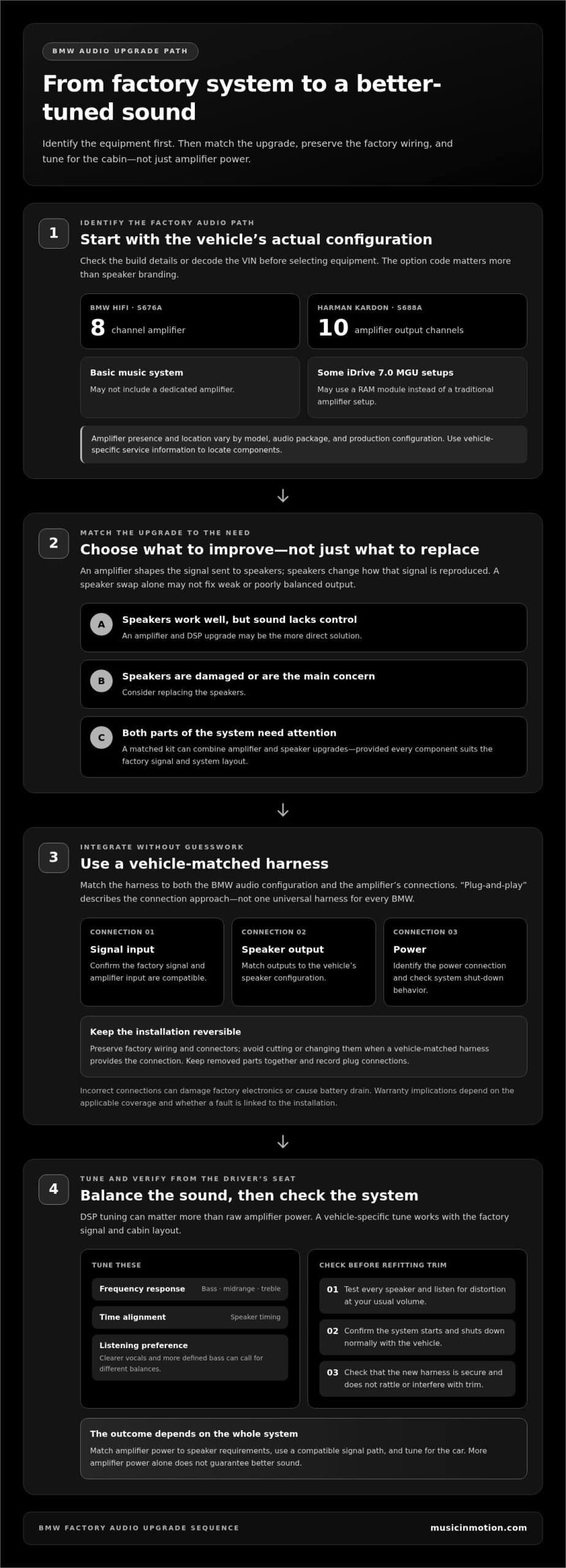
Check the vehicle’s build details or decode its VIN to identify the factory audio option before selecting equipment. BMW HiFi, option code S676A, uses an 8-channel amplifier; Harman Kardon, option code S688A, has a 10-channel amplifier output. Basic BMW music systems may not include a dedicated amplifier, so the correct upgrade depends on the installed system.
Look for the option code, not just the speaker branding. In the United States, the BMW HiFi system was described as standard equipment at the time of publication. Some iDrive 7.0 MGU configurations use a RAM module instead of a traditional amplifier setup, which changes how the audio system should be approached.
Factory Amplifier Models and Locations
There’s no single model-year cutoff or amplifier location that applies across the BMW range. The audio package, model, and production configuration determine whether a separate factory amplifier is present and where it’s located. Use the VIN to identify the equipment, then consult vehicle-specific service information to locate the components before planning the installation.
Some basic systems lack a dedicated amplifier, while an iDrive 7.0 MGU setup may use RAM. Those differences matter: a replacement amplifier must receive a compatible signal and connect correctly with the factory system.
DSP tuning adjusts frequency response and time alignment. These controls help balance bass, midrange, and treble while accounting for speaker positions inside the vehicle. A vehicle-specific tune considers the cabin layout and factory signal instead of applying the same generic settings to every BMW.
Good amplifier tuning starts with how you listen. A driver who wants clearer vocals may prefer a different balance from someone seeking more defined bass. Custom DSP tuning can refine those preferences while coordinating speaker output. Raw amplifier power doesn’t determine the result on its own, and tuning can matter more.
A factory amplifier may be repaired or refurbished if diagnosis finds a repairable fault. If the unit can’t reliably drive its outputs, replacement may be the better option. This distinction helps determine whether a BMW factory amplifier upgrade should focus on the existing unit or a new system.
Plug-and-play installation and wiring harnesses
A plug-and-play installation uses vehicle-matched connections to integrate upgraded audio equipment with the factory system. Wiring matters: incorrect connections can damage factory electronics or cause battery drain. Warranty implications depend on the applicable coverage and whether a fault is linked to the installation.
Plug-and-Play Wiring Harnesses
A wiring harness connects the BMW’s factory plugs to compatible upgrade components, avoiding improvised splices. Match the harness to the vehicle’s audio configuration and the amplifier’s input and output connections. For example, a harness made for a factory-amplified system may not suit a basic system without a dedicated amplifier.
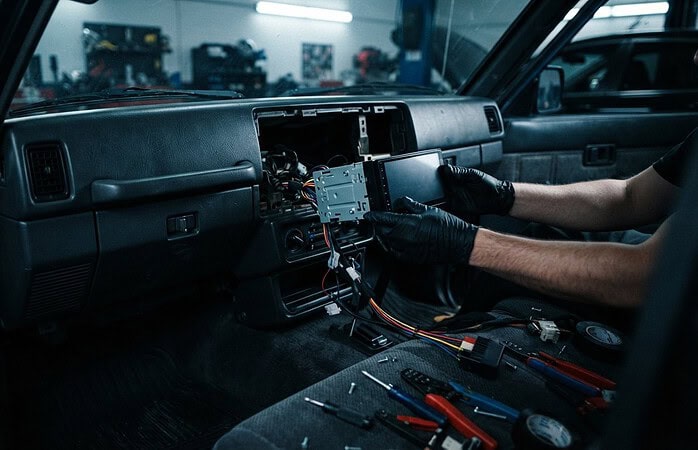
Before installation, identify each connector’s purpose: signal input, speaker output, or power. Keep factory connectors and wiring intact, then test every speaker and confirm the system starts and shuts down normally. “Plug-and-play” describes the connection approach, not a promise that every BMW uses the same harness.
Non-Invasive and Reversible Installation
A reversible installation preserves the original wiring and connectors, so you can restore the factory setup by removing the upgrade components. The BMW audio upgrade is plug-and-play and fully reversible. Avoid cutting factory wires or changing connectors when a vehicle-matched harness provides the required connection.
Keep removed factory components and installation parts together. Record how each plug was connected, and secure the new harness to prevent rattles or interference with nearby trim. These steps make later removal easier and help protect the original setup during service or a future equipment change.
Battery drain can result if wiring leaves an amplifier powered after the vehicle shuts down. Incorrect connections, poor grounding, or a signal mismatch can also cause damage. Before refitting trim, check that the system powers down with the vehicle and plays cleanly.
For a premium system, professional car audio upgrades can bring together compatible connections and careful installation without guesswork.
Speaker and amplifier upgrade kits
Match the upgrade kit to your BMW’s factory audio configuration before choosing speakers, an amplifier, or both. The VIN helps identify the components that fit the system.
Amplifier Versus Speaker Upgrades
An amplifier upgrade improves the signal sent to the speakers, while new speakers change how that signal is reproduced. BMW speakers can only perform as well as the signal they receive, so replacing speakers alone may not solve weak or poorly balanced output.
Compare the factory setup first. The HiFi system, option code S676A, uses an 8-channel amplifier; Harman Kardon, option code S688A, has a 10-channel amplifier output. Some basic BMW music systems have no dedicated amplifier. These differences affect which kit and connection approach suit the vehicle.
If the existing speakers work well but the sound lacks control, an amplifier and DSP upgrade may be the more direct solution. If the speakers are damaged or their sound is the main concern, consider replacing them. A matched kit can combine both, but every component must suit the factory signal and system layout.
Upgrading Without Replacing Other Components
Yes, you can upgrade a BMW amplifier while keeping the factory head unit and speakers. Choose an amplifier that accepts the factory audio signal and works with the existing speaker configuration. A VIN-based equipment check helps identify a compatible kit before installation.
Ask the installer how the amplifier will connect to the factory system, whether the head unit and current speakers can remain, and how the system will be tuned afterward. For a United States installation, choose an automotive audio installer familiar with BMW factory systems. Discuss the VIN, factory audio option, signal compatibility, and whether the proposed kit requires speaker changes.
Keep the decision practical: upgrading one component can work, but each part depends on the system around it. New speakers, for example, won’t overcome a limited or unsuitable amplifier signal. A vehicle-matched amplifier kit can retain the original head unit while improving the signal path, making it a focused first step for some BMW owners.
Amplifier power and distortion
Amplifier power matters, but a higher rating alone doesn’t guarantee cleaner BMW audio. Match the amplifier’s output to the speakers, then assess distortion and tuning together.
Compare amplifier output with the speakers’ power handling and impedance requirements. An amplifier that can deliver more power than a speaker can handle requires careful gain setting. A low-powered amplifier pushed hard can distort, too. The goal is usable, clean output suited to the connected speakers, not the biggest number on a product label.
Compare power specifications consistently. Look at continuous output ratings measured under the same conditions, including load and number of channels. Ratings measured differently may not predict performance in your BMW. Check that each channel can drive its assigned speaker, especially in systems with separate outputs for multiple speaker locations.
Distortion can make music sound rough, compressed, or tiring as volume rises. Clipping is one possible cause: the amplifier is asked to produce more signal than it can deliver cleanly. Set gain to match the incoming signal, not as a volume control. Test familiar tracks at everyday listening levels and listen for harsh vocals, flattened dynamics, or bass that loses definition.
Use this practical comparison before choosing an amplifier:
- Compare continuous power ratings under matching test conditions.
- Match the amplifier’s load requirements to the installed speakers.
- Listen for clean vocals and controlled bass at typical volume.
- Consider DSP tuning, since frequency response and time alignment can matter more than raw power.
A measured setup balances output, speaker capability, and sound quality. For help planning an amplifier setup around your BMW’s speakers and listening needs, plan your car audio upgrade.
Music In Motion: Car Audio Upgrades
Music In Motion provides car audio upgrades and custom installations for drivers planning a better-matched BMW sound system. Bring together your factory audio configuration, listening preferences, and upgrade goals to shape a system around the vehicle instead of choosing components by power ratings alone.
Turn to Music In Motion for help with amplifier and speaker compatibility, installation, or a custom audio setup. The team also builds custom subwoofer enclosures for projects where bass response and available vehicle space both matter. Depending on the system and your goals, the right approach may be a focused component upgrade or a broader installation.
Contact Music In Motion to discuss your BMW audio upgrade.
Make Your Next Drive Sound More Like You
Start by turning what you want to hear into a clear system goal. Decide whether your priority is richer detail, more controlled bass, or comfortable listening at higher volume. That focus gives the upgrade a purpose beyond adding equipment and helps shape a sound that suits your daily drives.
A thoughtful BMW factory amplifier upgrade should suit both the vehicle and the listening experience you want. Music In Motion offers Car Audio Upgrades and Custom Installations for tailored in-vehicle audio projects, as well as Marine Audio Systems for time on the water. Each setup is designed around how you use your vehicle.
Share your BMW model, factory audio configuration, and main listening priorities with the team to start a practical conversation about your next step. Contact Music In Motion about your BMW, and move toward a sound system that makes every drive more enjoyable.
Frequently Asked Questions
How much power?
Choose amplifier power to suit the speakers, not a universal wattage target. The speaker’s power handling, the amplifier’s output per channel, and the intended listening level all affect the match. An upgrade for factory speakers, for example, needs a different assessment from one paired with replacement speakers. Compare continuous power ratings measured under the same conditions, then set gain for clean output.
What is a BMW amplifier?
A BMW amplifier boosts the signal from the vehicle’s audio system to drive its speakers. Depending on the factory setup, it may also manage separate speaker channels. Some basic BMW music systems don’t have a dedicated amplifier, while equipped systems use one as part of the audio path. Knowing your vehicle’s configuration helps identify what an upgrade needs to connect to.
What are the best aftermarket amplifier upgrades for different BMW models and factory audio systems?
Choose an amplifier designed for your BMW’s specific factory audio configuration, not just its model name. Start with the VIN and installed audio option, then compare signal compatibility, channel count, speaker requirements, and tuning controls. A setup for a basic system may not suit a Harman Kardon vehicle. Prioritize clean output and proper system integration over a high power rating.
What plug-and-play amplifier and wiring harness options fit my BMW model and year?
Fit depends on the vehicle’s model, year, factory audio option, and connector configuration. Use the VIN to identify the installed system, then match the amplifier and harness to it. A harness for a factory-amplified setup, for example, may not connect correctly to a basic system. Confirm compatibility across signal inputs, speaker outputs, and power connections before installation.
How do BMW amplifier upgrades compare with replacing speakers or adding a DSP?
An amplifier upgrade changes how the audio signal is strengthened, while speaker replacement changes how sound is reproduced. DSP adjusts the signal, including frequency balance and timing, to suit the cabin and listener. Start with the main problem: weak output points to evaluating amplification, while damaged or unsuitable speakers call for replacement. DSP can refine the system, but it doesn’t replace component compatibility.
How do I install and configure an aftermarket amplifier in a BMW?
Start by identifying the factory audio configuration and selecting compatible equipment. Connect the amplifier using the appropriate vehicle-matched harness, preserve the original wiring, and secure components away from moving trim or loose panels. Before closing the installation, test every speaker, confirm the amplifier powers down with the vehicle, and listen for clean output. Set gain to match the incoming signal, then tune for balanced sound.