Did you know that even a factory “premium” sound system can lose up to 40% of its musical detail before the sound ever reaches your ears? It’s a frustrating reality for many drivers who find themselves stuck with muffled vocals and boomy, undefined bass that causes ear fatigue after just a short trip. If you’re tired of your music sounding like it’s coming from under a heavy blanket, fixing muddy car audio starts with understanding why your factory setup is failing you. We’ve seen how conflicting forum advice often leads to more confusion, and we’re here to provide the professional clarity you need to transform your listening experience.
In this guide, we’ll show you how to eliminate distortion and reclaim the crystal clear sound your music was meant to have. We’ll explore the impact of modern digital signal processors, the necessity of sound deadening, and the specific 2026 component upgrades that deliver a soundstage as vivid as a live performance. By the time you finish reading, you’ll have a clear roadmap to achieving tight, textured bass and crisp high frequencies in any vehicle you own. Our goal is to move beyond the transaction and focus on the internal experience of the drive, ensuring every detail of your audio system is in safe hands.
Key Takeaways
- Identify the specific frequency range between 200Hz and 500Hz that creates the “mud zone” and masks your music’s delicate details.
- Avoid the common “smiley face” EQ trap and learn the professional steps for fixing muddy car audio by auditing your signal path first.
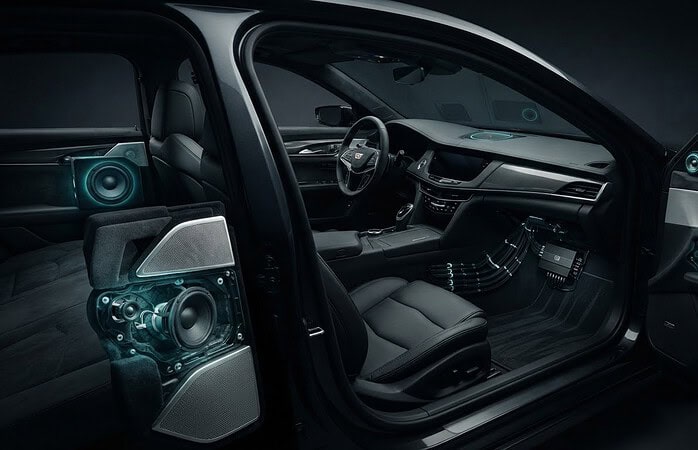
- Replace underpowered factory components with high-end composite speakers and dedicated amplification to eliminate lazy, undefined performance.
- Use sound deadening materials to stop panel resonance and road noise from acting as acoustic mud inside your vehicle’s cabin.
- Leverage Digital Signal Processing to fix factory time-alignment issues and ensure your audio system works seamlessly with modern vehicle electronics.
Understanding ‘Muddy’ Audio: Why Your Sound System Feels Muffled
When you sit in your driver’s seat and turn up the volume, you expect a crisp, immersive performance. Instead, you often get a sound that feels congested and distant. We call this “muddy” audio. It is the audio equivalent of looking through a dirty windshield. You can see the road, but the fine details are lost. Fixing muddy car audio requires us to look past the volume knob and analyze how different frequencies interact within your cabin.
The primary culprit is usually found in the lower-midrange, specifically between 200Hz and 500Hz. We refer to this as the “Mud Zone.” When this range is overemphasized, it creates a thick, boxy sound that smothers the clarity of instruments and vocals. At the same time, boomy bass from an untuned subwoofer can physically mask higher frequencies. Because bass waves are larger and more powerful, they can easily drown out the delicate shimmer of a cymbal or the breathiness of a vocal track. This creates the “blanket effect,” where the music feels like it is trapped behind a heavy barrier even at high volumes.
We find it vital to distinguish between a hardware failure and a tuning issue. Vehicle audio systems are complex environments where reflections and phase cancellations happen constantly. Sometimes your speakers are capable of great sound, but the signal they receive is cluttered. Other times, the hardware itself simply cannot keep up with the music. We start every project with a systematic audit to find exactly where that clarity is being lost.
The Physics of Mud: Frequency Masking
Frequency masking is the primary cause of perceived muddiness, occurring when a louder sound prevents you from hearing a quieter one at a similar frequency. Lower-midrange frequencies clutter the soundstage if they aren’t carefully attenuated. This creates a sonic “fog” that hides the position of instruments. Slow speaker cone recovery also plays a role. If a driver cannot stop its motion instantly after a note, it bleeds into the next sound. This ruins rapid musical transients and leaves the output sounding blurred and undefined.
Why Factory Systems Default to Muddy Profiles
Most manufacturers follow a “Safe Tune” philosophy. They prioritize durability over high-fidelity detail to ensure the system survives years of abuse. Factory paper cones are common because they are lightweight and cheap, but they lack the rigidity needed to manage complex frequencies without flexing. Additionally, factory signal processing often rolls off high frequencies. This prevents tweeter damage from distortion, but it also leaves your music sounding dull. Fixing muddy car audio often involves bypassing these factory limitations to let the true character of your music shine through.
Auditing the Signal: EQ Settings and Phase Issues
Before you start swapping out hardware, we always recommend looking at the signal itself. Many drivers fall into the “Smiley Face” EQ trap. This happens when you boost the bass and treble to their maximum levels while leaving the midrange flat. While this might feel powerful at first, it actually hollows out the core of your music. It smothers the vocals and makes the instruments feel distant. This lack of midrange presence is a primary contributor to the muffled sound you are trying to escape. Fixing muddy car audio often begins with a complete reset of these settings to find a true baseline.
Modern head units often include internal processing that “colors” the sound to compensate for cheap factory speakers. These hidden filters can add artificial bloat to the lower frequencies. Our team starts every audit by disabling “Loudness” buttons and bass-boost features. We want to hear the raw output of the system. This allows us to identify if the muddiness is coming from the digital signal or the physical speakers. If the signal is cluttered from the start, even the best speakers will struggle to produce clarity.
Phase issues are the silent killers of audio quality. If your speakers are out of phase, one speaker cone pushes out while the other pulls in. This causes the sound waves to cancel each other out, especially in the mid-bass frequencies. The result is a thin, confused soundstage that lacks impact. To ensure every note hits with precision, we recommend a professional Custom Installation audit to verify your system’s electrical and acoustic timing.
Step-by-Step Phase Check
We use a mono-track test to identify speakers working against each other. When playing a mono signal, the sound should appear to come from the center of the dashboard. If the sound feels like it is coming from the side windows or sounds “hollow,” you likely have a phase issue. We check the wiring polarities at both the amplifier and the speaker terminals to ensure consistency. In complex builds, 180-degree phase shifts can occur due to acoustic reflections, requiring specialized testing equipment to diagnose and correct.
Correcting EQ Smearing
The secret to professional tuning is subtractive EQ. Instead of boosting the frequencies you like, we cut the ones that cause trouble. Research into Multipoint Equalization of Digital Car Audio shows that managing multiple points in the cabin is essential for a balanced response. We look for “honky” or boxy frequencies, usually around the 400Hz range, and pull them back slightly. This creates “air” in the mix. We also set crossovers strictly to ensure small door speakers aren’t trying to play deep bass, which only leads to distortion and more mud.

Hardware Bottlenecks: Speakers, Amplification, and Crossovers
Even if you have a perfect signal, hardware bottlenecks act as a physical barrier to clarity. We’ve seen many enthusiasts focus solely on the head unit while ignoring the mechanical reality of their speakers. Fixing muddy car audio requires a close look at how your components move. If a speaker cone is too heavy or the magnet is too weak, the sound loses its “snap.” This leads to a lazy performance where notes bleed into each other, creating that dreaded muffled effect. High-performance listening relies on the hardware’s ability to start and stop instantly.
Total Harmonic Distortion (THD) is another major factor. When an amplifier or speaker is pushed beyond its comfortable limits, it generates extra noise that wasn’t in the original recording. This distortion fills the gaps between notes with sonic clutter. We prioritize high-quality components with low THD ratings to ensure that what you hear is exactly what the artist intended. Managing the crossover points is equally vital. Whether you use passive crossovers or an active setup, keeping the right frequencies in the right drivers prevents the overlap that often causes a “congested” soundstage.
Speaker Material and Transient Response
Rigid materials are essential for detail. Factory speakers typically use untreated paper cones. While paper is cost-effective, it lacks the structural integrity to move quickly without flexing. This flexing is called “cone breakup,” and it causes the audio to sound harsh and blurred at higher volumes. We recommend moving to a component system over a coaxial design for several reasons:
- Rigidity: Materials like carbon fiber or Kevlar provide the strength needed for fast transient response.
- Separation: Moving the tweeter away from the woofer prevents high-frequency interference.
- Clarity: Treated silk or aluminum dome tweeters offer a crispness that factory paper simply cannot match.
The Power Gap: Why Your Amp Matters
A high-quality amplifier provides the “grip” needed to stop a woofer instantly after a note. This is controlled by the damping factor. A high damping factor ensures the speaker doesn’t continue to vibrate after the signal stops, which keeps your bass sounding tight and textured rather than boomy. It’s a common mistake to think amplifiers are only for volume. In reality, they provide the necessary clean headroom to handle musical peaks without clipping. We always ensure your amplifier’s RMS power matches your speaker’s requirements to maintain total control over the driver’s movement. This mechanical precision is a cornerstone of fixing muddy car audio for good.
Controlling the Cabin: Sound Deadening and Fabrication
Your vehicle’s interior is a hostile environment for high-fidelity sound. Even after addressing signal quality and hardware, the physical cabin often fights against your speakers. Road noise, wind, and vibrating metal panels act as “acoustic mud” that smears your audio’s clarity. This conflict between your signal and your space is why many high-end systems still sound muffled. We focus on lowering the noise floor to reveal the hidden details in your favorite tracks. When the background hiss of the road is silenced, the true texture of the music emerges.
One of the most common issues we see is the “Infinite Baffle” problem. A car door is essentially a hollow metal box with many access holes. When a speaker moves, it creates sound waves from both the front and the back of the cone. If these waves meet, they cancel each other out. This kills your mid-bass punch and leaves the music sounding thin and disconnected. Fixing muddy car audio requires sealing these cavities to ensure every bit of energy is directed into the cabin rather than being lost inside the door frame.
Treating the Door Cavity
We apply butyl-based deadening materials to both the outer and inner door skins to stop metal resonance. This transforms your door from a vibrating tin can into a solid, inert speaker enclosure. Additionally, we use closed-cell foam to decouple the door panels from the metal frame. This prevents those annoying plastic rattles that often accompany deep bass notes. If you are starting with a factory setup, this is a vital step in any car audio upgrade for stock stereo to ensure your new components can perform at their peak.
Custom Fabrication for Acoustic Clarity
Standard factory mounting locations are rarely ideal for soundstage height or imaging. We use car audio fabrication techniques to create rigid speaker baffles and rings. These components direct sound waves through the door panel and into your ears rather than letting them bounce around inside the door cavity. We also install acoustic tiles behind the driver to eliminate “back-wave” interference. This prevents the sound from reflecting off the outer door skin and hitting the back of the speaker cone, which is a major cause of distortion. Fixing muddy car audio is as much about controlling the environment as it is about the equipment itself.
While factory locations for subwoofers might save space, they often lack the volume and rigidity needed for tight bass. We build Custom Subwoofer Enclosures that are tuned specifically for your vehicle’s unique acoustics. This ensures the bass is textured and controlled rather than boomy and undefined. If you’re ready to stop the rattles and start hearing the music, our team is here to help with professional Custom Installations that master the physics of your cabin.
Professional Integration: The Music In Motion Approach
Modern vehicles are more than just transport; they are computers on wheels. In 2026, “smart” cars feature highly integrated data buses and factory-tuned audio profiles that present a unique challenge for enthusiasts. You can’t simply swap out a pair of speakers and expect a miracle. The factory head unit often has permanent equalization curves designed to protect cheap paper cones. If you install high-end components without addressing this internal processing, you’ll likely find that fixing muddy car audio remains an uphill battle. We approach every vehicle as a complete ecosystem, ensuring our upgrades work in harmony with your car’s existing safety and infotainment systems.
Our philosophy centers on delivering a finished result rather than just a transaction of goods. We’ve seen many drivers buy the most expensive parts on the market only to be disappointed by a cluttered, muffled sound. The difference lies in the integration. We move beyond the hardware to focus on the internal experience of the listener. By using advanced software and professional-grade tools, we create a 3D soundstage that feels like a live performance happening right on your dashboard. This level of precision is what transforms a standard commute into a high-performance listening session.
The Role of the DSP in 2026
The Digital Signal Processor (DSP) is the brain of a modern high-fidelity system. It allows us to correct for the physical reality of automotive design. Because you sit closer to the left speakers than the right, the sound reaches your ears at different times, which creates a blurred, muddy image. A DSP allows us to implement time-alignment, delaying the closer speakers by milliseconds so the sound hits both ears simultaneously. We also use the DSP to remove factory “all-pass” filters. These filters are notorious for causing phase-related muddiness that no amount of volume can fix. With a DSP, we can create custom tuning presets for different musical genres or seating positions, giving you total control over your acoustic environment.
Why Professional Installation Wins
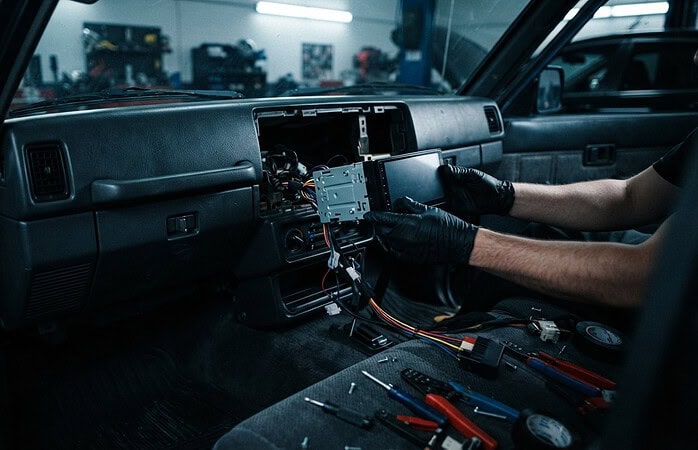
Achieving crystal clear sound requires more than a good ear. We use calibrated microphones and a Real-Time Analyzer (RTA) to see exactly how sound behaves inside your specific cabin. This data allows us to identify and flatten frequency peaks that cause ear fatigue. While DIY projects can be rewarding for simple swaps, the complexity of modern vehicle electronics makes professional expertise essential. We ensure your Car Audio Upgrades don’t interfere with factory sensors, backup cameras, or hands-free systems. We take pride in our growth and evolution as specialists, and we’re dedicated to helping you reclaim the clarity your music deserves. Contact our team for a custom audio consultation and let’s start fixing muddy car audio in your vehicle today.
Reclaim Your Sonic Clarity
Achieving high-performance sound is about more than just volume; it’s about the precision of every note. We’ve explored how fixing muddy car audio requires a systematic approach, from auditing your signal path to treating the physical acoustics of your cabin. By managing the frequency “Mud Zone” and utilizing the power of modern Digital Signal Processing, you can finally hear the textures and transients that factory systems often hide. Every vehicle presents a unique set of challenges, but a clear roadmap makes the path to premium sound simple and reliable.
Since 1994, our team has focused on delivering finished results that improve your daily life behind the wheel. we bring decades of high-performance audio experience and expert custom fabrication to every vehicle type we service. As specialists in integrated radar and safety technology, we ensure your customization remains functional and secure. Transform your driving experience with a custom audio upgrade from Music In Motion. Your music shouldn’t feel like it’s trapped behind a heavy blanket. It’s time to let the details breathe and enjoy every mile of the road again.
Frequently Asked Questions
Why does my car audio sound muffled after I installed new speakers?
Muffled sound after installing new speakers usually happens because the factory head unit is still applying a “safe tune” designed for low-quality paper cones. Your new, high-fidelity speakers are trying to play a signal that has been stripped of its high-frequency detail. Additionally, if you didn’t add an amplifier, your factory deck might not have the current needed to move the heavier magnets of aftermarket drivers, resulting in a lazy and undefined performance.
Can a bad ground wire cause muddy sound in a car stereo?
A bad ground wire typically introduces audible engine whine or humming, but it can also lead to perceived muddiness by starving your amplifier of necessary current. When an amp lacks a stable power return, it struggles to maintain control over the speaker’s movement. This leads to early clipping and distortion during musical peaks. We always verify the integrity of the electrical foundation to ensure your system has the clean energy required for sharp transients.
What EQ settings are best for fixing muddy audio?
The best EQ strategy for fixing muddy car audio is subtractive equalization rather than simply boosting the treble. We recommend identifying the “honky” frequencies in the 200Hz to 500Hz range and pulling them back by 2 or 3 decibels. This creates room in the mix for vocals and high-frequency details to shine through. Avoid the common mistake of maxing out your bass and treble, as this only creates more distortion and ear fatigue.
Do I need a new amplifier to fix muffled sound?
You might need a new amplifier if your current setup lacks the power to drive your speakers efficiently. Underpowered speakers often sound “slow” because the amplifier can’t provide enough grip to stop the cone instantly after a note. This lack of control causes sounds to bleed together. Adding a dedicated amplifier provides the clean headroom needed to handle musical peaks without the signal “squashing” or becoming muffled at higher volumes.
How do I know if my car speakers are out of phase?
You can identify out-of-phase speakers by playing a mono-recorded track and listening for a lack of mid-bass punch. If the sound feels like it’s coming from the door panels rather than the center of the dashboard, your speakers are likely fighting each other. One cone is pushing while the other pulls, which cancels out the sound waves. This creates a hollow, thin experience that is a frequent culprit when fixing muddy car audio issues.
Will sound deadening actually make my music sound clearer?
Sound deadening is one of the most effective ways to improve clarity because it lowers the vehicle’s noise floor. By applying butyl-based materials to your door panels, we stop the metal from vibrating along with your music. This eliminates panel resonance that acts as acoustic clutter. When you remove the interference of road noise and vibrating plastic, you can hear the delicate high-frequency details that were previously masked by the cabin’s environment.
What is the ‘mud zone’ in audio frequencies?
The “mud zone” refers to the frequency range between 200Hz and 500Hz where lower-midrange energy tends to accumulate. In a car’s small acoustic environment, these frequencies often bounce off glass and plastic surfaces, creating a thick and boxy sound. If this range isn’t carefully managed with tuning or signal processing, it smothers the clarity of the vocals and makes the entire system feel like it’s playing from behind a heavy curtain.
Is it possible to fix a factory premium system without replacing the head unit?
It is absolutely possible to fix a factory premium system without replacing the head unit by integrating a Digital Signal Processor (DSP). Most modern “smart” cars have head units that are too complex to remove. A DSP allows us to take that factory signal, strip away the manufacturer’s restrictive tuning, and apply a professional calibration. This approach preserves your factory features while providing the high-fidelity output and time-alignment needed for a truly clear soundstage.