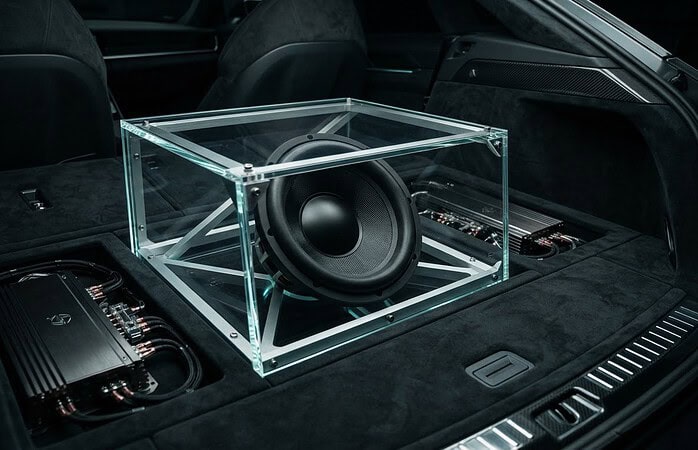
You’ve finally finished that custom subwoofer enclosure, but the moment the bass hits, your headlights flicker and your amplifier slips into protect mode. It’s a frustrating reality for many enthusiasts who realize that a world-class sound stage requires more than just high-end components; it demands a solid power foundation. We know the feeling of a system that sounds incredible at low volumes but falls apart when you really want to feel the music. Most factory setups simply aren’t built to handle the massive current draw of a modern high-performance amplifier, which is why upgrading car electrical system for audio is the most critical step in any serious build.
We believe in delivering a finished result that performs as well as it looks, and that starts with a high-output alternator. In this 2026 guide, we’ll show you how a high-output unit stabilizes your voltage at a steady 14.4V to prevent equipment damage and eliminate distortion. You’ll discover the practical differences between stock and high-amperage units, the necessity of Big 3 wiring, and how to future-proof your vehicle for even bigger upgrades. From understanding idle output to selecting the right amperage for your specific gear, we’re here to help you unlock the full potential of your mobile audio experience.
Key Takeaways
- Understand why factory alternators aren’t built for high-demand audio and how upgrading car electrical system for audio provides the steady current needed for high-wattage amplifiers.
- Learn why adding more batteries is only a temporary fix and why a high-output alternator is the only way to provide sustained power for your system.
- Discover why the “Big 3” wiring upgrade is an essential partner to any charging system upgrade to ensure maximum current flow and safety.
- Get a practical formula for calculating your total current draw so you can choose an alternator that handles peak demands with a reliable safety margin.
- See how professional integration protects your vehicle by ensuring new high-power hardware works seamlessly with modern factory data buses and charging sensors.
Why Your Stock Alternator is the Bottleneck for High-Performance Audio
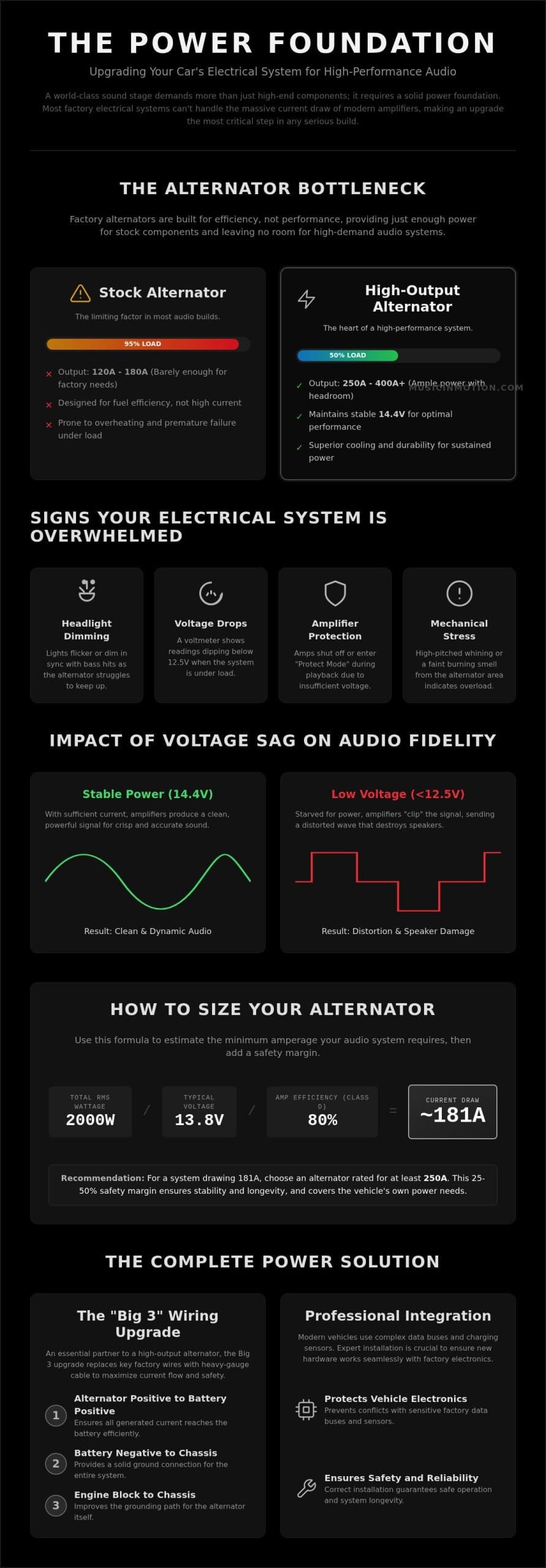
Every modern vehicle depends on its charging system to keep the engine running and electronics powered. To understand the root of the problem, it helps to look at How alternators work in a standard environment. They convert mechanical energy into electrical energy, but they have a finite ceiling. A high-output alternator is a specialized unit engineered with heavy-duty internal components, such as larger rotors and stators. It’s designed specifically to provide the massive current demands that standard units can’t touch. We see these units as the heartbeat of a truly custom build, providing the lifeblood your gear needs to survive.
In 2026, manufacturers build vehicles with efficiency as the primary goal. They equip cars with alternators that provide “just enough” amperage to cover factory lights, computers, and safety systems. There is very little headroom for expansion. When you start upgrading car electrical system for audio, you are often fighting against a stock unit that provides only 120A to 180A. If you add a system pulling 2,000 watts RMS, you’re asking for over 160A just for the audio equipment. That math doesn’t work. The stock alternator works at 100% capacity constantly, which leads to extreme heat and premature failure of the internal diodes.
Signs Your Electrical System is Overwhelmed
Your car will tell you when it’s struggling. We often see vehicles where the electrical load has simply outpaced the charging capacity. Look for these specific warning signs:
- Headlight Dimming: Exterior and interior lights flicker or dim in sync with the bass hits.
- Voltage Drops: A digital voltmeter shows readings dipping below 12.5V while the engine is running.
- Mechanical Stress: A high-pitched whining noise or a faint burning smell coming from the alternator area.
- Equipment Protection: Amplifiers frequently enter “Protect Mode” or shut off entirely during high-volume playback.
The Impact of Voltage Sag on Audio Fidelity
Low voltage isn’t just a mechanical risk; it ruins the listening experience. When your amplifier doesn’t get the 14.4V it needs, it can’t produce a clean signal. It begins to “clip,” which sends a distorted square wave to your speakers. This distortion generates massive heat and can eventually destroy your voice coils. Stable power is the secret to tight, impactful bass that you can actually feel. For many, this journey begins with a car audio upgrade for stock stereo, but high-end performance requires the electrical foundation to match. We prioritize this foundation to ensure your investment sounds as good as it looks.
Key Benefits: How High Output Alternators Transform Your Sound Experience
We view the charging system as the foundation of every high-end build. When you’re upgrading car electrical system for audio, you’re essentially ensuring that every component receives the exact voltage it was engineered to use. Most high-performance amplifiers are rated to deliver their best specs at a steady 14.4V. Without a high-output alternator, your system might dip into the 12V range, forcing the amp to work harder and generate more heat while producing less power. This consistency is what separates a standard install from a professional-grade system.
These heavy-duty units also offer superior thermal management. Because they’re built with larger internal components, they run significantly cooler when delivering moderate loads compared to a stock unit pushed to its limit. This protects the internal diodes and prevents deep-cycle discharges on your battery. By keeping voltage high, you stop the battery from having to “fill the gap” during every bass hit, which drastically extends its life. It also future-proofs your vehicle, allowing you to add LED lighting, winches, or even larger audio arrays down the road without another teardown. If you’re ready to see what your system can really do, our team at Music In Motion can help you choose the right power solution.
Stable Voltage and Equipment Protection
A consistent current doesn’t just help the music; it protects the vehicle’s brain. Modern cars rely on complex Electronic Control Units (ECUs) that are sensitive to electrical noise and voltage spikes. By maintaining a steady flow, you prevent the “Protect Mode” shutdowns common in high-end amplifiers. We always recommend building in “headroom.” Using a 320A alternator for a 150A load is far better than using a 200A unit at its peak. This extra capacity ensures the system stays cool and responsive, even during long listening sessions.
Enhanced Bass Performance and Dynamic Range
Subwoofers are the most power-hungry part of any setup. They require massive, instantaneous bursts of current to move the large cones and displace air. When the electrical system is properly supported, you’ll notice a distinct improvement in “punch” and “attack.” The music feels more dynamic because the amplifier isn’t struggling to find the energy for those split-second transients. Proper current availability ensures the voice coil can achieve full excursion without the signal clipping or losing control of the woofer’s movement. For those interested in the technical side of upgrading automotive wiring, understanding these current demands is the first step toward a competition-grade result.
Alternators vs. Batteries and Capacitors: Which Power Upgrade Do You Need?
We often hear the same question from enthusiasts: “Can’t I just add a second battery to stop my lights from dimming?” While adding storage might seem like a quick fix, it’s important to understand the difference between a power source and power storage. A battery is essentially a bucket that holds energy. An alternator is the tap that fills that bucket. If your high-performance audio system pulls more energy than the tap can provide, the bucket will eventually run dry. When you are upgrading car electrical system for audio, you must prioritize the source of the energy rather than just increasing the size of the container.
A high-output alternator is the only component in your vehicle that actually creates the energy your amplifiers consume. Relying on a stock alternator to charge multiple batteries is a recipe for disaster. The stock unit will work at 100% duty cycle trying to keep up, leading to excessive heat and eventually a total charging system failure. By installing a high-output unit, you simplify your build. You often eliminate the need for heavy, expensive battery banks that take up valuable space in your trunk or cabin. It’s a more efficient, reliable way to ensure your gear gets the current it needs.
When to Use a Secondary Battery
Secondary batteries have a specific purpose in a professional build. We recommend them primarily for engine-off listening. If you plan to play your system at car shows, tailgates, or campsites without the engine running, an AGM or Lithium battery is essential. These storage units work in synergy with a high-output alternator. The alternator provides the raw power while the engine is running, and the battery handles the load when you’re parked. However, adding more batteries to a weak stock system only increases the strain on your alternator, as it now has to charge the extra batteries on top of powering your audio gear.
The Pitfalls of Cheap Power Fixes
In 2026, many older “tricks” like stiffening capacitors have lost their relevance for high-current builds. A capacitor can only store enough energy for a split-second transient hit. If you have a sustained voltage drop during a heavy bass note, a capacitor won’t help. We’ve seen many cases where undersized wiring and cheap capacitors actually created more electrical resistance, making the problem worse. The long-term ROI of an alternator upgrade far outweighs the cost of replacing dead batteries every year. It’s a one-time investment that protects your amplifiers, your vehicle’s sensitive electronics, and your peace of mind.
The Technical Side: Sizing Your Alternator and the Big 3 Wiring Upgrade
Choosing the right alternator requires more than just picking the highest number on the shelf. To find your required amperage, we start by summing the total fuse ratings of your amplifiers and adding the factory baseline load of your vehicle, which is typically between 60A and 100A for modern electronics. We always recommend sizing for your peak demand plus a 20% safety margin. This buffer ensures your alternator isn’t constantly running at its thermal limit. A unit that operates at 70% capacity will last significantly longer than one pushed to 100% every time the volume goes up. We prioritize high-quality internal components and heavy-duty casings to ensure your power delivery remains reliable for years.
Idle output is the most critical metric for daily driving. A 320A alternator that only produces 90A at idle won’t help you at a stoplight when the bass hits. Modern high-output units are engineered to deliver a significant portion of their rated power at low RPMs. This is vital for upgrading car electrical system for audio because it prevents voltage sag in stop-and-go traffic. When we select a unit, we look for a pulley ratio that balances high idle output with safe peak RPMs to protect the internal bearings and diodes.
The Big 3 Wiring Upgrade Explained
Your new alternator is only as good as the wire carrying the current. Factory 8-gauge or 4-gauge wire is a bottleneck that creates massive electrical resistance. The Big 3 upgrade involves replacing or supplementing three vital cables: the alternator-to-battery positive, the battery-to-chassis ground, and the engine-to-chassis ground. We use 0-gauge (1/0 AWG) oxygen-free copper (OFC) for these connections because it offers the highest conductivity and flexibility. Standard copper-clad aluminum (CCA) wire often lacks the current-carrying capacity needed for 250+ amp systems.
Belt Sizing and Installation Nuances
High-output alternators often feature a smaller pulley to increase rotor speed at idle. This change sometimes requires a slightly shorter serpentine belt to maintain proper tension and prevent slipping. We also emphasize safety by integrating high-amperage fused links between the alternator and the battery. This protects your vehicle’s entire electrical network from shorts or surges. If you want to ensure your high-performance gear is powered safely and correctly, contact our expert team to discuss a custom integration for your vehicle.
Professional Integration: Why Expert Installation is Crucial for Electrical Upgrades
Many online forums suggest that installing a high-output unit is as simple as swapping two bolts and a plug. While that might have been true for a 1990s pickup, modern 2026 vehicles are far more sophisticated. We treat upgrading car electrical system for audio as a deep integration project rather than a simple hardware swap. Today’s vehicles use complex data buses, like the LIN bus, to communicate between the Engine Control Unit (ECU) and the charging system. If the alternator isn’t correctly integrated, the vehicle may not recognize the new power capacity, leading to dashboard error lights or even a refusal to charge.
Our expertise in custom car audio fabrication allows us to handle the physical and electrical nuances that DIYers often miss. We don’t just bolt the unit in; we ensure the mounting brackets are perfectly aligned and the high-amperage wiring is routed safely away from heat sources and moving parts. Once the hardware is in place, we test the entire charging circuit under a full simulated load. This ensures the system maintains its 14.4V target without stressing the vehicle’s factory harnesses. We aim for a finished result that looks like it belonged there from the factory, but performs at a world-class level.
Avoiding Common DIY Electrical Mistakes
Electrical work carries high stakes. A single poorly terminated ground can lead to ground loops, causing that annoying engine whine through your speakers. Even worse, improper fusing is the number one cause of catastrophic vehicle fires in aftermarket builds. We’ve seen many cases where DIYers used undersized fuses or placed them too far from the battery source. We also pay close attention to serpentine belt alignment. Even a fraction of an inch of misalignment can lead to belt squeal and premature bearing failure in your expensive new alternator.
System Tuning for the New Power Ceiling
The job isn’t finished once the alternator is spinning. With a stable power foundation, your entire audio system needs a fresh look. We re-tune your amplifier gains because they were likely set when the system was struggling at 12V. Now that you have a consistent 14.4V, your amps can produce more clean power before clipping. We optimize the interaction between the alternator, the vehicle’s safety systems, and your audio gear to ensure everything works in harmony. This professional integration provides the peace of mind that your vehicle is safe, reliable, and ready to perform at its engineered potential. Beyond electrical stability, keeping your engine and brakes in peak condition is vital for overall performance, and you can learn more about Humbers All Car to ensure your vehicle is mechanically sound.
A high-performance audio system is only as strong as its power source. We have seen how a high-output alternator provides the steady 14.4V necessary to keep your amplifiers out of protect mode and your bass hitting with maximum impact. By focusing on the source of your energy rather than just adding more storage, you simplify your build and protect your vehicle’s sensitive electronics. Remember that upgrading car electrical system for audio requires a total system approach, combining heavy-duty hardware with the critical “Big 3” wiring upgrades to ensure every amp gets the current it needs.
Since 1994, we have specialized in custom vehicle fabrication and high-performance electronics. Our team focuses on professional integration to ensure your new charging system works seamlessly with your car’s modern data buses. We don’t just sell parts; we deliver finished results that look and perform better than factory. If you are ready to stop the flickering lights and start hearing your system’s true potential, we are here to help. Upgrade your power and your sound with Music In Motion. Let’s build something incredible together.
Frequently Asked Questions
Will a high output alternator damage my car battery?
No, a high output alternator won’t damage your battery; it actually helps extend its life by preventing deep discharges. While a stock unit struggles to keep up with high current draws, a high output unit maintains a steady charge. This means your battery doesn’t have to fill the gap during every bass hit. By keeping the voltage stable, you reduce the chemical stress on the battery’s internal plates, leading to better overall battery health.
Does a high output alternator reduce gas mileage or horsepower?
There is a minor impact on horsepower and fuel economy, but it’s usually negligible for most drivers. An alternator creates electrical energy by using mechanical energy from the engine. A high output unit requires more force to turn when it’s under a heavy electrical load. However, the difference is typically only 1 to 3 horsepower, which is rarely noticeable behind the wheel. For the trade-off of a crystal-clear sound system, the impact is minimal.
Do I need a second battery if I have a high output alternator?
You only need a second battery if you plan on listening to your music while the engine is turned off. For daily driving, the alternator is the primary source of power. If your alternator can handle the total current draw of your amplifiers, an extra battery is often redundant. We recommend focusing on the alternator first to ensure a constant power supply, then adding a secondary battery only for car shows or tailgates.
How many amps do I need for a 2,000-watt sound system?
A 2,000-watt RMS system typically requires an alternator rated for at least 250 amps. This calculation accounts for a 165A to 185A draw from the amplifiers plus the 60A to 90A needed for your vehicle’s factory electronics. We always suggest adding a 20% safety margin to prevent the unit from overheating. Upgrading car electrical system for audio with a 320A unit ensures you have enough headroom to keep the voltage at a steady 14.4V.
What is the Big 3 upgrade and is it mandatory for car audio?
The Big 3 upgrade involves replacing the three main electrical cables in your engine bay with 0-gauge wire. These include the alternator-to-battery positive, battery-to-chassis ground, and engine-to-chassis ground. It is mandatory when installing a high output alternator because factory wiring cannot safely carry 200+ amps. Without this upgrade, your new alternator will be bottlenecked by thin, restrictive wires, which can lead to excessive heat and can even cause a vehicle fire.
Can I install a high output alternator myself?
While the physical installation might seem straightforward, modern vehicles require specialized knowledge for proper integration. Many 2026 models use complex data buses to regulate the charging system. If the new unit isn’t correctly communicated to the vehicle’s computer, you may face error codes or charging failures. Our team ensures that every installation includes proper circuit testing and belt alignment to prevent premature bearing failure, giving you a reliable result that a DIY attempt might miss.
Why do my lights still dim even with a new alternator?
If your lights still dim after an upgrade, the issue is likely rooted in poor grounding or restrictive wiring. Even the most powerful alternator can’t overcome the resistance of thin factory cables. You should also check your alternator’s output at idle. Some units only reach their peak amperage at higher RPMs. If your system is pulling more current than the alternator produces at a stoplight, your battery will still experience a voltage drop, causing the lights to flicker.
Is a high output alternator worth the cost for a daily driver?
A high output alternator is absolutely worth the investment if you value the longevity of your vehicle. Upgrading car electrical system for audio protects your expensive amplifiers from clipping and prevents your vehicle’s sensitive computers from experiencing voltage spikes. Beyond the audio benefits, it ensures your daily driver remains reliable even with added accessories like LED lighting or remote starts. It’s the best way to ensure your car’s electrical foundation is robust.