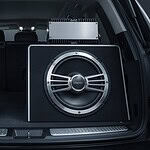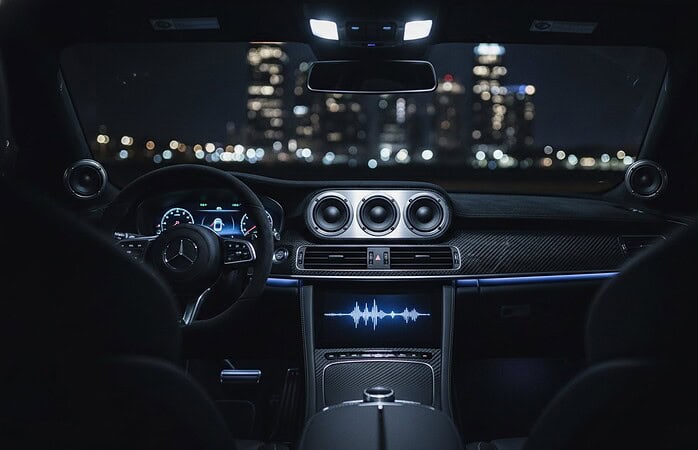
A true RV audio upgrade is about managing the environment, not just swapping out a few speakers. Most factory systems fail the moment you hit 65 mph, leaving you with distorted sound that competes with road noise and wind. We understand that your motorhome is your sanctuary, and fighting with outdated Bluetooth or clunky zone controls is the last thing you want to do on your vacation. If you’ve ever struggled to lower the outdoor volume while keeping the music playing in the bedroom, you know that standard equipment often falls short of modern expectations.
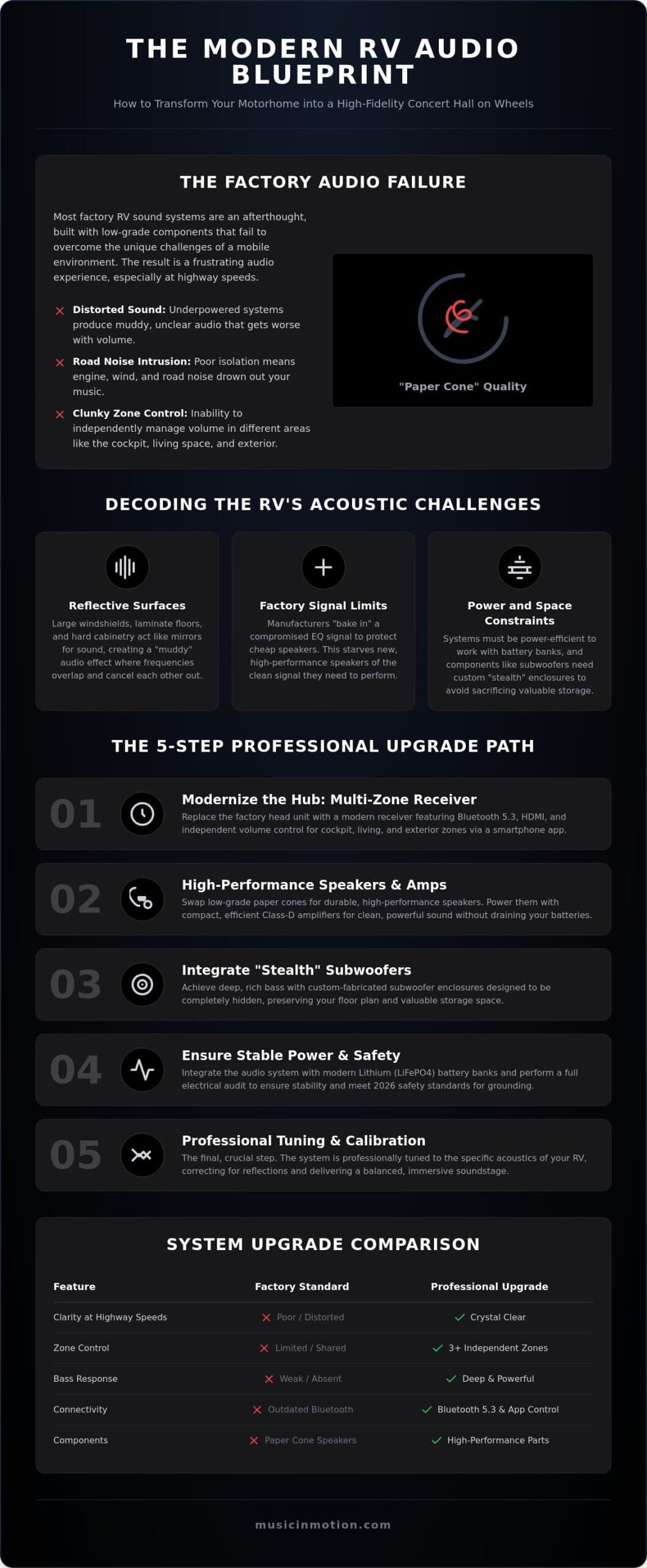
We’ve mastered the art of transforming these mobile spaces into high-fidelity concert halls. In this guide, we’ll teach you how to upgrade RV sound system hardware to include the latest Bluetooth 5.3 technology and seamless smartphone integration. We’ll explore how to achieve crystal clear audio in the cockpit while maintaining multi-zone independence. From custom stealth subwoofers that preserve your floor plan to meeting the latest 2026 safety standards for electrical grounding, we’ll walk you through the process of creating a professional, finished result that makes every mile sound better.
Key Takeaways
- Overcome acoustic challenges by replacing low-grade factory paper speakers with high-performance components designed specifically for mobile environments.
- Learn how to upgrade RV sound system hubs with multi-zone receivers that allow independent volume control for your living area, bedroom, and exterior.
- Maximize efficiency using compact Class-D amplifiers and custom-fabricated stealth enclosures that deliver powerful bass without sacrificing valuable storage space.
- Ensure system stability by integrating your audio components with modern Lithium (LiFePO4) battery banks and performing a full electrical audit.
- Focus on the finished result with professional tuning and calibration to transform your motorhome into a high-fidelity concert hall on wheels.
Understanding the Unique Challenges of RV Audio in 2026
Most people think of their motorhome as a house on wheels, but from an audio perspective, it’s a giant, resonant box. When you look at vehicle audio systems across different platforms, RVs present the most complex hurdles. Understanding these obstacles is the first step in learning how to upgrade RV sound system components effectively. You aren’t just fighting volume; you’re fighting the very architecture of the vehicle. We focus on solving these environmental issues before we even pick out a speaker.
Factory systems are notoriously weak. Manufacturers often install budget-friendly, paper-cone speakers that lack the durability and range needed for a premium experience. These units are usually underpowered, leading to distortion at the exact moment you need clarity, like when you’re cruising at highway speeds. We see it all the time: high-end coaches with audio hardware that belongs in a 90s sedan. Beyond the cockpit, the challenge grows as you try to balance interior sound with outdoor entertainment zones without annoying the entire campground. It’s a delicate balance of power and precision.
Acoustics: Why Your RV Sounds Muddy
RV interiors are filled with hard, reflective surfaces. Large windshields, laminate flooring, and wooden cabinetry act like mirrors for sound waves. Instead of reaching your ears cleanly, the music bounces around, creating a “muddy” effect where frequencies overlap and cancel each other out. This is especially true in open-concept floor plans where sound has plenty of room to get lost in irregular shapes. We solve this by strategically placing speakers to account for these reflections. We also utilize professional sound-deadening materials in the doors and dash to block out the rumble of the engine, allowing your music to shine through the silence.
The Problem with Factory Signal Processing
Factory EQ is a pre-set, permanent adjustment applied by the manufacturer that limits the clarity and range of your audio output. Many modern RV head units have this “baked-in” tuning designed to protect cheap factory speakers from blowing out. If you simply swap in high-performance speakers without addressing this signal, those new components will still sound flat and lifeless because they are being fed a compromised signal. Learning how to upgrade RV sound system electronics means understanding how to bypass or correct these limitations. We prioritize signal correction to ensure your new system receives a clean, uncolored audio signal. This is the foundation of any professional mobile audio build and ensures we deliver a finished result that exceeds expectations.
Modernizing the Hub: RV Receivers and Multi-Zone Control
The receiver is the brain of your entire mobile experience. If you’re still wrestling with a noisy CD player or a Bluetooth connection that drops every time you step into the kitchen, it’s time for a change. When we consider how to upgrade RV sound system setups, we start by installing a modern hub that supports Bluetooth 5.3 and HDMI integration. This ensures that your smartphone connects instantly and your high-definition video signals travel through the system without losing quality. Modern receivers aren’t just radios; they’re the central command for your digital life on the road.
Multi-zone control is arguably the most important feature for any motorhome owner. This technology allows us to separate the audio levels in the cockpit, the living area, and the exterior. You can enjoy a podcast while driving without blasting the passengers in the back, or keep the music playing outside while someone else naps in the bedroom. When exploring RV entertainment system upgrades, we prioritize units that offer dedicated app-based control. This lets you adjust the volume or change the track from your smartphone while you’re sitting by the campfire or relaxing in a lounge chair.
Choosing a Multi-Zone Head Unit
We look for specific features that handle the heavy lifting of a large vehicle. A professional-grade head unit should offer at least three independent zones and high-voltage pre-amp outputs for clean signal delivery to your amplifiers. SiriusXM readiness is a must for travelers who frequently venture beyond cell service. Touchscreen interfaces have become the standard because they provide clear navigation and safer control while driving. For those curious about how these principles apply to other vehicles, you can read our guide on a car audio upgrade for stock stereo systems to see how we maintain factory aesthetics.
Digital Signal Processing (DSP) for RVs
Because an RV cabin is so long, sound from the front speakers often reaches your ears at a different time than sound from the rear. We use a Digital Signal Processor (DSP) to correct these timing issues, effectively “moving” the speakers so they feel equidistant from your seat. A DSP also allows us to create custom presets for different scenarios. You might want a “Driving Mode” that focuses sound on the driver’s seat and a “Camping Mode” that fills the entire living space with rich, balanced audio. Our team at Music In Motion specializes in these RV audio systems, ensuring that every installation results in a perfectly defined soundstage on your dashboard. Professional tuning makes the difference between a loud system and a truly great one.
High-Performance Speakers and Amplification for Mobile Living
Once the signal is clean and the hub is modernized, we turn our attention to the physical hardware that moves the air. Choosing the right speakers is a critical step in learning how to upgrade RV sound system performance. In the cockpit, we recommend component speakers over standard coaxial units. By separating the tweeter from the woofer, we can mount the high frequencies closer to your ears. This creates superior imaging and a more realistic soundstage while you drive, making it feel like the band is performing right on your dashboard.
Powering these speakers requires more than just a standard head unit. Factory receivers rarely provide enough wattage to overcome road noise, leading to thin, strained audio at high volumes. We use high-output amplifiers to give the system the headroom it needs for effortless clarity. However, because RVs have limited space and ventilation, we prioritize Class-D amplification. These modern units are incredibly efficient, producing massive power with minimal heat and a low draw on your battery bank.
Car-Grade vs. Marine-Grade Components
We often see owners make the mistake of using standard car speakers for every zone. While car-grade hardware is excellent for the climate-controlled interior of your coach, your outdoor kitchen and awning zones face much harsher conditions. For these areas, marine-grade speakers are mandatory. These components feature UV-resistant grilles and waterproof polypropylene cones rather than the paper found in cheaper units. Moisture and sun exposure will quickly degrade standard speakers, but “ruggedized” marine hardware is built to survive the elements year after year. We ensure that every exterior zone we install is ready for rain, humidity, and direct sunlight. To further protect and enjoy these areas, you can check out Muskokify for premium awnings and motorized screens that provide the ultimate outdoor retreat.
Efficient Amplification
Modern 2026 amplifiers have become remarkably compact, allowing us to hide them inside tight cabinetry or under furniture without risking a fire hazard. When we design these systems, we often utilize multi-channel amplifiers to manage both indoor and outdoor zones from a single chassis. This simplifies the wiring and reduces the footprint of the installation. We also pay close attention to the gauge of the power wire. Because RVs are so long, thin factory wires can cause significant voltage drops. We install heavy-duty, oxygen-free copper wiring to ensure your amplifiers receive consistent power, even when you’re running off your inverter. This focus on the technical details is how we deliver a finished result that remains reliable through every mile of your journey.
Power Management and Custom Fabrication for Stealth RV Installs
The heart of a successful mobile build often lies where you can’t see it. When we discuss how to upgrade RV sound system performance, we have to look at the electrical foundation. Modern motorhomes are increasingly moving toward Lithium (LiFePO4) battery banks, which provide a significantly more stable voltage than traditional lead-acid batteries. This stability is a massive advantage for high-performance audio. It allows your amplifiers to perform at their peak without the voltage sag that often causes distortion or system resets. By integrating our high-efficiency Class-D components with these advanced power systems, we ensure you get maximum play time without worrying about your batteries dying in the middle of the night.
We prioritize stealth installations because we know that every square inch of your living space is valuable. You shouldn’t have to choose between a comfortable dinette and great bass. Our team specializes in creative fabrication that hides heavy-duty hardware inside the existing architecture of your coach. This approach preserves the factory aesthetic while delivering a sound experience that stock systems simply can’t match. We focus on the finished result, ensuring that your audio components look like they were always meant to be there.
Audio for the Boondocker
For those who love off-grid living, power management is everything. We help you calculate the specific amp-hour impact of your new system so there are no surprises while you’re parked in the wilderness. If you plan on listening for hours without a shore power connection, we look at high-output alternators to ensure your batteries stay topped off while you’re moving between campsites. This level of planning is part of our custom car audio fabrication philosophy. We treat the vehicle’s electrical system as an integral part of the audio design, not an afterthought.
Stealth Bass Solutions
Adding a subwoofer usually brings up concerns about lost storage. We solve this by utilizing dead space that most manufacturers ignore, such as the voids under beds or behind sofa panels. We build custom-fit fiberglass pods or enclosures that match your interior textures and colors perfectly. While we are upgrading your entertainment, we also recommend reviewing your vehicle safety systems to ensure your rig is as secure as it is loud. If you’re ready to see what’s possible for your specific floor plan, contact us at Music In Motion to begin your custom installations project today.
The Music In Motion Approach to Professional RV Integration
We believe that a premium audio system is only as good as its final calibration. While many online guides focus purely on the hardware, we prioritize the finished result. This philosophy means we look at your vehicle as a complete ecosystem rather than a collection of separate parts. When we consult with owners on how to upgrade RV sound system hardware, we start with a comprehensive electrical audit. This step is vital because modern 2026 motorhomes use complex data-bus integration. We ensure your new amplifiers and receivers work in harmony with your rig’s existing wiring without causing interference or safety issues. We also verify proper grounding to prevent “hot skin” issues, adhering to the latest safety standards for 30-amp and 50-amp services.
Safety is never an afterthought in our shop. We calibrate our systems to ensure that critical alerts, such as backup sensor beeps, blind spot detection, or navigation prompts, remain clear and audible over your music. Our team bridges the gap between audiophile-grade performance and the rugged reliability required for life on the road. We want you to feel the same excitement whether you’re listening to a symphony in the bedroom or a rock concert in the outdoor kitchen. Whether you’re piloting a massive diesel pusher or a nimble travel trailer, our specialized knowledge ensures a perfect fit for every medium of transport.
Expert Calibration and Tuning
The interior of a motorhome is an acoustic challenge that can’t be solved with basic bass and treble knobs. We use professional Real-Time Analyzer (RTA) tools to visualize how sound behaves inside your specific floor plan. This allows us to adjust the equalization to account for hard surfaces like glass and cabinetry. We also focus on:
- Phase Coherence: Ensuring that speakers in different zones don’t cancel each other out, creating a seamless transition as you move through the coach.
- Thermal Management: Setting proper gains and ensuring amplifiers have the airflow they need to stay cool during long summer trips.
- Equipment Protection: Using precision tuning to prevent clipping, which protects your high-end speakers from damage at high volumes.
Ready to Upgrade Your Journey?
Transforming your motorhome into a high-fidelity sanctuary requires a blend of technical precision and creative fabrication. From stealth subwoofer enclosures to multi-zone smartphone control, we provide the expertise needed to make your dream system a reality. Don’t settle for the thin, distorted sound of factory equipment when you could be enjoying crystal clear audio on every mile of your trip. If you’re ready for a tailored solution that respects both your living space and your budget, Consult with Music In Motion today to start your journey toward premium mobile audio.
Elevate Your Adventures with Professional Mobile Audio
Your motorhome should be a place where memories are made with a perfect soundtrack. We’ve shown that a successful build requires more than just new speakers. It demands a balanced focus on multi-zone control, high-efficiency Class-D amplification, and seamless lithium battery integration. By utilizing stealth fabrication, we ensure your high-fidelity experience never compromises your valuable living space. Learning how to upgrade RV sound system hardware is the first step toward a more enjoyable journey, but the final result depends on professional calibration and a dedicated electrical audit.
While our team focuses on your mobile sanctuary, for larger celebrations like weddings or school dances, DJ 1203 Productions provides the professional DJ services needed to create a perfect atmosphere for your guests.
Since 1994, we’ve specialized in custom mobile electronics that bridge the gap between technical precision and lifestyle benefits. We don’t just sell boxes; we deliver finished acoustic results that make your time on the road truly special. Our team is ready to help you navigate the complexities of modern data-bus integration and custom subwoofer enclosures. Upgrade your RV sound system for the ultimate road trip, contact Music In Motion! We look forward to helping you transform your rig into the ultimate mobile concert hall. Safe travels and happy listening.
Frequently Asked Questions
Will a high-powered audio system drain my RV house batteries?
Modern high-performance systems won’t drain your batteries if they’re designed with efficiency in mind. We use Class-D amplifiers that provide massive output with very low power draw. When we show you how to upgrade RV sound system components, we also look at integrating them with your Lithium (LiFePO4) battery banks to ensure you can enjoy music for hours while boondocking without any power anxiety.
Do I need marine-grade speakers for the inside of my RV?
You don’t need marine-grade speakers for the interior zones of your motorhome. Standard high-quality car audio components perform beautifully in climate-controlled cabins. However, we always recommend marine-grade hardware for any exterior zones, such as outdoor kitchens or under-awning speakers. These areas face direct sun and moisture, so UV-resistant materials are essential for a long-lasting, finished result.
Can I still use my RV zone-switch buttons with a new stereo?
Yes, we can usually integrate your factory zone-switch buttons with a new head unit. Modern multi-zone receivers are designed to handle independent areas like the bedroom, salon, and exterior. We prioritize seamless integration so you don’t lose the convenience of your original layout. We can even add smartphone control so you can manage those zones from your lounge chair outside.
How do I add a subwoofer to my RV without losing storage space?
We solve the storage problem through custom stealth fabrication. Instead of using bulky boxes that sit on the floor, we build custom enclosures into “dead space” under dinettes, inside sofa bases, or beneath beds. This approach allows you to enjoy deep, rich bass without sacrificing a single square inch of your valuable living or storage area.
Is it possible to integrate my RV backup camera with a new head unit?
Absolutely, and we highly recommend it. Most modern multimedia receivers feature dedicated camera inputs that support your existing backup and side-view cameras. We ensure these safety systems trigger automatically when you shift into reverse. This integration provides a much larger, clearer display on your dashboard than most factory monitors, making it safer to navigate tight campsites.
What is the difference between a standard car amp and an RV-ready amp?
The main differences are thermal management and efficiency. RV-ready amplifiers use Class-D technology to stay cool even when mounted in tight, unventilated cabinets. They also feature a lower current draw to protect your house batteries. While standard car amps can work, we prefer specialized mobile electronics that are built to handle the unique electrical environment of a large motorhome.
Can I control my RV sound system from my smartphone?
Yes, modern receivers with Bluetooth 5.3 allow for full app-based control. You can change the track, adjust the volume, and toggle different zones directly from your phone. This is a game-changer for campers who want to manage the outdoor music without having to step back inside the coach. It’s one of the most popular features we include when we show clients how to upgrade RV sound system technology.
How long does a professional RV sound system upgrade typically take?
Most professional upgrades take between one and three days to complete. A simple speaker and head unit swap might be finished in a single afternoon. However, more complex projects involving custom fabrication for subwoofers or full electrical audits for lithium integration require more time. We provide a clear timeline for every project to ensure your rig is ready for your next road trip.