The most expensive material on the shelf isn’t always the one that will make your favorite tracks sing. It’s a common misconception that high-tech composites always outperform traditional options; in the unique environment of a car, the reality is much more nuanced. We’ve seen plenty of enthusiasts choose a premium-looking driver only to end up with muddled mid-range frequencies or speakers that fail after one season of intense heat. When we look at car speaker cone materials compared, the goal isn’t just to find the stiffest or lightest option. It’s about matching the right physics to your specific cabin and listening style.
We understand the frustration of trying to decode marketing jargon while you’re just looking for crystal-clear vocals and tight mid-bass. This 2026 audiophile guide breaks down the technical trade-offs of every major material to help you find the perfect balance of durability and high-fidelity sound. We’ll explore the performance of treated paper, polypropylene, and advanced composites like carbon fiber. By the end, you’ll have the confidence to choose hardware that lasts for years without degrading. We’re moving beyond the spec sheet to focus on the finished result of your vehicle upgrade.
Key Takeaways
- Master the relationship between stiffness and mass to ensure your speakers handle high volumes without losing clarity or accuracy.
- See car speaker cone materials compared side by side to identify which options offer the most natural vocal reproduction versus those built for extreme durability.
- Identify the specific material types that resist moisture and heat to prevent your hardware from degrading in harsh automotive or marine environments.
- Understand how custom fabrication and professional integration act as the bridge between premium hardware and a truly high-fidelity finished result.
- Learn to match exotic metals like beryllium or titanium to your listening preferences for unmatched high-frequency precision in your 2026 upgrade.
The Physics of Performance: Stiffness, Mass, and Damping
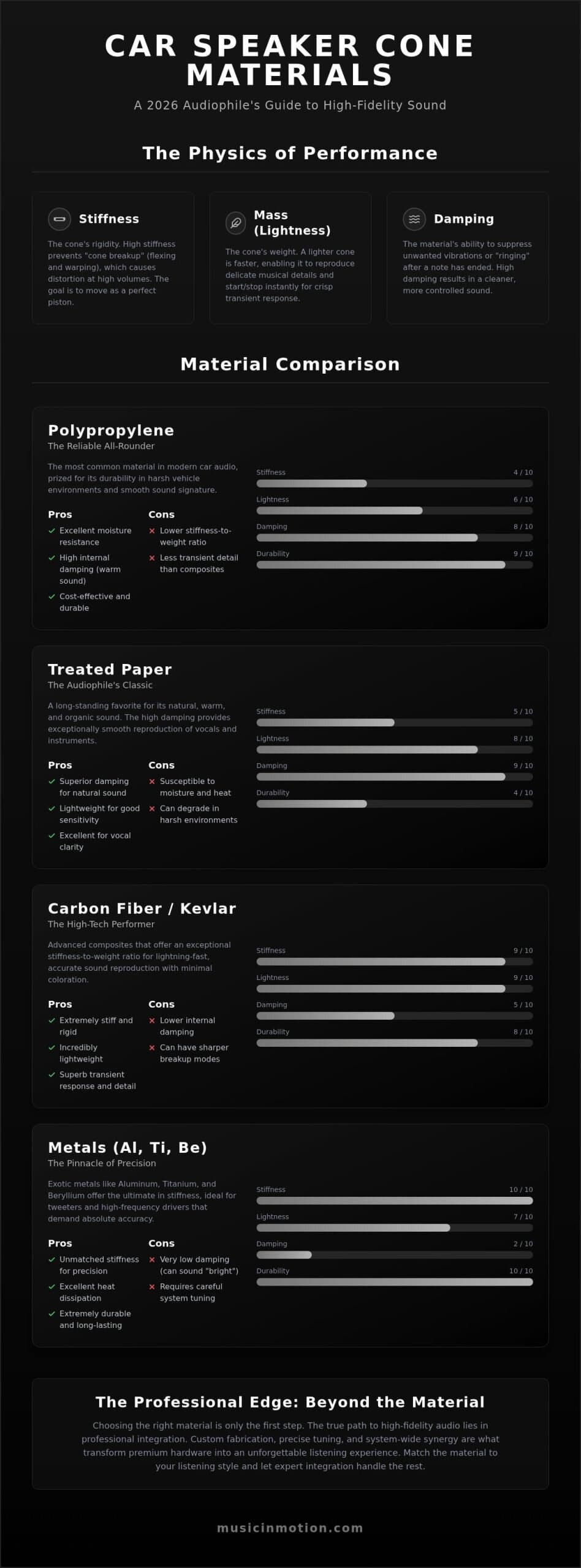
Every speaker cone is a compromise between three competing forces of physics. When we look at car speaker cone materials compared, we aren’t just looking at brand names or aesthetics. We’re looking at how a material handles stiffness, mass, and damping. The “Holy Grail” of 2026 audio standards is a cone that is infinitely stiff, weightless, and perfectly self-damped. Since that material doesn’t exist in nature, we choose specific composites to get as close as possible to that ideal balance.
Stiffness is the first priority. If a cone isn’t rigid, it will flex and warp when pushed by the voice coil. This warping, often called “cone breakup,” creates audible distortion that ruins your favorite tracks at high volumes. Mass is the second factor. A light cone is fast; it can start and stop instantly to reproduce delicate details. However, some mass is necessary for moving enough air to create deep, punchy mid-bass. Finally, we have damping. Damping is the ability of a material to suppress unwanted vibrations. Without it, the cone would continue to ring like a bell long after the musical note has ended.
Why Materials Matter for Soundstage and Imaging
The speed and accuracy of your speaker cone directly dictate the “image” of the music on your dashboard. If the cone material is too heavy or lacks rigidity, the timing of the sound waves becomes slightly blurred. This muddled response makes it difficult to pinpoint exactly where the vocalist or the drummer is positioned in the virtual soundstage. High-frequency accuracy depends on a material’s ability to vibrate thousands of times per second without losing its shape. If you’re just starting your journey, we recommend checking out our guide on Car Audio Upgrade for Stock Stereo to understand how these hardware choices fit into a broader system plan.
Understanding Internal Damping and “Sonic Signature”
Every material has a unique “voice” based on its internal damping properties. Natural fibers like paper are excellent at absorbing their own energy, which results in a warm, organic sound that many audiophiles prefer for vocals. In contrast, metals like aluminum are incredibly stiff but have very low damping, which can lead to a “bright” or clinical sound signature if not properly tuned. While the cone itself is the primary mover, the surround and spider also play a role in controlling these vibrations to ensure the finished result is clean and precise. You can explore the technical evolution of various speaker diaphragm materials to see how engineers have historically tackled these acoustic challenges. Ultimately, the best choice depends on whether you value clinical precision or a smooth, musical experience behind the wheel.
Synthetic Solutions: Polypropylene and Treated Plastics
Polypropylene, often simply called “poly,” is the most common material you’ll find in modern car doors. It’s popular for a reason. Unlike organic materials, poly is inherently moisture-resistant. This is a critical advantage because vehicle doors are notorious for collecting condensation and rain runoff. When we look at car speaker cone materials compared, poly stands out as the practical choice for longevity. It doesn’t rot, mold, or lose its shape when the humidity spikes, making it a reliable foundation for any standard system.
Manufacturing methods matter just as much as the base material. Vacuum-formed poly cones are thinner and lighter, often found in entry-level sets. In contrast, injection-molded cones allow for variable thickness across the diaphragm. This design strengthens the cone where it attaches to the voice coil while keeping the edges flexible for better movement. Many premium brands now use mineral-filled polypropylene, adding mica or talc to the mix. These minerals increase the stiffness of the plastic without significantly increasing its weight. This shift occurred because engineers recognized the limitations of paper cones in challenging automotive environments.
The Pros and Cons of Plastic-Based Cones
Polypropylene is a favorite for daily drivers because it offers high internal damping. This means the material naturally absorbs excess energy, preventing the harsh “ringing” sound that can occur with stiffer metals. However, the trade-off is a lower stiffness-to-weight ratio. While a poly cone sounds smooth and warm, it may lack the lightning-fast transient response of a carbon fiber or Kevlar driver. We often suggest these for commuters who want a reliable, great-sounding system that won’t degrade over years of service. They’re affordable, weather-resistant, and incredibly forgiving during the tuning process.
Modern Synthetic Composites in 2026
In 2026, synthetic technology has evolved far beyond basic plastic. Manufacturers are now creating advanced polymer blends that mimic the rigidity of high-end natural fibers while maintaining total weatherproofing. These thermal-formed plastics are especially vital for motorcycle and powersports audio, where speakers face direct sunlight and wind. Modern synthetics are tested to survive extreme dashboard heat, which can easily exceed 150 degrees Fahrenheit in the summer sun. By using these durable composites, we ensure your finished result sounds as clear on day 1,000 as it did on day one. They provide a perfect baseline for a dependable, high-performance audio upgrade in any environment.
Natural and Composite Fibers: Paper, Kevlar, and Carbon Fiber
We’ve found that for listeners chasing the ultimate soundstage, natural and composite fibers are the gold standard. When car speaker cone materials compared side-by-side, these fibers offer a level of detail and “speed” that standard plastics struggle to match. While synthetics win on sheer weatherproofing, fibers are the primary choice for those who want to hear the breath of a vocalist or the sharp snap of a snare drum. In 2026, we’re seeing a massive resurgence in these materials as drivers become more efficient and power-hungry.
The Audiophile’s Choice: The Case for Paper
Treated paper isn’t a budget relic. It remains a top choice for high-end Sound Quality (SQ) builds because it sounds incredibly natural and non-fatiguing. Engineers prioritize Stiffness, low density, and internal damping, and treated paper excels at all three. It provides a warm, musical response that many synthetic materials can’t replicate. Modern 2026 coatings have solved the durability issues of the past. These new treatments make paper cones resistant to moisture and UV damage, allowing them to survive in car doors while delivering a mid-bass punch that feels physical and controlled.
High-Performance Weaves: Kevlar and Carbon Fiber
Carbon fiber is the king of transient response. Because it has an extreme stiffness-to-weight ratio, a carbon fiber cone can start and stop almost instantly. This precision is essential for high-output systems where you need the hardware to keep up with complex, fast-paced tracks. Kevlar, often recognized by its iconic yellow weave, provides similar strength but with slightly better damping properties. In these speakers, the resin used to bond the fibers is just as important as the weave itself. The resin defines the final “sonic signature,” determining whether the speaker sounds clinical or smooth. We’re also seeing hybrid weaves in 2026 that mix glass fiber with carbon to create a balanced acoustic response that avoids the “ringing” sometimes associated with pure carbon drivers.
| Material | Stiffness | Damping | Weight | Cost |
|---|---|---|---|---|
| Treated Paper | Moderate | High | Low | Low |
| Kevlar | High | Moderate | Moderate | High |
| Carbon Fiber | Extreme | Low | Very Low | High |
Choosing between these depends on your ultimate goal. If you want a smooth, organic sound for long road trips, paper is hard to beat. If you’re building a competition-grade system that needs to stay accurate at extreme volumes, carbon fiber is the answer. We often use custom fabrication to bridge the gap between these premium materials and your vehicle’s factory locations, ensuring the finished result performs exactly as the engineers intended.
Metal and Exotic Materials: Aluminum, Titanium, and Beryllium
We often turn to metal and exotic materials when a project demands absolute precision and zero flex. Aluminum is a favorite for mid-bass drivers and subwoofers because it offers incredible rigidity. This stiffness allows the cone to move massive amounts of air without distorting, resulting in deep, punchy bass that stays accurate even at high volumes. When car speaker cone materials compared for structural strength, aluminum and its alloys consistently lead the pack. These drivers provide a level of impact that softer materials simply cannot match.
However, metals come with a unique challenge called “breakup.” Because they are so stiff, they tend to vibrate at a specific high frequency; this creates a sharp peak in the sound that can be distracting. We solve this by using advanced digital signal processors (DSPs) and precise crossover tuning to cut those frequencies before they reach your ears. Professional tuning is required to prevent metal cones from sounding “harsh” at high frequencies. Some manufacturers also use ceramic-coated “sandwiches” to add internal damping to the metal, giving you the best of both worlds. Analyzing car speaker cone materials compared reveals that while metals require more skill to integrate, the results are worth the effort.
The Accuracy of Metal Diaphragms
Metal diaphragms excel at maintaining their shape under extreme excursion. This makes them ideal for environments where you need high output without the muddled response of softer materials. In Premium Marine Audio Systems, metal drivers are often preferred over silk or paper because they resist the elements while cutting through wind and engine noise. They provide a crisp, detailed sound that remains consistent across the entire volume range. We find that for open-air environments, the durability of metal is a significant advantage.
Exotic Materials in High-End 2026 Systems
Beryllium is the gold standard for high-fidelity tweeters in 2026. It is lighter than aluminum but significantly stiffer, allowing it to reproduce frequencies far beyond the range of human hearing with zero distortion. Titanium is another popular choice, offering a balance of durability and precision for high-frequency drivers. While these materials carry a higher price tag, the performance reality is undeniable for listeners who want every detail of a high-resolution recording. If you are ready to experience this level of clarity, contact our team for a custom installation that maximizes the potential of these exotic materials.
The Professional Edge: Selection and Integration
We believe that the best material in the world is only as good as the environment it’s placed in. When we look at car speaker cone materials compared, we have to account for the unique heat, humidity, and vibration of your specific vehicle. A treated paper cone that sounds incredible in a luxury sedan might fail in a Jeep that spends its weekends with the doors off. We prioritize matching the hardware to your lifestyle to ensure a long-lasting, high-fidelity experience. Our team focuses on the specific vehicle environment first because the physics of a car door are vastly different from those of a motorcycle fairing or a boat’s hull.
Custom fabrication acts as the secret bridge between premium hardware and real-world performance. It allows us to take a high-end material and make it perform exactly as the engineers intended. Without proper mounting, even a carbon fiber driver will lose its impact and clarity. We also emphasize sound deadening as the “secret sauce” for every installation. By reducing the vibrations in your car’s sheet metal, we lower the noise floor and allow the subtle details of your speaker cones to shine. Our philosophy is simple: we’re here to deliver a finished result, not just a transaction of goods.
Custom Fabrication and Material Synergy
We use Custom Car Audio Fabrication techniques like reinforced baffles and custom A-pillar pods to position speakers for the best possible soundstage. This approach transforms a simple hardware swap into a complete acoustic solution. When we use more “revealing” materials like beryllium or carbon fiber, sound deadening becomes even more critical. It ensures that the only thing you hear is the music, not the rattling of a plastic door panel. This synergy between material choice and professional integration is what creates a truly immersive listening experience behind the wheel.
Selecting the Right Material for Your Lifestyle
Choosing the right hardware requires a clear understanding of how you use your vehicle. Every project is a guided tour of possibilities, where we match technical specs to your daily life. We’ve found these combinations work best for most of our clients:
- Best for Daily Drivers: Polypropylene and mineral-filled composites offer the best balance of cost and weather resistance.
- Best for Critical Listening: Treated paper and silk or metal hybrids provide the non-fatiguing, natural sound audiophiles crave.
- Best for Extreme Environments: Carbon fiber and advanced waterproof synthetics are essential for motorcycles, boats, and powersports.
Professional installation ensures the acoustic perfection that DIY material swaps often miss. We take pride in being a versatile partner for any custom project, ensuring that every detail of your property is in safe hands. This dedication to audio excellence is shared by industry experts like MAV MEDIA PRODUCTION, who bring a similar focus on quality to the world of professional podcasting and media. Whether you’re upgrading a standard utility system or building a complex competition-grade rig, the right material choice is just the beginning of the journey.
We’ve explored how the physics of stiffness, mass, and damping define the soul of your speaker. Having car speaker cone materials compared side-by-side reveals that the “best” choice is always the one that matches your specific vehicle and listening habits. Whether you need the rugged durability of mineral-filled polypropylene for a daily driver or the clinical precision of beryllium for a high-end component set, the hardware is just the first step. True high-fidelity sound depends on how that material interacts with your cabin and your installation.
Since 1994, we’ve used our expertise in custom fabrication to bridge the gap between premium components and a flawless finished result. We specialize in seamless audio integration for cars, motorcycles, and marine vessels, ensuring every project meets our standards for performance and reliability. You deserve a system that sounds as good as it looks. Consult with our specialists to design your custom audio system and start your journey toward superior sound today. We’re ready to help you find the perfect balance for your next upgrade.
Frequently Asked Questions
Does speaker cone material actually affect sound quality?
Yes, the material choice is fundamental to the final sound quality because it determines how accurately the cone moves. When car speaker cone materials compared, we see that different textures and weights change the tonal balance. A heavy cone might provide deeper bass but lose clarity in the high-mid frequencies. We focus on matching these physical traits to your music preferences to ensure the finished result meets your expectations.
What is the most durable speaker cone material for car doors?
Polypropylene and mineral-filled plastics are generally the most durable choices for standard car doors. These materials are naturally waterproof and won’t warp when exposed to the high humidity found inside door panels. We recommend these for daily drivers because they withstand the extreme temperature swings of a vehicle interior. They offer a reliable, long-lasting solution that doesn’t require constant maintenance or specialized enclosures to survive.
Are paper cones bad for car audio because of moisture?
Modern treated paper cones are perfectly safe for automotive use. While raw paper pulp would absorb moisture and rot, the high-tech coatings used in 2026 protect the fibers from water and UV damage. We often select treated paper for sound quality builds because it offers a natural, warm vocal response. It provides the musicality of a home theater system with the ruggedness required for a life on the road.
Why are high-end speakers often made of Beryllium or Carbon Fiber?
These exotic materials offer the best stiffness-to-weight ratio currently available in the industry. Beryllium is incredibly light yet rigid, allowing it to vibrate at high frequencies without distorting. Carbon fiber provides the speed needed for fast, accurate transients in high-output systems. We use these materials in custom installations when a client demands absolute precision and wants to hear every detail in a high-resolution recording.
Can I mix different cone materials in the same vehicle system?
You can absolutely mix different cone materials to create a balanced system. Many of our favorite setups use a silk or metal tweeter for crisp highs paired with a paper or poly woofer for smooth mid-bass. The key to success is professional tuning and proper crossover settings to ensure the different “sonic signatures” blend seamlessly. We use digital signal processing to make these different materials work together as a single, cohesive unit.
How does material choice change for marine or motorcycle audio?
Marine and motorcycle systems require materials that can handle direct exposure to rain, salt, and intense sunlight. We typically move away from standard paper and toward carbon fiber, treated plastics, or synthetic composites. These materials don’t just sound great; they’re built to survive the high-vibration environment of a motorcycle fairing or the open deck of a boat. We prioritize total weatherproofing to ensure your investment lasts for years.
Is Kevlar better than Carbon Fiber for car speakers?
Kevlar and carbon fiber both offer extreme strength, but they serve different acoustic purposes. Kevlar is often preferred for its slightly better damping, which can lead to a smoother sound in the mid-range. Carbon fiber is typically stiffer and faster, making it excellent for high-output mid-bass or subwoofers. When car speaker cone materials compared, the choice often comes down to whether you value clinical precision or a slightly warmer, musical character.
Do I need an amplifier to hear the difference in speaker materials?
While you’ll hear a difference on factory power, an external amplifier is usually necessary to unlock the full potential of premium materials. Stiffer cones like carbon fiber or metal often have higher power requirements to move effectively. Without enough wattage, these high-end drivers can sound thin or lifeless. We recommend a dedicated amplifier to provide the control and headroom needed for crystal-clear vocals and tight, physical mid-bass.