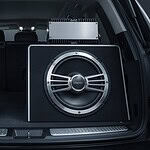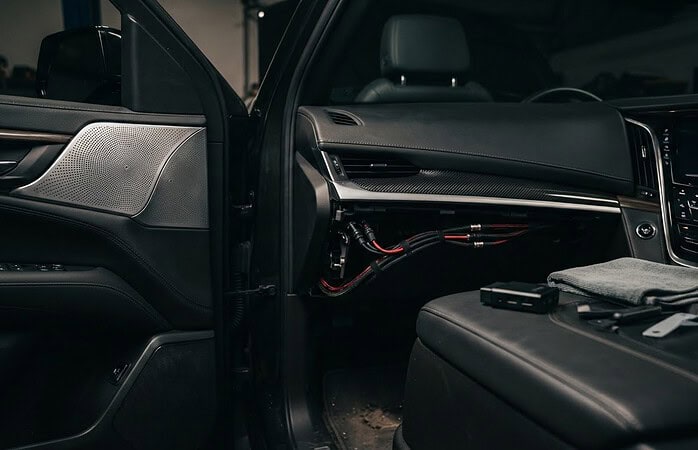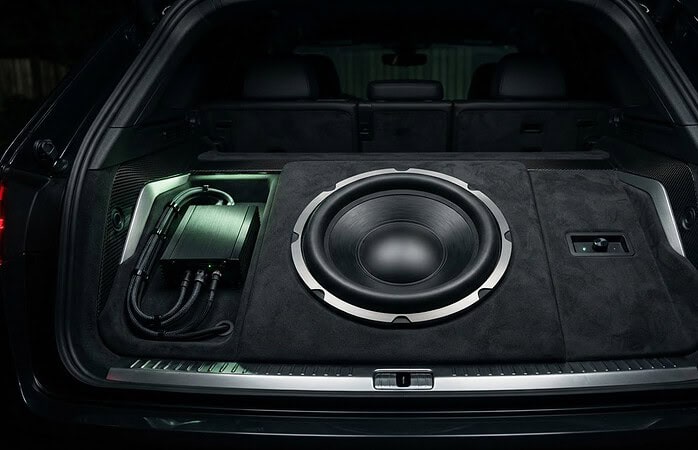
Why did you invest in a high-performance machine if you can only hear your favorite tracks while you’re parked? It’s a common frustration for riders who find their music turning into a garbled mess of static the moment they hit the throttle. We know how it feels to have a great day on the trail dampened by equipment that fails after the first mud hole or a battery that dies during a lunch break. Most riders accept these hurdles as part of the lifestyle, but we don’t believe you should have to sacrifice sound quality for utility. That’s why we focus on custom powersports audio solutions that are built to handle the elements without missing a beat.
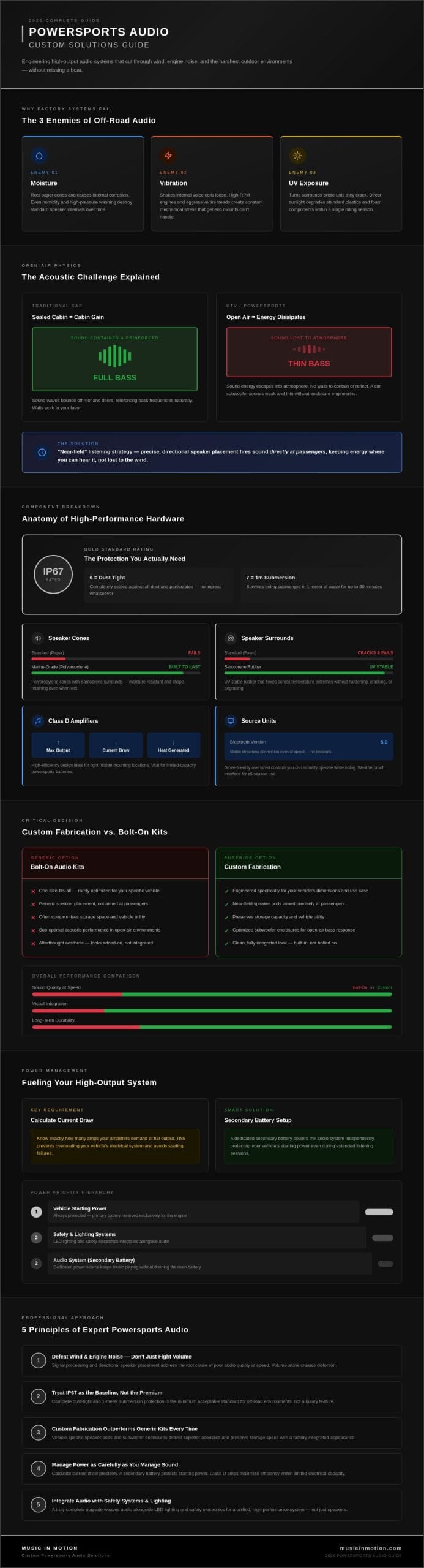
In this 2026 guide, you’ll discover how to engineer a rugged, high-output system that cuts through wind and engine noise while withstanding the harshest outdoor environments. We’ll show you how to achieve crystal-clear audio at high RPMs and a clean, integrated look that preserves your vehicle’s storage space. From the latest IP-rated hardware to advanced power management, we’re sharing our expert approach to creating a finished result that sounds just as good at 50 mph as it does in the shop. It’s time to stop fighting the noise and start enjoying the ride.
Key Takeaways
- Learn how custom powersports audio solutions defeat wind and engine noise by addressing the unique acoustic challenges of open-air environments.
- Discover the importance of IP67 ratings and marine-grade materials in building a system that withstands moisture, dust, and heavy vibrations.
- Compare the limitations of generic bolt-on kits against the superior performance and integrated look of custom-fabricated speaker pods and subwoofer enclosures.
- Gain insights into calculating current draw and using secondary batteries to keep your music playing without compromising your vehicle’s starting power.
- See how a professional approach integrates audio with safety systems and LED lighting to deliver a complete, high-performance upgrade.
The Challenges of Open-Air Audio: Why Factory Systems Fail
Standard factory systems are built for comfort; they aren’t built for the trail. When you’re behind the wheel of a UTV or on the back of a bike, you’re fighting a constant battle against the environment. We define custom powersports audio solutions as systems specifically engineered to overcome the crushing levels of environmental noise and mechanical vibration that destroy standard equipment. Unlike traditional vehicle audio systems designed for sealed cabins, these setups must perform in a space without walls to contain the sound energy.
Most factory setups use inexpensive paper-cone speakers. These might sound fine in a showroom, but they quickly fall apart when exposed to the three main enemies of off-road audio: moisture, vibration, and extreme UV exposure. Moisture rots the cones, vibration shakes the internal coils loose, and UV rays turn the surrounds brittle until they crack. To get a system that lasts the life of your vehicle, you need hardware that treats these harsh conditions as the baseline, not the exception. High-velocity riding requires materials that don’t just survive the elements but thrive in them.
The Physics of Wind and Engine Noise Interference
High-RPM engines and aggressive tire treads create a wall of sound that masks your music. As you accelerate, the low-end and mid-range frequencies of your favorite tracks are literally swallowed by the mechanical roar. Simply turning up the volume isn’t the answer. Without proper signal processing, you’re just pushing a distorted signal through speakers that can’t handle the strain. In a moving UTV, the signal-to-noise ratio represents the strength of your music relative to the chaotic background noise of the trail. Achieving clarity requires a system that can punch through that interference without losing its musicality.
Acoustic Loss in Non-Enclosed Environments
Traditional car audio relies on “cabin gain,” which is the way sound waves bounce off the roof and doors to reinforce bass frequencies. In an open-air vehicle, that energy simply dissipates into the atmosphere. This is why a subwoofer that sounds thunderous in a car might feel thin and weak on a side-by-side. Our custom powersports audio solutions prioritize “near-field” listening, using precise, directional speaker placement to fire sound directly at the passengers. This strategic integration ensures that the energy stays where you can hear it, rather than being lost to the wind. By focusing the output, we create an immersive experience that defies the open-air challenge.
The Anatomy of High-Performance Powersports Hardware
Building a system that survives a weekend in the mud requires more than just a “waterproof” sticker. When we design custom powersports audio solutions, we select components based on their ability to endure extreme thermal cycles and physical abuse. We start with marine-grade materials like polypropylene cones and Santoprene surrounds. Unlike the paper or foam found in standard speakers, these materials don’t absorb moisture or lose their shape when they get wet. We also look for UV-stable plastics that won’t chalk or crack after a summer of direct sun exposure.
The gold standard for off-road durability is the IP67 rating. This specific Ingress Protection code means the component is completely dust-tight and can survive being submerged in a meter of water for thirty minutes. While you might not plan on sinking your UTV, this level of protection is essential for high-pressure washing and heavy rain. Because of the unique challenges of open-air acoustics, the hardware must be as tough as the vehicle itself.
To drive these speakers, we use high-efficiency Class D amplifiers. These units maximize output while minimizing current draw, which is vital since powersports batteries have limited capacity. They run cooler than traditional amps, making them perfect for tight, hidden mounting locations. We pair these with source units featuring Bluetooth 5.0 for stable streaming and glove-friendly buttons that you can actually use while riding. If you’re ready to see how these components fit your specific machine, our team at Music In Motion can help you map out the perfect layout.
Material Science: Beyond “Waterproof” Labels
Standard car audio speakers often fail within months on the trail because their internal components aren’t protected against corrosion. We use non-corrosive hardware, such as stainless steel and brass, to prevent rust from seizing mounting points. In our amplifiers, we insist on conformal-coated circuit boards. This microscopic layer of silicone or epoxy protects delicate electronics from the humidity and salt air that lead to short circuits.
Digital Signal Processing (DSP) for Powersports
A Digital Signal Processor is the brain of a high-end system. It allows us to perform environment-specific tuning to correct for the frequency masking caused by wind noise. Through time-alignment, we ensure the sound from every speaker reaches your ears simultaneously, creating a focused soundstage even in a custom-fabricated layout. We can even program EQ presets, so you can switch from a “trail” mode that prioritizes vocal clarity to a “dunes” mode with boosted bass for stationary listening.
Custom Fabrication vs. Bolt-On Audio Kits
Many riders start their journey with a generic “plug-and-play” kit. While these bundles offer convenience, they often suffer from poor fitment and generic acoustics that don’t account for your vehicle’s unique geometry. Thin plastic pods can rattle or vibrate under heavy bass, muddying the sound you worked so hard to hear. We believe that custom powersports audio solutions should do more than just make noise; they should feel like a seamless extension of the machine itself.
Custom work allows for a level of aesthetic integration that generic kits simply can’t match. We use premium materials like fiberglass and high-density plastics to create rigid, non-resonant mounts that stay quiet even on the roughest trails. This approach creates a finished result that looks like a factory-installed luxury option rather than a cluttered afterthought. By choosing custom car audio fabrication, you’re investing in a system where every bracket and enclosure is optimized for the specific air volume your speakers require to perform at their peak.
Custom Subwoofer Enclosures for UTVs and Side-by-Sides
Plastic soundbars are popular for their ease of installation, but they can’t reproduce the physical impact of a dedicated subwoofer. We design “under-seat” or “dash-mounted” custom boxes that outperform generic alternatives by maximizing every square inch of available space. The internal volume of an enclosure directly dictates the low-frequency extension and overall depth of the bass. Our custom powersports audio solutions balance this output with the limited space available, ensuring you get deep, rolling bass without sacrificing legroom or vital storage capacity.
Custom Speaker Pods and Kick Panels
Imaging is everything in an open-air vehicle. We maximize this by fabricating custom A-pillar pods or kick panels that angle the sound directly toward the driver and passengers. These rigid mounting surfaces are essential for mid-bass clarity, as they prevent speaker energy from being absorbed by flimsy plastic panels. We take great care to ensure these pods don’t interfere with your visibility or comfort. We aren’t just bolting on parts; we’re creating a specialized environment where the technology enhances your ride without getting in the way of the adventure.
Power Management: Fueling Your High-Output System
High-output sound requires high-output power. You can’t simply add thousands of watts to a machine designed with a modest factory charging system and expect it to survive. We prioritize power management in all our custom powersports audio solutions to ensure your music never leaves you stranded on the trail. Calculating the total current draw of your amplifiers and accessories is the first step in building a reliable system. Many powersports vehicles use stators or small alternators that struggle to keep up with high-wattage demands. If your lights flicker when the bass hits, your system is starving for current.
Upgrading your wiring is a non-negotiable part of the process. We use Oxygen-Free Copper (OFC) exclusively because it carries more current and resists corrosion better than cheaper Copper Clad Aluminum (CCA). In a high-vibration environment, CCA becomes brittle and can snap; this leads to intermittent power or dangerous shorts. We protect every run with tech-flex braiding and heat-shrink tubing to create a harness that’s as rugged as your suspension. If your electrical system isn’t up to the task, we can help you determine if a high-output alternator upgrade is necessary to maintain your vehicle’s health.
Battery Solutions for Extended Playtime
When you’re parked at the dunes or the trailhead, you want to keep the music going without worrying about your engine starting. We often recommend a dual-battery setup using an isolator. This device allows your audio system to pull from a secondary battery while keeping the primary cranking battery fully charged. For these applications, we weigh the benefits of AGM batteries, which handle vibration exceptionally well, against Lithium options that offer more capacity in a lighter package. For more details on choosing the right power source, check out our guide on premium marine audio systems, as the battery technology often overlaps.
Wiring Integrity and Circuit Protection
Safety is our primary concern. We use marine-grade fused distribution blocks to ensure every component is properly protected from surges or shorts. Grounding is another critical factor, especially in modern vehicles with plastic or composite frames. We don’t just find a random bolt; we create a dedicated ground path to the engine block or battery to ensure a clean, noise-free signal. If you’re concerned about your vehicle’s electrical capacity, contact us at Music In Motion to discuss a professional power audit for your machine.
The Music In Motion Approach to Powersports Integration
We don’t just sell boxes of parts. Our philosophy centers on delivering a finished result that improves your time behind the wheel. When we design custom powersports audio solutions, we look at the entire vehicle as a single, cohesive project. This begins with a consultation where we discuss how and where you ride. A system built for slow-speed rock crawling requires a different acoustic profile than one designed to scream across open desert flats at 60 mph. We tailor every component to your specific environment.
For V-Twin enthusiasts, this cohesive approach often involves coordinating with specialists like Project Faster Inc. to ensure the motorcycle’s mechanical upgrades are as high-quality as the audio system.
Professional tuning is the final step that separates a “loud” system from a “high-performance” one. Many DIY installs end with a system that is plenty loud but lacks balance, leading to ear fatigue and distorted vocals. We use specialized measurement tools to calibrate your system’s output, ensuring every frequency is crisp and every beat is punchy. This meticulous attention to detail ensures that your investment provides a premium listening experience throughout the entire RPM range.
Comprehensive Vehicle Customization
Our expertise extends beyond sound. We often combine audio upgrades with RGB accent lighting to create a total sensory experience that looks as good as it sounds. Safety is equally vital, which is why we specialize in integrating vehicle safety systems like backup cameras and dash cams into your powersports machine. For those who want their vehicle ready to go the moment they arrive, a professional remote start installation allows for climate-controlled prep before you even step outside. This level of integration ensures your machine is as functional as it is fun.
Why Professional Installation Matters
The trail is a brutal environment for electronics. DIY wiring often fails because it lacks the specialized strain relief and weatherproofing necessary for high-vibration use. Our team uses professional-grade tools for acoustic measurement and electrical testing that aren’t found in a standard garage. This expertise ensures long-term reliability and gives you the peace of mind that comes with expert craftsmanship. We take pride in our work so you can take pride in your ride, knowing every detail of your property is in safe hands. When you choose custom powersports audio solutions from a specialist, you’re investing in the longevity of your equipment.
Take Control of Your Off-Road Soundtrack
Building a system that survives the trail requires more than just high-end parts; it demands a strategic approach to open-air acoustics and electrical stability. We’ve explored how custom enclosures defeat wind noise and why marine-grade wiring is essential for long-term safety. By choosing custom powersports audio solutions, you move beyond generic bolt-on kits and invest in a finished result that is engineered specifically for your vehicle and riding style.
Since 1994, owners Mike and Kim have led our team of specialists with a focus on reliability and superior sound quality. We take pride in our custom fabrication and high-performance integration, ensuring every project meets our rigorous standards for safety. You don’t have to settle for distorted audio or failing equipment. Our experts are ready to help you design a system that stands up to the elements while delivering crystal-clear output at any speed.
Experience the Music In Motion difference; contact us for a custom powersports audio consultation today. We look forward to helping you transform your machine into the ultimate adventure vehicle. Let’s get your next ride started with the sound you deserve.
Frequently Asked Questions
Can I use regular car audio speakers in my UTV?
You should avoid using standard car audio speakers in a UTV because they aren’t built to survive the outdoors. Regular speakers often use paper cones and foam surrounds that rot when they get wet or sit in the sun. Our custom powersports audio solutions rely on marine-grade materials like Santoprene and polypropylene to ensure your system stays functional through mud, rain, and heavy vibrations.
How much power does a powersports audio system need?
A powersports system generally needs more power than a standard car setup to overcome open-air noise. Because you’re fighting wind and engine roar at high speeds, we recommend high-efficiency Class D amplifiers that provide high wattage without overwhelming your vehicle’s charging system. This ensures your music remains clear and impactful even when you’re pinned at full throttle.
Will a high-end audio system drain my battery?
A high-end system won’t drain your battery if the electrical integration is handled correctly. We often install battery isolators and secondary batteries to separate your audio power from your cranking battery. This setup allows you to enjoy your music while parked without worrying about whether your machine will start when it’s time to head home.
What is the best way to get bass in a side-by-side?
The most effective way to get deep bass in a side-by-side is through custom-fabricated subwoofer enclosures. While plastic soundbars are convenient, they lack the air volume needed for true low-frequency extension. We design enclosures that fit under seats or behind the dash, maximizing every inch of space to deliver punchy, rolling bass that you can actually feel.
Are soundbars better than custom speaker pods?
Soundbars are great for simple, space-saving installations, but custom speaker pods offer superior sound quality and imaging. Pods allow us to angle the speakers directly toward your ears, which is critical for clarity in an open cockpit. Custom-fabricated pods also provide a more rigid mounting surface, which reduces vibration and improves mid-bass response compared to generic plastic bars.
How do I protect my audio system when pressure washing my vehicle?
You protect your system by choosing components with an IP67 rating and using common sense during cleaning. While these parts are designed to be water-resistant, you should never blast a high-pressure nozzle directly into the speaker cones or source unit faceplate. A gentle rinse is usually enough to remove mud from your custom powersports audio solutions without risking damage to the internal seals.
What does “marine-grade” actually mean for audio equipment?
Marine-grade equipment is specifically engineered to resist salt, fog, UV radiation, and water ingress. This involves using non-corrosive hardware like stainless steel and applying a conformal coating to the internal circuit boards. This protective layer prevents humidity from causing short circuits, which is a common failure point for standard electronics in outdoor environments.
Can I control my powersports audio system from my smartphone?
Yes, you can easily control your system from your smartphone using Bluetooth 5.0 connectivity. Most modern source units allow for seamless streaming and volume control directly from your device. We can also integrate localized controllers that mount to your dash or roll cage, giving you a glove-friendly way to skip tracks while your phone stays safely tucked away in a dry bag.