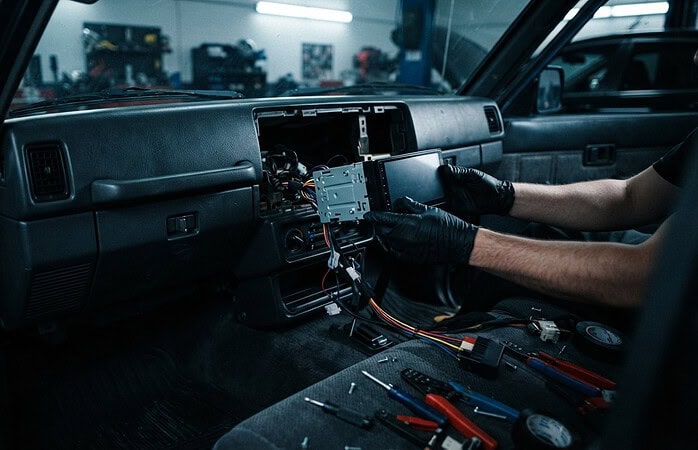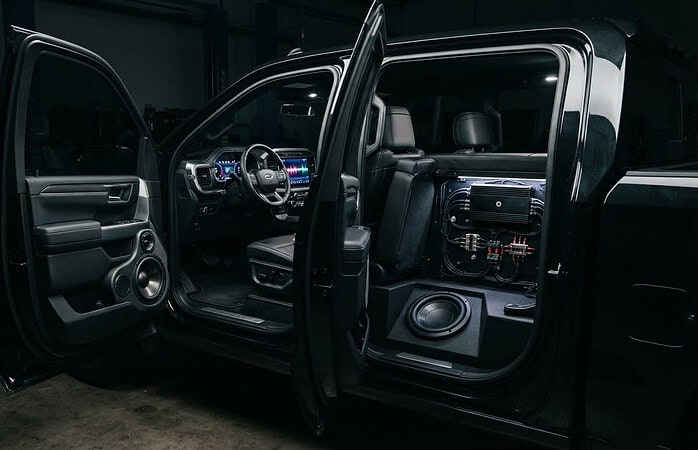
Spending thousands of dollars on premium hardware doesn’t guarantee a world-class listening experience. In fact, the most expensive parts often sound mediocre if they aren’t part of a balanced, precisely tuned ecosystem. We understand the hesitation that comes with upgrading your vehicle. It’s easy to feel overwhelmed by technical jargon like Class D, Ohms, and DSP, or to worry that you’re simply buying parts rather than a finished result. You want your 200 annual hours of commuting to feel like a private concert, but the variety of speaker types and conflicting advice can make the process feel like a gamble.
In this high-end car audio components explained guide, we reveal the engineering secrets that turn a standard cabin into an audiophile’s sanctuary. You’ll discover how individual pieces, from carbon-fiber cones to the latest Dolby Atmos receivers like the Pioneer SPHERA, work together to create a seamless soundstage. We’ll provide a clear roadmap of the necessary hardware and explain why the Digital Signal Processor is the true brain of your system. By the end, you’ll have the confidence to discuss a custom build with any professional and the knowledge to ensure every dollar spent translates into pure, sensory bliss behind the wheel.
Key Takeaways
- Learn why true audio quality is defined by clarity at low volumes and how to recreate a “live performance” feel right on your dashboard.
- Understand why the Digital Signal Processor is the most critical part of any modern build in our guide to high-end car audio components explained.
- Discover the difference between raw volume and “headroom” to ensure your system delivers warm, effortless sound during complex musical passages.
- Identify why a 3-way active speaker setup is the professional standard for eliminating distortion and providing total control over every frequency.
- Explore how professional integration and sound deadening serve as the foundation for a world-class listening environment.
What Defines High-End Car Audio in 2026?
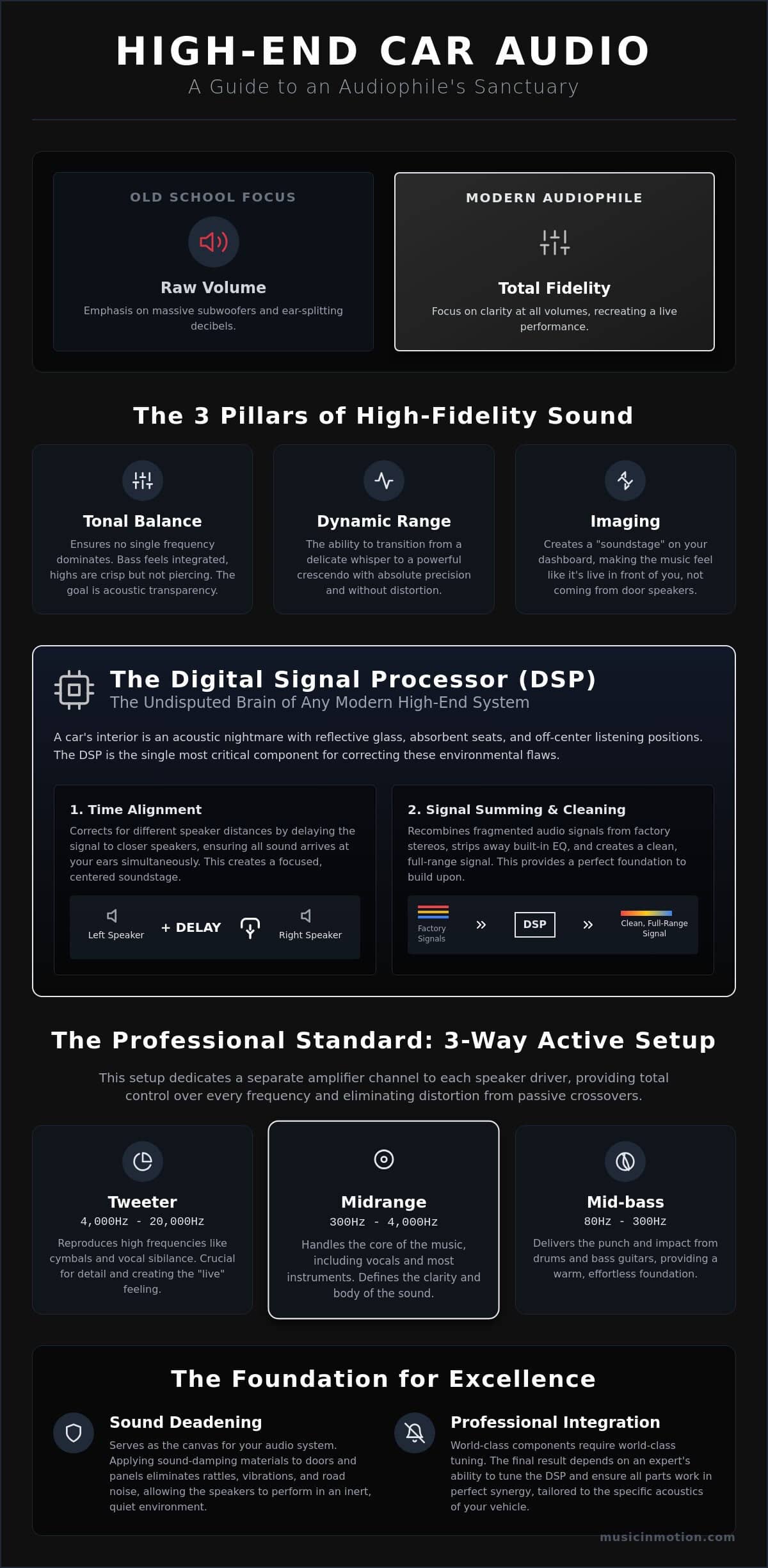
In the past, many people associated premium sound with massive subwoofers and ear-splitting volume. Today, the focus has shifted entirely toward fidelity. True quality is revealed when you can hear every nuance of a recording even at low volumes. This level of detail requires a synergy between hardware and software. When we look at high-end car audio components explained through a modern lens, we see that the goal is to recreate a live performance on your dashboard. It is about the emotional connection to the music, not just the decibel level.
High-resolution audio sources have become the standard for audiophiles. With services like Tidal and the ability to play lossless FLAC files, your system needs to be capable of reproducing that extra data. Modern Vehicle audio systems must handle these high-bitrate signals without introducing noise or distortion. Often, a car audio upgrade for stock stereo is the best way to start this journey. It allows us to keep your factory dashboard look while bypassing the heavy-handed processing built into basic factory head units.
Tonal Balance and Dynamic Range
Tonal balance means that no single instrument or frequency dominates the mix. The bass should feel integrated rather than overwhelming, and the high notes should be crisp without being piercing. Dynamic range is just as vital. It describes the system’s ability to transition from a quiet, delicate whisper to a powerful orchestral crescendo with absolute precision. We look for components that maintain this clarity across the entire volume spectrum. Acoustic transparency is the ultimate goal of premium component integration.
Imaging: Putting the Band on Your Hood
Imaging is the magic that makes you forget you’re sitting in a car. Instead of hearing sound coming from the plastic door panels, you experience music as if the singer is standing right on your hood. This requires careful placement and timing of tweeters and midranges. Factory speaker locations are rarely optimal because they are chosen for manufacturing ease rather than acoustic perfection. High-end components allow us to lift the soundstage, creating a wide and deep environment that feels like a front-row seat at a concert.
We use ultra-lightweight materials like carbon fiber and flax for speaker cones because they respond instantly to signal changes. This responsiveness is what allows for that “live” feeling. When you invest in premium parts, you aren’t just buying louder speakers. You are buying the ability to hear the breath of the singer and the subtle vibration of a guitar string. It’s a transformative experience that makes every mile of your commute more enjoyable.
The Digital Signal Processor (DSP): The System Brain
The Digital Signal Processor (DSP) is the undisputed brain of a modern build. While speakers move the air, the DSP decides exactly how and when they do it. In a car, you aren’t sitting in the middle of the speakers like you would at home. You’re tucked into one corner, surrounded by reflective glass and absorbent upholstery. These acoustic flaws destroy sound quality. As we dive deeper into high-end car audio components explained, the DSP stands out as the single most influential piece of hardware for fixing these environmental issues.
Time alignment is perhaps the most impressive trick a DSP performs. Because the driver’s side speaker is closer to your ear than the passenger’s side, the sound arrives at different times. This ruins the center image and makes the music feel lopsided. By delaying the signal to the closer speakers by just a few milliseconds, the DSP ensures every note hits your ears at the exact same moment. This creates a focused, realistic soundstage that makes the music feel like it is floating right in front of you.
Signal summing is another essential task for modern integration. Most factory radios split the audio into different channels before they reach the speakers. A high-quality DSP takes those fragmented signals, strips away the factory equalization, and sums them back into a full-range, flat signal. This provides a clean slate for us to build a world-class listening experience. We prioritize high-end audio product quality to ensure the processor doesn’t add noise or hiss to your music during this conversion.
Equalization (EQ) at the Professional Level
Standard car stereos offer basic bass and treble knobs. In a high-end system, we use parametric EQ. This gives us granular control over specific frequencies, allowing us to boost or cut sound with surgical precision. We use this to combat cabin gain, where the small interior of a car naturally boosts certain bass frequencies to a boomy, unpleasant level. Professional tuning software allows us to visualize these peaks and valleys, ensuring a smooth response that matches the artist’s original intent.
Active vs. Passive Crossovers
High-end systems almost always ditch passive crossovers. Passive units are the generic black boxes that come with basic speaker kits. We prefer an active setup where every speaker channel has its own dedicated DSP output and amplifier channel. This allows us to protect delicate tweeters with steep, precise filters while maximizing the mid-bass impact. If you want a system that adapts to your musical taste, we can help you select the right processor for your specific vehicle. Active control means we can tune the system on-the-fly, ensuring your favorite rock tracks and jazz records both sound spectacular.
Amplification and Power Management Infrastructure
Raw wattage is often a vanity metric. In the world of high-fidelity sound, we focus on headroom and control rather than just raw volume. Headroom is the reserve power an amplifier keeps in the tank to handle sudden musical peaks without distorting. When high-end car audio components explained through the lens of performance, the amplifier acts as the muscle that must move the speaker cones with absolute precision. If an amp lacks control, the music sounds muddy and disorganized; if it has plenty of headroom, the sound remains effortless and clear even at higher listening levels.
By 2026, the gap between Class D and Class AB amplifiers has narrowed significantly. Historically, Class AB was prized for its warmth and fidelity, while Class D was chosen for its compact size and efficiency. Modern engineering has allowed Class D units to achieve incredible transparency, making them a staple for high-end builds where space is at a premium. However, the best amplifier in the world can’t perform if it is starved for power. Your car’s factory wiring is often a bottleneck. We frequently recommend the “Big Three” upgrade, which involves replacing the main charging cables to ensure your system gets the current it needs. For high-fidelity builds, high output alternators are essential for sustaining stable voltage during demanding tracks.
Signal-to-Noise Ratio (SNR)
A “quiet” amplifier is the foundation of a great system. Signal-to-Noise Ratio (SNR) measures how much higher the music signal is than the background hiss of the electronics. High-end amplifiers feature exceptionally high SNR ratings, ensuring that during silent passages in a high-resolution track, you hear absolutely nothing but the music. This silence is what allows the smallest nuances, like the decay of a cymbal or the acoustics of the recording room, to emerge. A superior SNR rating directly improves the perceived depth and width of your soundstage.
Power Delivery: Alternators and Batteries
High-end components require a stable electrical environment to prevent signal clipping. Clipping occurs when an amplifier tries to draw more power than the electrical system can provide, resulting in a squared-off sound wave that can damage speakers. To prevent this, we often integrate secondary batteries or ultra-capacitors that act as local reservoirs for bass transients. This stability is even more important when we are integrating audio with other advanced electronics like laser defense systems. We ensure your vehicle’s electrical infrastructure is robust enough to power every customization without compromise, protecting both your investment and your listening experience.
Component Speakers: Tweeters, Midranges, and Mid-Bass
Choosing the right drivers is where the technical theory of your system meets the physical reality of sound. In a standard vehicle, you often find coaxial speakers. These have the tweeter mounted directly in the center of the woofer. While convenient for factory replacement, they fail the test of high-fidelity audio. To achieve a true soundstage, we utilize component speakers. This physical separation of the tweeter from the midrange and mid-bass drivers is mandatory. It allows us to place each component exactly where it needs to be to reach your ears without obstruction. When we look at high-end car audio components explained, the transition from coaxial to component drivers is the most visible sign of a professional build.
The 3-way active setup is the gold standard for 2026. This configuration dedicates a specific driver to the high, middle, and low frequencies. By giving each speaker a narrower range of notes to play, we virtually eliminate the distortion that occurs when a single cone tries to do too much. We pair these drivers with custom car audio fabrication to ensure every speaker has a rigid, acoustically optimized mounting point. This precision prevents the plastic vibrations that plague factory installations and ensures the energy of the speaker goes into the air, not the door panel.
Material science plays a massive role in how these high-end car audio components explained actually perform. We select materials based on the desired sound profile. Silk dome tweeters offer a warm, smooth character that is easy on the ears during long drives. Beryllium and carbon fiber are prized for their incredible rigidity and light weight. These exotic materials respond to electrical signals with lightning speed, capturing the micro-details in high-resolution recordings that lesser speakers simply miss. The result is a level of clarity that makes you feel like you’ve removed a blanket from your speakers.
Tweeter Placement and Off-Axis Response
High-frequency sound is very directional. If your tweeters are buried in the bottom of your doors, the crisp details of the music will be lost in your floor mats. We consider A-pillar mounting the gold standard for imaging. By fabricating custom pods on the pillars, we can aim the tweeters directly at the listening position. This avoids the harsh reflections caused by bouncing sound off the windshield glass. Proper placement ensures the singer stays centered on your dashboard rather than shifting every time you move your head.
Subwoofers: Texture Over Thump
A high-end subwoofer isn’t about rattling your mirrors; it is about musicality. We focus on “texture,” which is the ability of the sub to play fast, accurate bass notes that stay in time with the rest of the music. We often use sealed, custom-fabricated enclosures to provide the air spring necessary for maximum transient response. When tuned correctly, the subwoofer disappears. You won’t hear the bass coming from the trunk. Instead, it will feel like the low-end notes are coming directly from the speakers on your dashboard. Ready to hear the difference that premium drivers make? Consult with our specialists to design your perfect speaker layout.
The Result: Professional Integration and System Synergy
Even the most expensive drivers will underperform in a poorly prepared environment. Integration is the bridge between a box of parts and a world-class listening experience. We’ve seen enthusiasts attempt a DIY approach, but modern vehicle data buses are incredibly complex. A simple mistake can trigger error codes or disable essential features. When we discuss high-end car audio components explained, we must emphasize that the installation environment is just as important as the hardware itself. Without synergy, you’re just listening to a collection of parts rather than a cohesive performance.
Modern cars are computers on wheels. They are equipped with sophisticated vehicle safety systems that must remain fully functional after any upgrade. Our integration process ensures that backup cameras, lane-departure warnings, and parking sensors still communicate perfectly through your new audio setup. We don’t just swap parts; we engineer a solution that respects the factory safety infrastructure while elevating the entertainment experience. This specialized knowledge is what prevents a high-end build from becoming a technical nightmare.
Acoustic Treatment and Vibration Dampening
We treat your car doors like high-fidelity speaker enclosures. Most factory doors consist of thin metal and plastic, which vibrate and cancel out sound energy. We use mass-loading materials to stop these panels from ringing and decoupling layers to prevent plastic trim from buzzing. This lowers the noise floor, allowing the subtle details of your music to shine through without competing with road noise. While soundproofing aims to keep external noise out, acoustic tuning focuses on optimizing the internal environment for the speakers to perform at their peak.
The Final Calibration
The last step of any build is the most critical. We use Real Time Analyzers (RTA) to measure the frequency response of the cabin with scientific accuracy. This allows us to find and fix acoustic peaks that would otherwise sound harsh or boomy. However, a flat graph doesn’t always equal an emotional experience. We rely on the human ear for the final tuning, adjusting the system until it feels alive and emotive. It’s a blend of art and science that ensures your high-end car audio components explained in this guide deliver their full potential.
Our approach at Music In Motion prioritizes the finished result over the mere transaction of goods. We want you to feel a surge of excitement every time you turn the key and hear the first note of your favorite track. By viewing your system as a complete ecosystem, we deliver a result that improves your daily life and the feeling of being behind the wheel. We are dedicated specialists who take pride in pushing creative boundaries while keeping your vehicle safe, functional, and sounding spectacular.
Elevate Every Mile of Your Journey
A world-class listening experience is within reach. We have explored how the Digital Signal Processor acts as the system brain and why 3-way active setups provide unmatched clarity. You now understand that high-fidelity sound requires a stable power infrastructure and meticulous acoustic treatment to truly shine. Having these high-end car audio components explained is just the first step toward reclaiming your time on the road. The real magic happens when these individual parts are woven into a seamless, high-performance ecosystem that respects your vehicle’s safety systems and factory aesthetics.
We are a locally owned and operated team of audio experts who have been pushing the boundaries of custom fabrication since 1994. As specialists in advanced vehicle electronics integration, we prioritize the emotional impact of the finished result over a simple transaction. Don’t settle for mediocre sound when you can have a private concert every time you turn the key. Experience the difference of a professionally integrated system at Music In Motion. We are ready to help you design a system that makes every commute a highlight of your day.
Frequently Asked Questions
What is the difference between a 2-way and 3-way component system?
A 2-way system splits sound between a tweeter and a woofer, while a 3-way system adds a dedicated midrange driver. This third speaker handles the critical vocal frequencies, allowing the woofer to focus on mid-bass and the tweeter to focus on high-end detail. We recommend 3-way systems for audiophile builds because they offer better clarity and lower distortion during complex musical passages. It creates a more realistic soundstage on your dashboard.
Do I need a new head unit for a high-end audio system?
You don’t always need a new head unit to achieve world-class sound. We can integrate high-end components with your factory radio using advanced interfaces and processors. This keeps your dashboard looking original while giving us a clean signal to work with. If you want features like native Dolby Atmos, an aftermarket receiver might be the right choice, but we can build a spectacular system around your stock stereo.
Why is a DSP considered the most important part of a premium build?
The DSP is the brain that corrects the acoustic nightmare of a vehicle interior. In this guide to high-end car audio components explained, we highlight how the DSP uses time alignment and equalization to fix glass reflections and poor speaker placement. Without a processor, your speakers will sound like they’re in a car; with a DSP, they sound like they’re on a concert stage. It is the foundation of every audiophile system.
Does high-end car audio drain my car battery?
Premium audio systems draw significant power, but they won’t drain your battery if the electrical infrastructure is designed correctly. We balance the power needs of your amplifiers with high-output alternators or secondary batteries to ensure stability. These upgrades protect your vehicle’s factory electronics while providing the current necessary for deep, accurate bass transients. A well-engineered system works in harmony with your car’s charging system during normal driving.
What is the benefit of custom fabrication for speakers?
Custom fabrication allows us to place speakers in acoustically ideal locations rather than just where the factory had room. We build custom A-pillar pods and sealed enclosures to ensure drivers are aimed correctly and mounted to a rigid surface. This prevents the plastic vibrations that ruin sound quality and ensures you’re hearing the speaker, not the door panel. It turns a standard interior into a optimized listening environment.
Can I install high-end audio components myself?
Modern vehicles use complex digital data buses that make DIY installation risky for high-end systems. A professional installer has the specialized tools, like Real Time Analyzers, to calibrate your system for your specific cabin. We ensure your vehicle safety systems remain functional and your investment is protected by a reliable, expert installation. Professional tuning is what separates a collection of expensive parts from a world-class sound system.
How much does a high-end car audio system cost to install?
The investment for a high-end installation depends on your specific vehicle and the level of customization you desire. Factors like custom fabrication, the number of channels, and the amount of acoustic treatment required will influence the total. We focus on delivering a finished result that provides lasting value and transforms your daily experience behind the wheel. Every project is a unique collaboration tailored to your specific goals and transport.
What is sound deadening and do I really need it?
Sound deadening is an invisible but essential component that lowers your vehicle’s noise floor. By applying mass-loading materials to metal panels, we stop them from vibrating and acting like a secondary, distorted speaker. You really do need it if you want to hear the delicate nuances of high-resolution audio. It prevents road noise from drowning out your music and ensures the energy from your speakers stays inside the cabin.