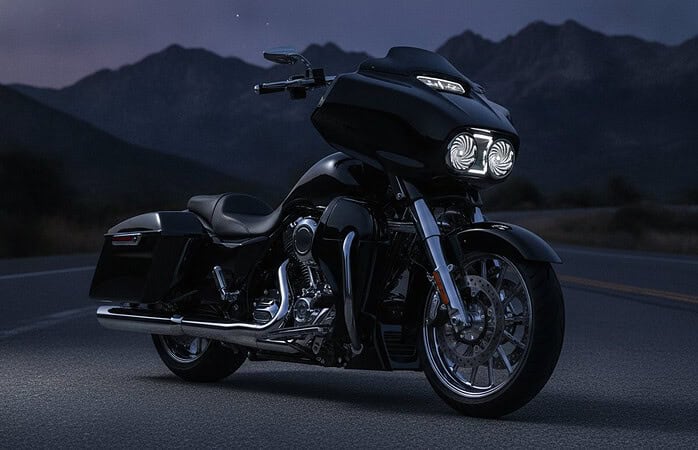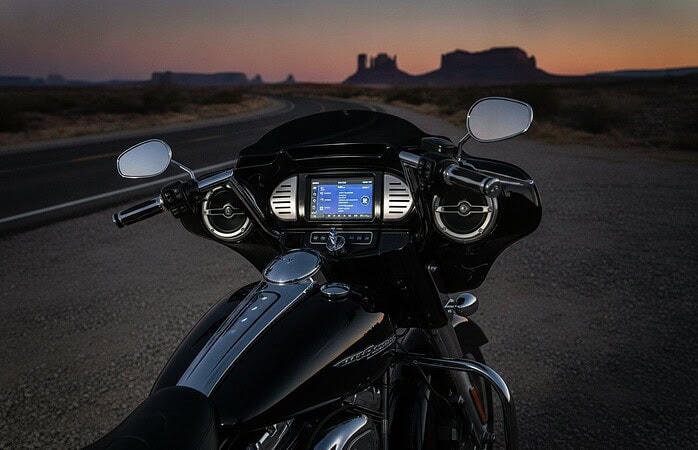
Most motorcycle audio systems are built for the parking lot, not the open highway. We know the frustration of watching your favorite playlist disappear into a cloud of wind noise and engine roar the moment you hit cruising speed. It’s a common struggle for touring enthusiasts who want a motorcycle audio system for long rides that actually performs when it matters most. You shouldn’t have to choose between hearing your music and maintaining your bike’s electrical reliability. Many off-the-shelf kits simply fail under the stress of 70 mph vibrations and unpredictable weather.
We believe your soundtrack should be as clear as the road ahead. In this guide, we’ll show you how to engineer a professional-grade system that delivers crystal-clear sound at highway speeds without compromising your battery or aesthetics. We’ll explore the technical synergy between high-output amplifiers, weather-resistant drivers, and the latest Bluetooth 6.0 connectivity. From custom fabrication secrets to smart power management, you’ll discover how to create a high-fidelity experience that survives every mile of your next cross-country tour.
Key Takeaways
- Understand the physics of the open road and how to maintain audio clarity against engine roar and wind resistance.
- Identify the essential components, such as high-efficiency speakers and compact amplifiers, needed for a motorcycle audio system for long rides.
- Compare off-the-shelf kits with custom fabrication to find the right balance of performance and aesthetics for your specific bike.
- Get the facts on IP ratings and electrical draw to keep your system running reliably through any weather conditions.
- See how combining audio with radar defense and dash cameras creates a safer, more enjoyable environment for long-distance touring.
Why Standard Motorcycle Audio Fails on Long Rides
Standard factory speakers aren’t designed for the brutal environment of a highway at 80 miles per hour. When you’re cruising, you aren’t just fighting the wind; you’re battling a wall of sound that can easily exceed 100 decibels. Most factory setups lack the signal-to-noise ratio required to cut through that roar. This is the primary reason why a specialized motorcycle audio system for long rides is a necessity rather than a luxury. We see it often: riders turn their volume to the max, but the music sounds like a garbled mess. It’s frustrating, and it’s avoidable.
Building a setup that works requires understanding the Essential Components of a High-Performance Touring System, starting with how the head unit interacts with the amplifier. Factory head units and speakers usually have low power ratings. When you push them to compete with wind noise, the amplifier hits its limit and starts “clipping” the audio signal. This creates distortion that sounds harsh and thin. By 2026, we’ve seen massive leaps in Digital Signal Processing (DSP) that allow us to tune a motorcycle audio system for long rides to cut through wind without needing to be deafeningly loud.
The Battle Against Wind and Engine Noise
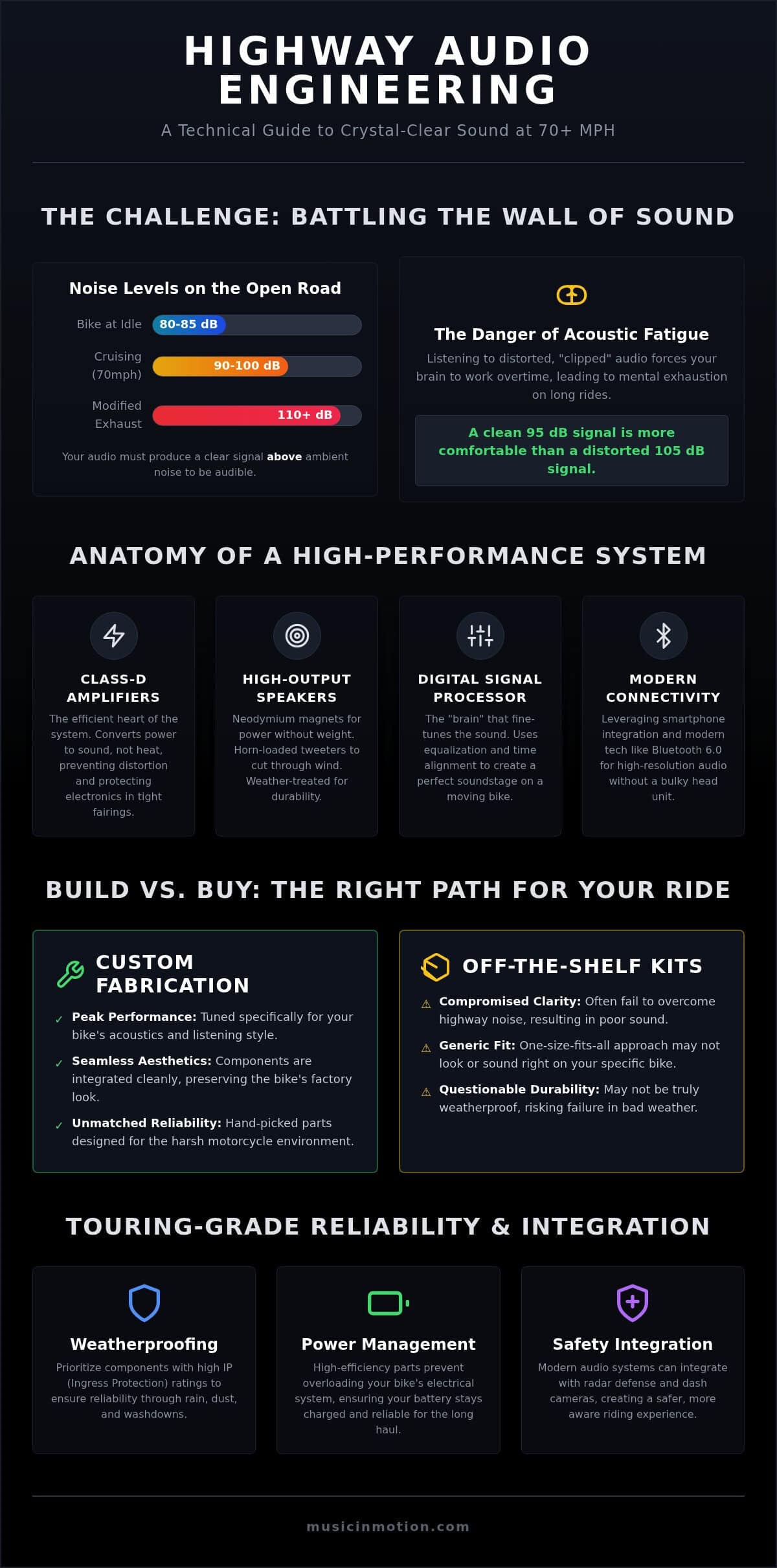
A motorcycle at idle produces about 80 to 85 decibels. Once you accelerate, that jumps to 90 or 100 decibels. If you have modified exhausts, you might be dealing with over 110 decibels. To hear music clearly, your system must produce a higher sound pressure level than the ambient noise. We prioritize mid-range frequencies because that’s where the human voice and most instruments live. High-efficiency drivers with neodymium magnets provide the punch needed to stay audible without adding unnecessary weight to your fairing. These drivers are designed to project sound directly at the rider, ensuring the “sweet spot” stays focused on you even at speed.
Understanding Acoustic Fatigue During Long Tours
Poor sound quality does more than just ruin a song; it actually exhausts your brain. This is called acoustic fatigue. When you listen to distorted, clipped audio for four hours, your mind works overtime to “fill in” the missing parts of the music. You’ll arrive at your destination feeling mentally drained rather than refreshed. Clean, unclipped power is the solution. A high-quality amplifier ensures that even at highway speeds, the signal remains pure. We focus on clarity over raw volume because a clean 95-decibel signal is far more comfortable than a distorted 105-decibel one. Modern 2026 technology, including Bluetooth 6.0 and advanced noise-reduction algorithms, helps maintain this purity over every mile of your journey.
Essential Components of a High-Performance Touring System
We don’t just look for loud parts. We look for efficient ones. A truly professional motorcycle audio system for long rides relies on a chain of high-quality components working in harmony. It starts with Class D amplifiers. These units are incredibly efficient, converting almost all their power into sound rather than heat. This is vital because fairings have zero airflow for cooling. Modern source units have also evolved. We’re moving away from bulky head units toward smartphone-integrated systems that support high-resolution audio formats for maximum fidelity.
High-Output Speakers and Tweeters
Speakers are where the power meets the air. We prefer high-efficiency drivers with neodymium magnets. They’re lighter and more powerful than standard ferrite magnets, which helps preserve your bike’s handling. For touring bikes, horn-loaded tweeters are the gold standard. They act like a megaphone, focusing high frequencies so they don’t get scattered by the wind. While coaxial speakers are easy to install, component systems offer better imaging by separating the tweeter and woofer. Every speaker we install features weather-treated cones. This protection is essential for cross-country reliability. It ensures your investment doesn’t rot after a heavy rainstorm.
Digital Signal Processing (DSP) for Custom Tuning
The DSP is the brain of a 2026 audio build. It allows us to correct the acoustic nightmares of a moving motorcycle. Wind noise tends to mask specific frequencies, usually in the lower and mid-range. A DSP lets us apply precise equalization to boost those lost notes. We also use time alignment to delay the signal to the closest speakers by milliseconds. This ensures the sound from all speakers reaches your ears simultaneously, creating a centered soundstage that feels like the band is right in front of you.
High-quality audio is also a subtle safety feature. Research into hearing loss shows that wind noise is a massive threat to riders. When we focus on Integrating Safety and Defense into Your Long-Ride Setup, we mean creating a system that is clear enough to hear over the roar without reaching dangerous decibel levels. If you’re planning a cross-country trip, our team at Music In Motion can design a motorcycle audio system for long rides that balances power with long-term reliability.
Custom Fabrication vs. Off-the-Shelf Audio Kits
Choosing between a pre-packaged kit and a custom installation is often the first hurdle for touring riders. Most off-the-shelf options promise simplicity. They offer a quick fix. However, a motorcycle audio system for long rides needs to do more than just fit in a hole; it needs to perform. Generic kits frequently trade audio quality for ease of installation, leaving you with thin sound that disappears once you click into sixth gear. We believe you shouldn’t have to compromise on the quality of your soundtrack just because a manufacturer wanted a one-size-fits-all solution.
The Limits of Generic Bolt-On Kits
Generic kits are built for the masses. This means they often use smaller speakers with shallow mounting depths to ensure they fit as many fairings as possible. Unfortunately, smaller speakers struggle to produce the mid-bass needed to overcome road noise. We also find that generic plastic brackets often lead to annoying vibrations and rattles over time. Custom-built enclosures solve this by providing the exact air volume a speaker needs to produce deep, rich sound. We use rigid mounting techniques that ensure your audio stays crisp even when the pavement gets rough. The benefits of choosing custom work include:
- Superior bass response through specifically tuned enclosures.
- Reduced vibration and mechanical noise at highway speeds.
- Seamless integration with your bike’s existing electrical system.
- Maximum sound projection tailored to your specific riding position.
Custom Fabrication for Modern Touring Bikes
Many shops focus exclusively on Harley-Davidson baggers. We take a different approach. Whether you ride a BMW K1600 GTL, an Indian Challenger, or a Honda Goldwing, we have the expertise to build a custom solution. These bikes often have complex fairings and non-standard frames that generic kits can’t handle. We use advanced materials like carbon fiber and high-density composites to create speaker pods that look like they came from the factory. These custom solutions respect your bike’s original aerodynamics and won’t eat up all your valuable saddlebag storage. Creating a motorcycle audio system for long rides that fits your specific bike perfectly is what we do best.
We believe that reliability is a key component of rider safety. Ensuring your bike can handle the electrical load of a new system is vital for those multi-day trips. We follow industry best practices and safety principles, similar to those promoted by the NHTSA, to prioritize Weatherproofing and Power Management for Reliability. Our goal is to provide a finished result that integrates seamlessly with your bike, allowing you to focus on the road while enjoying professional-grade sound that never quits.
Weatherproofing and Power Management for Reliability
Reliability is the backbone of any touring setup. If your gear fails halfway through a cross-country trip, the most expensive speakers in the world are just dead weight. A motorcycle audio system for long rides faces a triple threat: water, vibration, and heat. We don’t just bolt parts on; we engineer them to survive. This starts with understanding Ingress Protection (IP) ratings. While many brands claim to be “water-resistant,” we look for systems with at least an IPX6 rating. This ensures your fairing speakers won’t die the first time you get caught in a heavy summer downpour.
Marine-Grade Standards for the Open Road
We often look to the water for inspiration. The technology used in premium marine audio systems provides the perfect blueprint for motorcycles. These components use UV-resistant materials that won’t crack or fade under the relentless sun of a multi-day tour. High-end marine gear also undergoes rigorous salt-fog and moisture testing. This level of durability is critical for riders who frequent coastal routes or high-humidity environments. We prioritize these standards to ensure your investment looks and sounds as good in year five as it did on day one.
Heat is the silent killer of amplifiers. Since most touring amps are tucked away in cramped fairings or saddlebags, they have almost no natural airflow. We utilize Class D technology because it runs cool, but we also employ specific heat dissipation strategies. Thermal-conductive mounting helps pull heat away from the circuitry. Long-term wiring integrity is equally important. We never use crimp connectors. Instead, we solder and heat-shrink every connection to withstand the constant vibrations of the road.
Protecting Your Bike’s Electrical Health
Your bike’s charging system has limits. Modern touring bikes already power lights, GPS, and heated grips. Creating a motorcycle audio system for long rides requires a balance of acoustic power and electrical safety. We calculate the total current draw of your audio and safety tech to ensure your battery stays healthy. If the demand is too high, we may recommend a high-output alternator or a dedicated secondary battery. We also install smart relays. These ensure your system only draws power when the engine is running, preventing a dead battery during overnight stops.
Don’t leave your reliability to chance on the open road. If you’re ready for a bulletproof setup, contact Music In Motion to discuss your specific power and weatherproofing needs.
Integrating Safety and Defense into Your Long-Ride Setup
We often think of a motorcycle audio system for long rides as purely for entertainment. In our experience, it’s actually the command center for your bike’s entire electronic suite. A high-fidelity system allows you to hear more than just your favorite playlist; it provides clear, audible alerts from your safety technology that might otherwise be lost to wind noise. When you’re 500 miles into a multi-day trip, these clear communications keep you focused, informed, and protected. We believe that a truly great touring bike should be as smart as it is loud.
Laser and Radar Defense for Long-Distance Riders
Long-distance touring frequently takes you through unfamiliar counties and states where speed traps are common. We specialize in adapting a laser defense system for cars to fit the slim profile of a modern touring bike. These systems utilize sensitive sensors mounted discreetly on the front and rear of the motorcycle to detect and neutralize lidar signals. Instead of using a clunky, aftermarket box on your handlebars, we integrate visual indicators directly into your dash. We also feed the audible alerts into your audio system, ensuring you never miss a warning because of your exhaust note. This stealthy approach keeps your bike’s lines clean while providing professional-grade protection.
The Complete Touring Tech Package
A modern electronics strategy goes beyond just radar. We often integrate other vehicle safety systems like blind-spot detection and hardwired dash cameras. Unlike battery-powered action cams, these dash cameras are hardwired to your bike’s ignition. They start recording the moment you turn the key, providing essential documentation for insurance purposes or accident protection. Blind-spot sensors use microwave technology to monitor the areas your mirrors might miss, providing a subtle visual flash when a vehicle is nearby. This level of awareness is a game-changer during heavy traffic on long highway stretches.
Professional installation is critical for these complex systems. We don’t just “bolt on” sensors; we calibrate them to ensure they work accurately within your bike’s specific geometry. Poorly installed safety tech can fail when you need it most or interfere with your bike’s sensitive factory wiring. By consulting with a specialist, you ensure that your motorcycle audio system for long rides works in perfect synergy with your defense and safety tech. We take pride in delivering a finished result that makes your journey more relaxing and your bike more capable than ever before.
Engineer Your Ultimate Touring Experience
You’ve seen that high-fidelity sound on the highway isn’t about raw volume; it’s about smart engineering and clean power. By prioritizing high-efficiency components and custom fabrication, you can overcome acoustic fatigue and enjoy every mile of your journey. A professional motorcycle audio system for long rides must balance crystal-clear output with total weather protection and integrated safety technology to truly enhance your time behind the bars. You don’t have to settle for distorted audio or unreliable gear when you’re miles from home.
At Music In Motion, we bring over 30 years of custom electronics expertise to every project. We specialize in high-output, weather-resistant fabrication that looks as good as it sounds. As an authorized dealer for premium audio and safety brands, we’re dedicated to delivering a finished result that exceeds your expectations. Ready to transform your ride? Contact Music In Motion for a custom motorcycle audio consultation. The road is calling, and your perfect soundtrack is waiting. We’re here to help you build the ultimate long-distance machine.
Frequently Asked Questions
Can I hear a motorcycle audio system at 80 mph?
Yes, you can hear your music clearly at highway speeds if the system is engineered with the right power and projection. We use high-efficiency speakers and horn-loaded tweeters to cut through the 100-decibel wall of wind noise found at 80 mph. Proper tuning ensures the mid-range frequencies remain prominent. This prevents the sound from washing out. A well-designed motorcycle audio system for long rides focuses the acoustic energy directly on the rider.
Will a high-powered audio system drain my motorcycle battery?
A professionally installed system won’t drain your battery if the power management is handled correctly. We utilize Class D amplifiers because they convert nearly all energy into sound instead of heat. We also integrate smart relays to ensure the system only draws current while the engine runs. For extremely high-output setups, we calculate the total draw against your bike’s charging capacity. We might suggest a high-output alternator to maintain electrical health.
What is the difference between marine-grade and car audio for motorcycles?
Marine-grade equipment is built to survive moisture, salt-fog, and relentless UV exposure; standard car audio is designed for a protected cabin. Motorcycles are open to the elements, making marine standards the baseline for reliability. These components use specialized materials like treated cones and non-corrosive terminals. We prioritize these rugged builds for long tours because they resist the vibration and weather that would quickly destroy a traditional car speaker.
Do I need a DSP for my motorcycle audio system?
A Digital Signal Processor (DSP) is essential for any high-end build because it corrects the acoustic challenges of an open-road environment. It allows us to boost frequencies that wind noise usually masks. We use time alignment to ensure sound from every speaker reaches your ears at the exact same moment. This creates a focused soundstage. Without a DSP, your music often sounds thin or disorganized once you start moving at cruising speeds.
Can you install a custom audio system on a bike without a fairing?
We can definitely install high-performance audio on naked bikes or cruisers without fairings using custom-fabricated speaker pods. These pods mount to your handlebars or engine guards and are designed to project sound toward your seating position. We select compact, high-output drivers that deliver punchy sound without cluttering your bike’s profile. Even without a fairing, a motorcycle audio system for long rides can provide clear sound if the mounting angles are precise.
Is it legal to have speakers on a motorcycle?
Speakers are legal in most jurisdictions, but you must comply with local noise ordinances and decibel limits. For instance, the EPA sets a standard of 80 decibels for new on-highway motorcycles, though local enforcement varies significantly. Some states have specific rules regarding helmet speakers or headphones. We always recommend checking your specific state and local regulations to ensure your system remains compliant while you’re touring across different regions.
How much does a professional motorcycle audio installation cost?
Costs vary based on the complexity of the fabrication and the specific components chosen for your bike. A basic speaker and amp upgrade is a different investment than a full custom build with integrated radar defense and saddlebag speakers. We focus on delivering a finished result that provides long-term value and reliability. Since every project is unique, we provide detailed quotes after assessing your bike’s electrical capacity and your specific performance goals.
Can I integrate my phone’s navigation into my motorcycle audio system?
Yes, modern source units and Bluetooth 6.0 integration make it easy to hear turn-by-turn navigation through your speakers. We can configure your system so the music subtly dips when a navigation prompt or safety alert occurs. This ensures you never miss a turn while enjoying your playlist. We also offer smartphone-integrated solutions that allow you to control your apps directly through weather-resistant interfaces or handlebar controls for a safer riding experience.